Organic certification helps you understand the scope of a sourcing and manufacturing claim, but does not answer every question about sensitive-skin use. You still need to check the finished formula, ingredients you react to, and how the product fits with the rest of your routine. Read the exact certification and product directions together; neither an organic ingredient nor a product-level seal guarantees tolerance, effectiveness, or compatibility with another product.
Organic certification tells you where an ingredient came from — not what happens when it's combined into a formula and put on your face.
If you have dry, reactive, or barrier-compromised skin, that gap matters more than almost anywhere else in your routine. A jar can carry a legitimate organic certification logo and still sting, still disrupt your skin barrier, or still clash with the rest of your routine — because certification was never designed to answer those questions in the first place. Here are the three it consistently leaves open, and what to check instead.
What Organic Certification Actually Checks
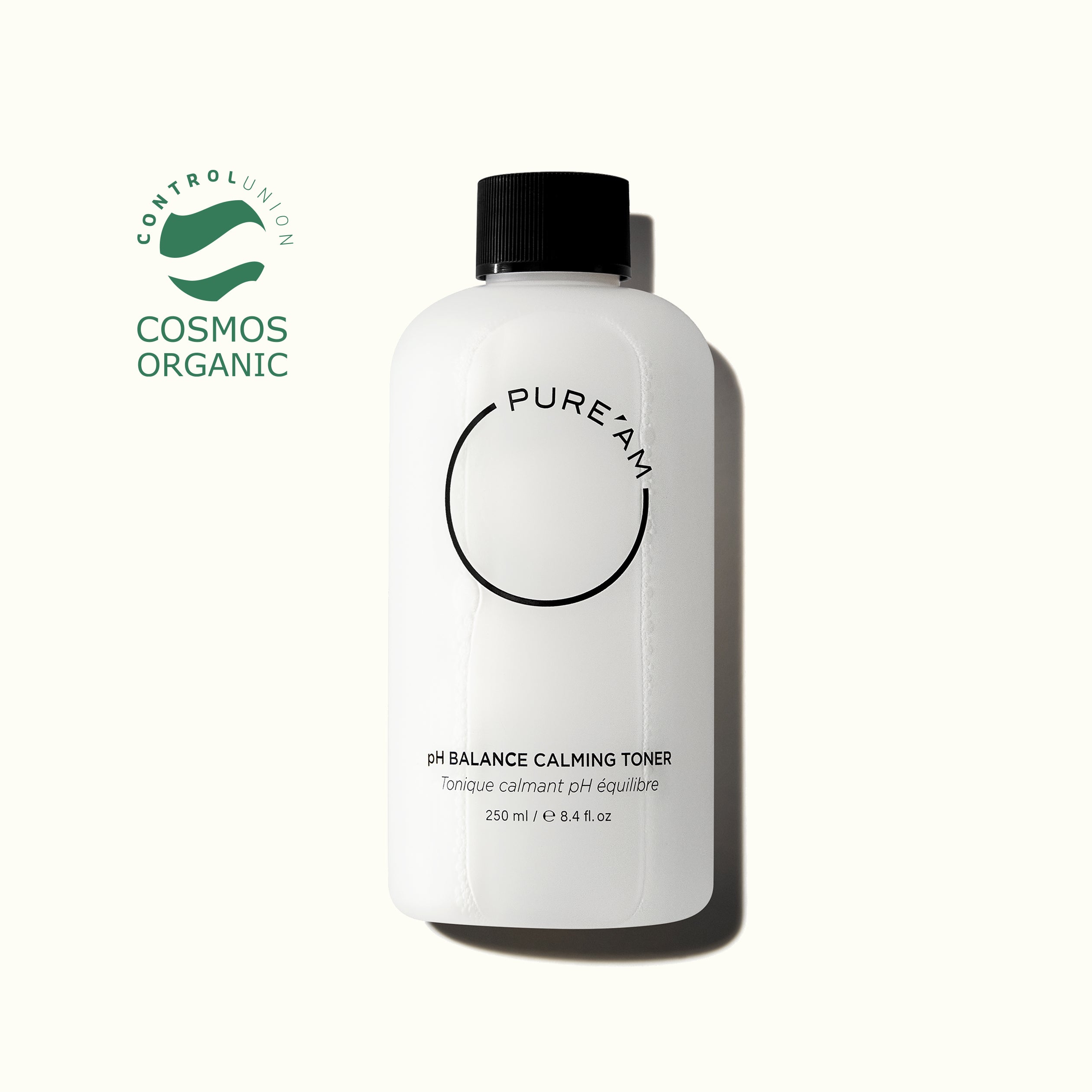
Certification bodies like COSMOS audit ingredient origin, banned synthetic classes, and manufacturing conditions. COSMOS Organic requires that at least 95% of physically processed plant-based ingredients be organically farmed, and that a minimum of 20% of the total finished formula be organic (10% for rinse-off products like cleansers). Crucially, water and minerals can never count toward that organic percentage — so a mostly-water toner or essence has to work much harder, ingredient-wise, to hit the same threshold as an anhydrous oil.
That 20% minimum is also a ceiling many brands never approach voluntarily. Some certification schemes require as little as 5% organic ingredients to license an "organic" claim on the front of the bottle — meaning the remaining 95% of the formula can legally be synthetic fillers, petroleum-derived thickeners, or fragrance, and the product still qualifies for a certification logo. In the U.S., the gap is wider still: the USDA has never created organic standards specific to formulating or labeling personal care products, the way it has for food. A brand can print "organic" on a U.S. label without a single third-party-certified ingredient inside.
None of this makes certification meaningless — it's a real, auditable claim about sourcing and process. It just isn't a claim about how the finished product behaves on skin. That's a separate, unaudited question, and it splits into three parts.
Question 1: What Is the Finished Formula's pH?
Certification schemes evaluate ingredient origin and concentration thresholds. They do not test or disclose the pH of the finished product. For sensitive and barrier-compromised skin, pH is arguably more consequential than organic percentage: skin's natural acid mantle is mildly acidic, and a mismatched cleanser or toner can strip lipids and disrupt that barrier regardless of how "clean" its ingredient list looks on paper.
A formula can be 95% organically sourced and still be poorly buffered — organic origin says nothing about final pH, because pH is a whole-formula property that emerges from how every ingredient interacts, not from any single certified input. This is a formulation decision, not a sourcing one, which is exactly why certification doesn't cover it. It's also why product naming that foregrounds pH — like a toner built specifically around acid-mantle-range pH rather than around an organic percentage claim — is signaling a different design priority than certification alone can convey.
Question 2: How Do the Ingredients Interact Once Combined?
Certification audits ingredients individually against an approved list. It does not audit how those ingredients behave once they're mixed, preserved, and stabilized together in one formula.
This matters most in preservation. Natural preservative systems required for organic certification are inherently less potent and more pH-sensitive than synthetic alternatives, and some are chemically incompatible with certain botanical extracts — meaning a certified formula can carry internal ingredient conflicts that no certification audit ever screens for. A preservative system that's too weak for the formula's water content, or an extract that shifts the whole formula's pH after a few months on a warm bathroom shelf, produces a real-world stability or irritation problem that the organic logo on the box never flagged.
This is also where "more organic ingredients" and "gentler on sensitive skin" quietly stop being the same claim. A formula optimized to maximize its certified-organic percentage may lean on a narrower, harsher preservative system to hit that number — a trade-off invisible from the label.
Question 3: Does It Fit Into a Compatible Routine?
The third question certification never touches: how a single certified product behaves as one step in a multi-product routine. A cleanser, toner, serum, and cream are formulated separately, often by different brands, with different pH targets, surfactant systems, and active concentrations — and certification evaluates each one in isolation, never as a sequence.
For barrier-compromised skin, sequence-level compatibility is often the actual point of failure: a mild cleanser followed by a poorly buffered toner can undo the cleanser's gentleness before the next step is even applied. This is a whole-routine question, and it sits entirely outside what any single-product certification claim was built to answer.
Why the Gap Matters More for Sensitive, Barrier-Compromised Skin
Certification and safety assessment are two separate systems measuring two separate things. Safety assessments for EU cosmetics are conducted independently of organic certification — meaning a product's organic status and its safety-for-sensitive-skin status are evaluated through entirely different processes, by design. For skin that reacts easily, that separation is the whole risk: an organic label answers "was this ingredient farmed without synthetic pesticides," not "will this finished formula, at this pH, in this order, keep my barrier intact."
That's not a reason to distrust certification — it's a reason to treat it as one input among several, alongside finished pH, preservative compatibility, and how a product actually performs inside your specific routine.
How PURE'AM Approaches These Three Questions
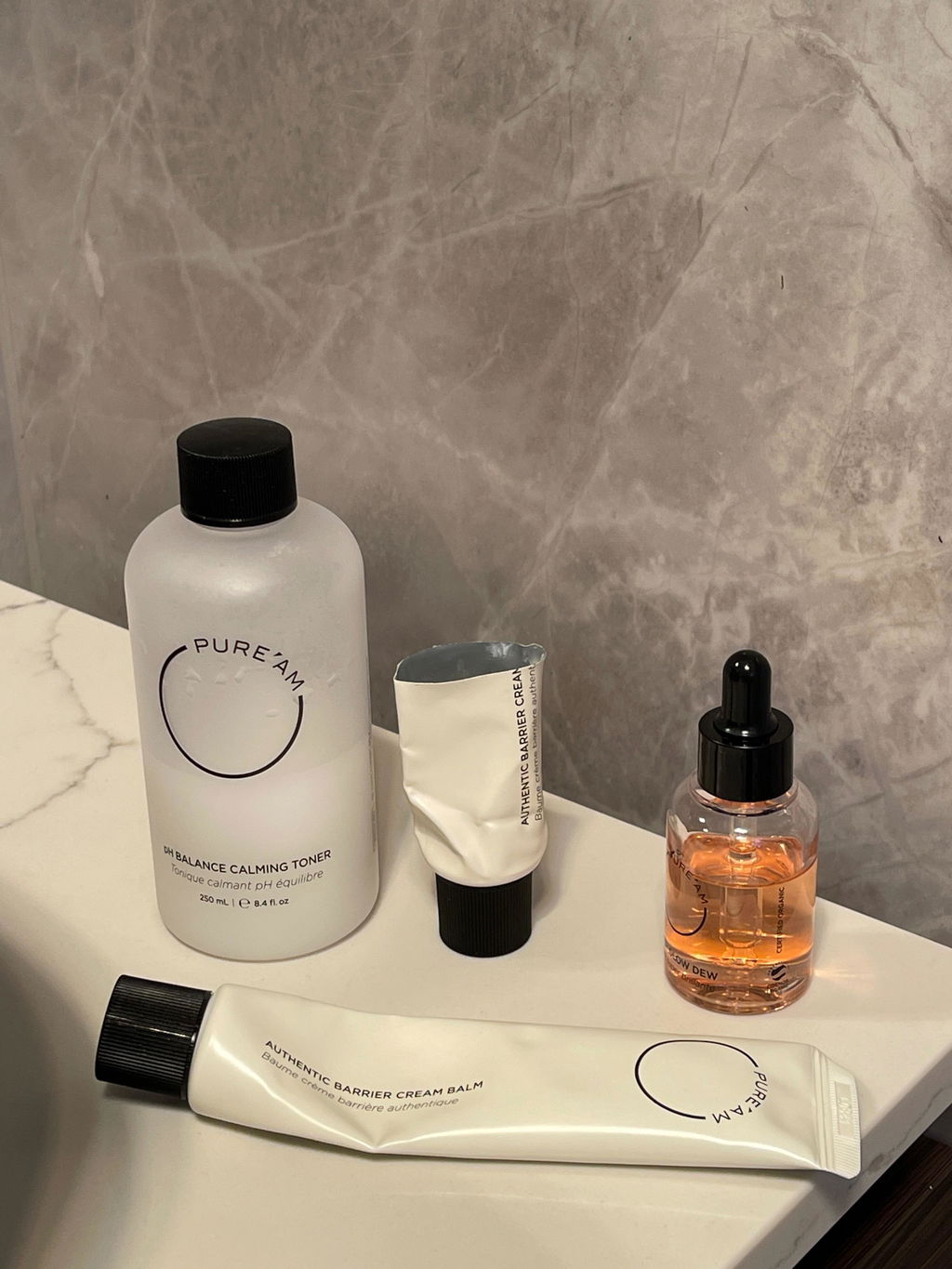
PURE'AM's product philosophy starts from the whole-formula and routine questions certification doesn't cover, rather than from an organic-percentage claim on the front of the bottle. The pH BALANCE CALMING TONER is named around finished-formula pH as a design target, not around a certification percentage. The AMINO ACID MILD CLEANSER uses amino-acid-based surfactants chosen for a milder cleansing profile, meant to work with — not against — the products that follow it. And the AUTHENTIC BARRIER CREAM BALM is positioned as the barrier-moisture step at the end of that same sequence, rather than a standalone hero product.
The brand's own routine guidance — cleanser, toner, oil or serum, then barrier cream — is built around that sequence-compatibility question directly, in the same spirit as the PURE'AM sensitive-skin routine guide. Brands across the category, from Round Lab to COSRX to Beauty of Joseon, make their own formulation choices around these same three variables — pH, ingredient interaction, and routine fit — and none of those choices show up on an organic certification label, PURE'AM's included. That's precisely why it's worth asking about them directly, for any brand, before assuming a certification logo has already answered the question.
FAQ
Does "organic" on a skincare label mean the product is sulfate-free or fragrance-free?
Not automatically. Organic certification restricts specific synthetic ingredient classes and requires a minimum organic percentage, but it doesn't guarantee the absence of fragrance or specific surfactant types unless those are separately disclosed on the ingredient list.
Is a higher organic percentage always better for sensitive skin?
Not necessarily. A higher organic percentage can push a formula toward a narrower, more pH-sensitive preservative system, which is a formulation trade-off, not a guarantee of gentleness. Finished pH and preservative stability matter independently of the organic percentage.
Why do rinse-off products like cleansers have a lower organic threshold than creams?
Because COSMOS sets a 10% total-organic minimum for rinse-off products versus 20% for leave-on products, reflecting that rinse-off formulas typically contain more water, and water can never count toward the organic percentage.
Can a product be "organic" in the U.S. without any certified ingredients?
Yes. The USDA has not established organic standards specific to personal care product formulation and labeling, so U.S. brands can use the word "organic" on packaging without third-party certification, unlike the regulated use of "organic" on food labels.
How can I check whether a routine's steps are actually compatible, since certification won't tell me?
Look at whether the brand explains an intended product sequence and rationale for each step, rather than marketing each product in isolation — and patch-test new combinations, since pH and ingredient interactions between steps aren't something a label, certified or not, discloses.