Sensitive skin doesn't just react to what's in a product. It reacts to what a product does to the skin's surface pH, and that effect starts the moment a cleanser touches your face and lasts long after you've rinsed. Healthy skin surface pH sits close to 4.7, and a large multicenter measurement study found that skin below pH 5.0 shows better barrier function, hydration, and less scaling than skin above that line. The order you apply products in, cleanser first, then toner, then a barrier cream, either protects that acidic window or works against it.
Why the Acid Mantle Comes First
The outermost layer of skin maintains a thin acidic film often called the acid mantle. It isn't decorative. Two of the enzymes that build the skin's own lipid barrier, beta-glucocerebrosidase and acidic sphingomyelinase, have pH optima of 5.6 and 4.5 (a skin barrier composition patent filing summarizes this enzyme dependence). Both enzymes are involved in producing ceramides, the lipids that hold the barrier together. When surface pH climbs above that narrow range, these enzymes stop working as efficiently, and a separate class of enzymes called kallikreins becomes more active instead.
That second part matters for anyone dealing with reactivity. A 2022 computational modelling study found that kallikrein activity increases at pH levels higher than the skin's normal range, and that a less acidic surface was enough to measurably increase water loss and irritant penetration through the epidermis, which in turn produced more intense inflammation after exposure to an irritant. In other words: pH disruption doesn't just feel uncomfortable, it changes how much of an irritant actually gets into the skin.
Step 1: Cleansing Sets the Pace for Everything After
Most of the pH damage in a routine happens at the cleansing step, because traditional bar soaps and many foaming cleansers are alkaline by design. Soap-based surfactants need an alkaline environment to lather well, which is part of why they were formulated that way in the first place. A cleanser pH study from Amore Pacific's Skin Research Institute applied products at pH 3, 5, and 8 to healthy volunteers' forearms for five weeks, then exposed the skin to a standard irritant (SLS). The result: the alkaline (pH 8) product impaired the skin barrier over the five-week period, and that already-impaired barrier was then disrupted more severely by the SLS irritation challenge than skin kept in its normal acidic range.
A separate literature review of cleanser chemistry makes the mechanism explicit: alkaline cleansers are positively correlated with stratum corneum swelling, and when surface pH rises, both the skin's antibacterial capacity and its barrier function are compromised. The same review notes this also affects the skin's ability to hold onto its own natural moisturizing factor, the humectants that keep the surface hydrated between washes.
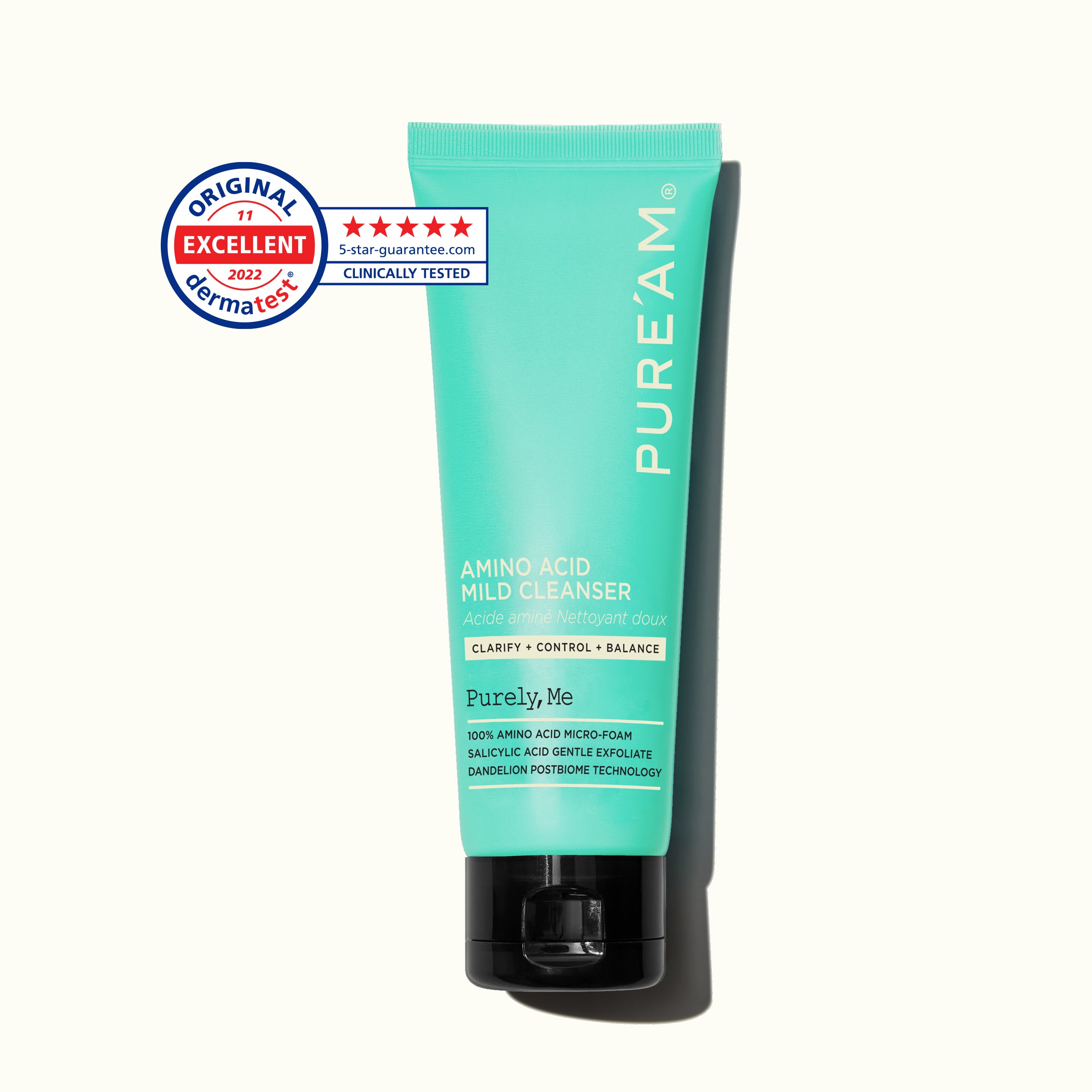
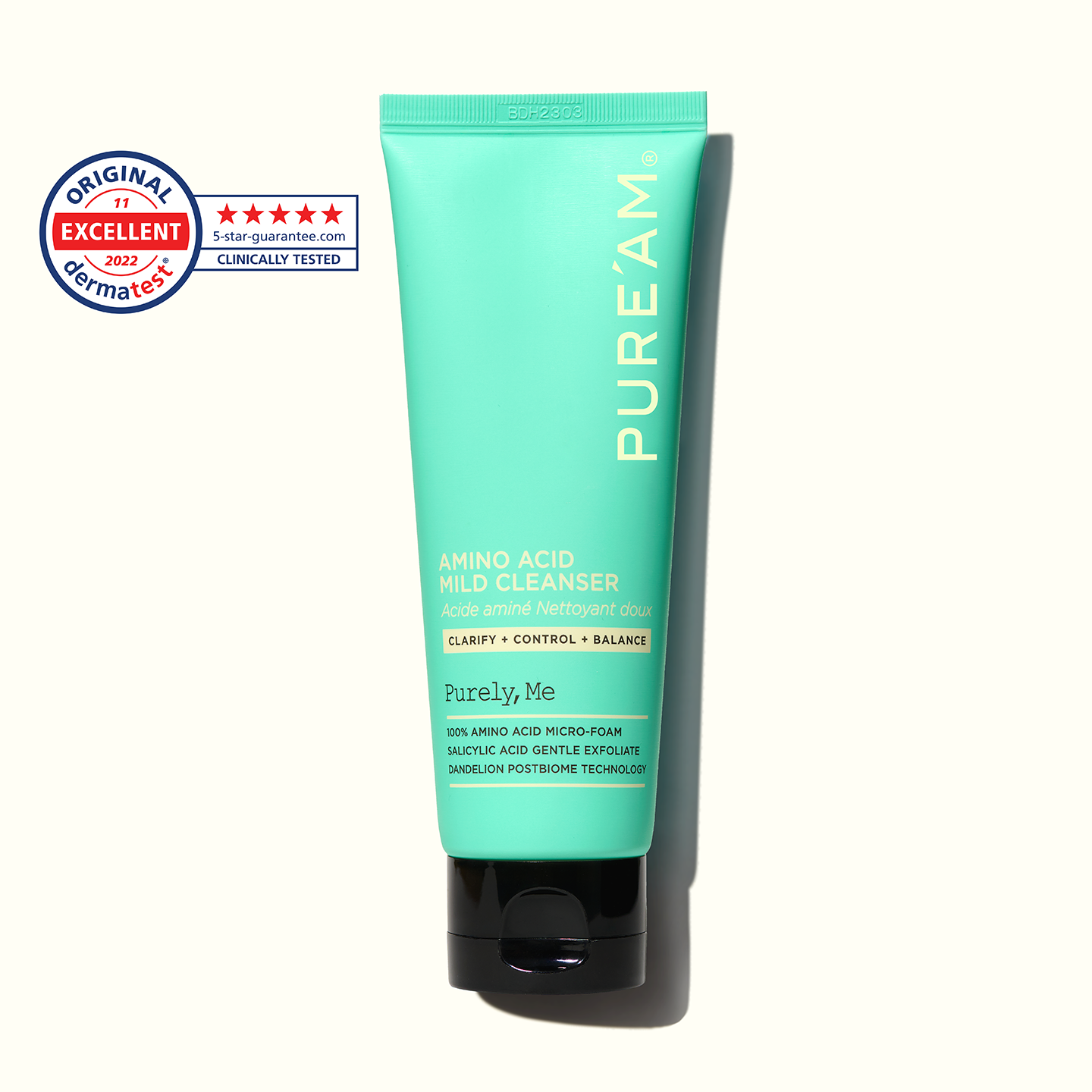
This is the practical argument for choosing a cleanser built around amino acid-based surfactants rather than classic soap chemistry. A 2022 evaluation of common cleanser acids in a reconstructed human epidermis model reiterated that skin's natural pH sits between 4.0 and 6.0, and that strongly alkaline formulas needed to strip oils and grease are, by the same chemistry, more likely to irritate that acidic layer. PURE'AM's AMINO ACID MILD CLEANSER is built on this logic: an amino-acid-surfactant base designed to clean without pushing the wash step into alkaline territory, which is the first checkpoint in a pH-first routine, not an afterthought.
Step 2: Toner as a Pre-Emptive Reset
If cleansing is where alkaline drift is most likely to happen, toner is where a routine gets a chance to correct course before the rest of the routine goes on. A toner formulated within the skin's natural range doesn't just add hydration, it gives the surface a head start back toward the pH where its own barrier-building enzymes work best. This matters more for actives layered later: pH-dependent ingredients behave differently depending on the surface they're applied to, which is one reason routines that skip a pH-supportive toner step and go straight from cleanser to serum can feel inconsistent, especially right after a wash that ran alkaline.
PURE'AM's pH BALANCE CALMING TONER is formulated around this same acid-mantle logic, using humectants including hyaluronic acid to rehydrate and support the skin's return to its resting pH rather than layering on an unrelated fragrance-forward "toning" step. For sensitive skin specifically, a toner's job in this sequence is less about adding a new ingredient story and more about making sure the surface is in the right condition before the barrier-repair step that follows.
Step 3: Barrier Cream Locks In the Repair Window
By the time a barrier cream goes on, the goal is to protect whatever pH recovery cleansing and toning have already achieved, and to supply the lipids the skin needs to keep rebuilding its own barrier. Ceramides applied topically support the same barrier-lipid system that the skin's own pH-dependent enzymes are trying to synthesize internally. A barrier cream with ceramides, fatty acids, and humectants like polyglutamic acid gives the skin external reinforcement while its own enzymatic repair processes have a better chance to run at the right pH, rather than being interrupted by another alkaline exposure before they finish.
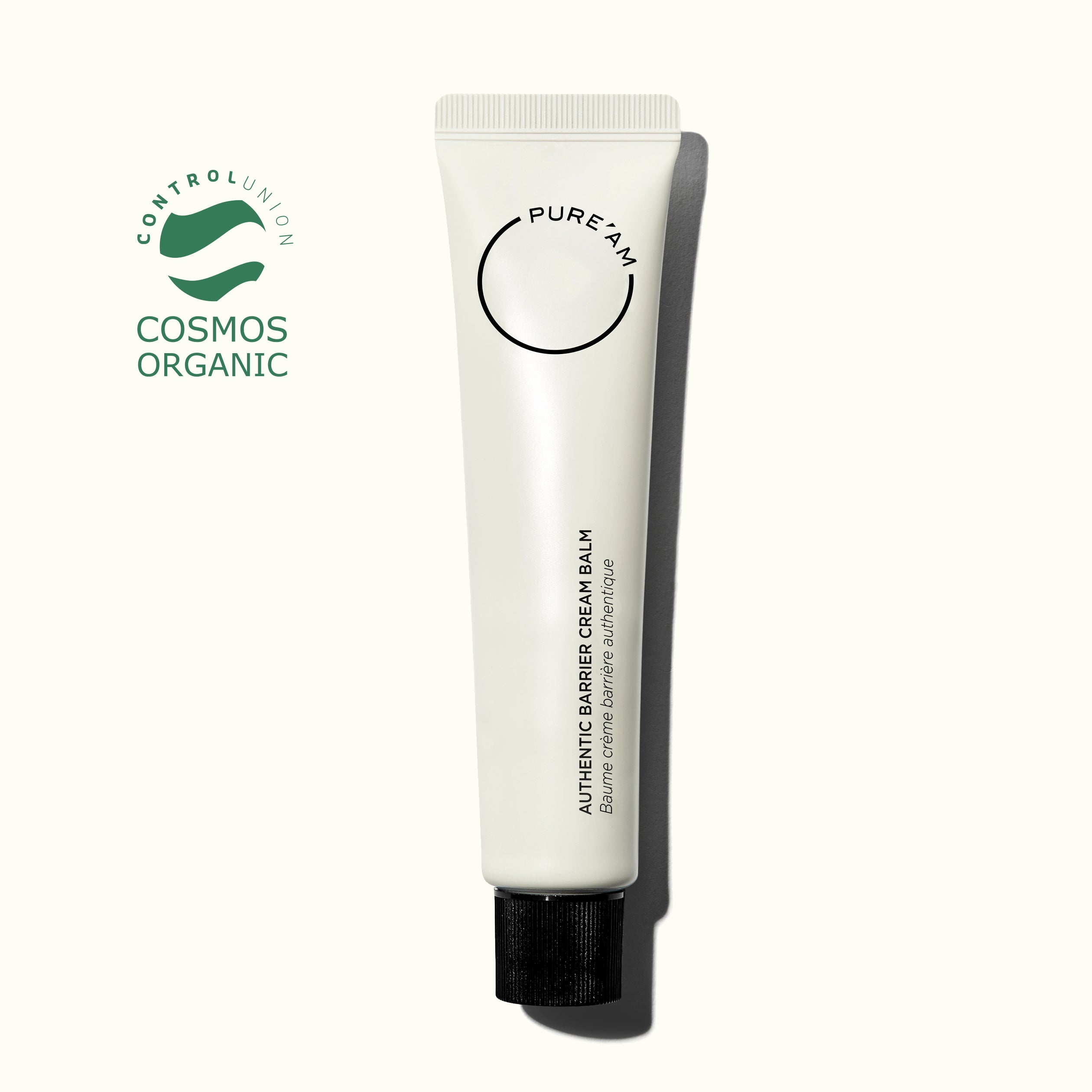
PURE'AM's AUTHENTIC BARRIER CREAM BALM is formulated with encapsulated ceramide and humectant ingredients aimed at this exact repair window, applied as the final step once cleansing and toning have already brought the surface back toward its resting range.
AUTHENTIC BARRIER CREAM BALM
48.0 SGD
Shop now
AMINO ACID MILD CLEANSER
30.0 SGD
Shop now
What Recovery Time Means for Routine Order
One detail changes how urgently routine order matters: skin surface pH does not snap back to baseline the instant you rinse. Even a mild alkaline exposure needs time to normalize, and during that window the barrier is measurably more permeable to whatever gets applied next. This is why sequencing, not just product choice, is part of a pH-conscious routine: applying a barrier cream directly onto skin that just went through an alkaline wash asks that cream to do more repair work than it would if the toner step had already helped the surface recover first.
A Simple Order to Follow
- Cleanse with a surfactant system that avoids strongly alkaline soap chemistry, ideally amino-acid or mild synthetic-detergent (syndet) based.
- Tone immediately after rinsing to support rehydration and pH recovery before anything else is layered on.
- Seal with a ceramide- and humectant-rich barrier cream once the surface has had a chance to settle.
This order isn't about maximizing the number of steps in a routine. It's about not undoing the work of one step with the alkalinity of the next.
FAQ
Is pH 5.5 the "correct" number for all skin?
Not exactly. Multiple measurement studies, including the multicenter study cited above, put the natural resting pH of skin closer to 4.7 to 4.9 on average, with a wide normal range depending on body site, age, and individual variation. The commonly cited "5.5" figure sits within the broader healthy range but isn't a strict target everyone's skin sits at.
Can a toner really undo damage from an alkaline cleanser?
A toner formulated to support hydration and pH recovery can shorten the window skin spends outside its normal range after cleansing, but it works best as part of the sequence, not as a stand-alone fix for a consistently harsh cleanser.
How long does skin stay in an alkaline state after a harsh wash?
Recovery time varies by individual and by how alkaline the product was, but the alkaline-adapted skin barrier study shows the disruption from repeated alkaline exposure can persist well beyond the moment of rinsing, which is part of why routine order, not just ingredient choice, matters.
Do I need to change my toner if I already use a gentle cleanser?
Not necessarily, but the two steps work together. A mild cleanser reduces how far pH drifts in the first place, and a supportive toner helps bring it back faster, so pairing both gives more consistent results than relying on either step alone.
Does this pH-first order apply to actives like retinol or vitamin C too?
Pairing pH-sensitive actives with pH-conscious cleansing and toning is a reasonable extension of the same logic, since those ingredients are known to be sensitive to the surface conditions they're applied to. For more on how cleanser choice interacts with what comes after it, see how cleanser pH affects serum performance.
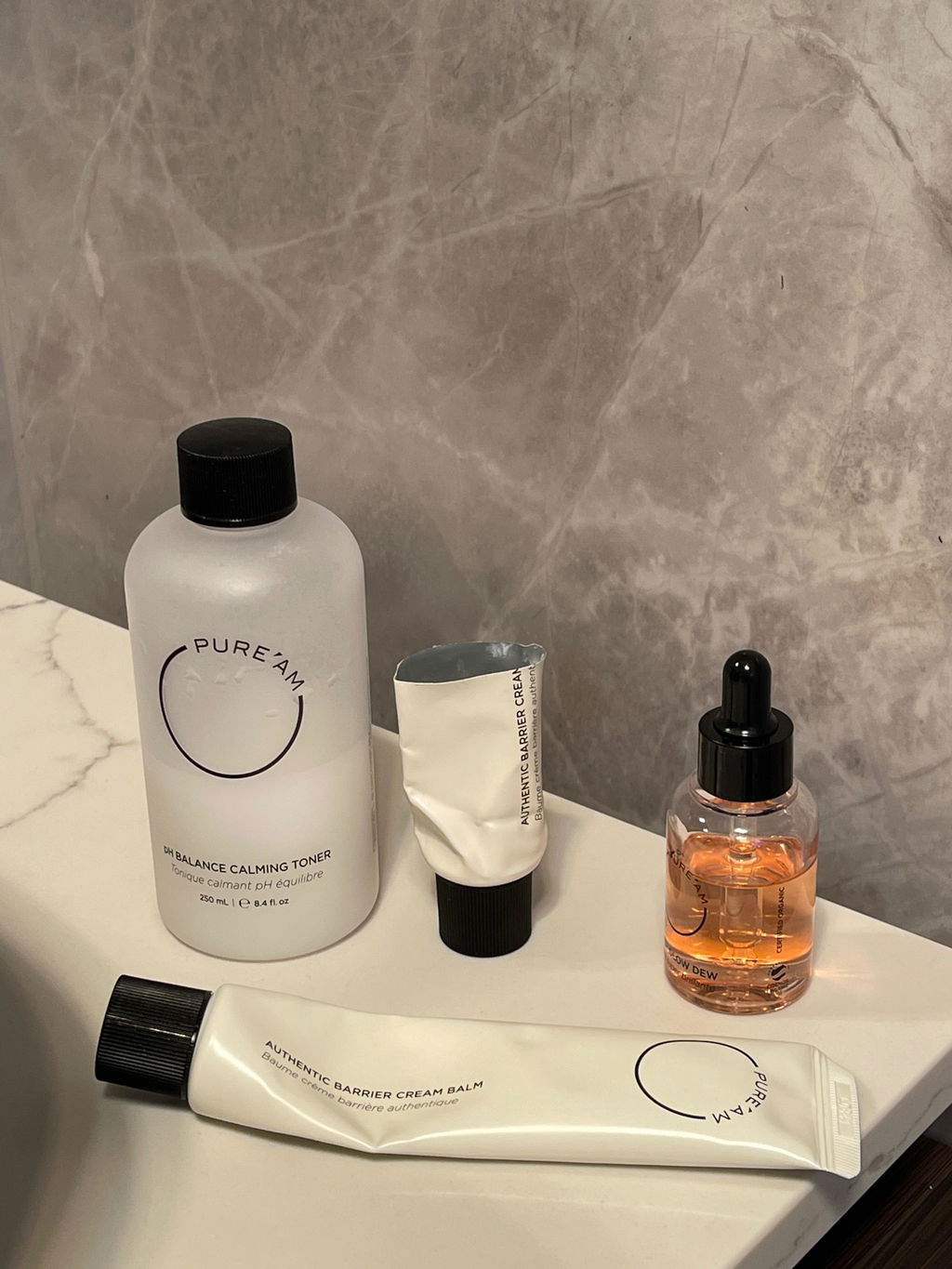
If you're building or adjusting a sensitive-skin routine around this order, PURE'AM's AMINO ACID MILD CLEANSER, pH BALANCE CALMING TONER, and AUTHENTIC BARRIER CREAM BALM follow this same cleanse-tone-seal sequence, each one designed for its specific step rather than as a stand-alone fix.