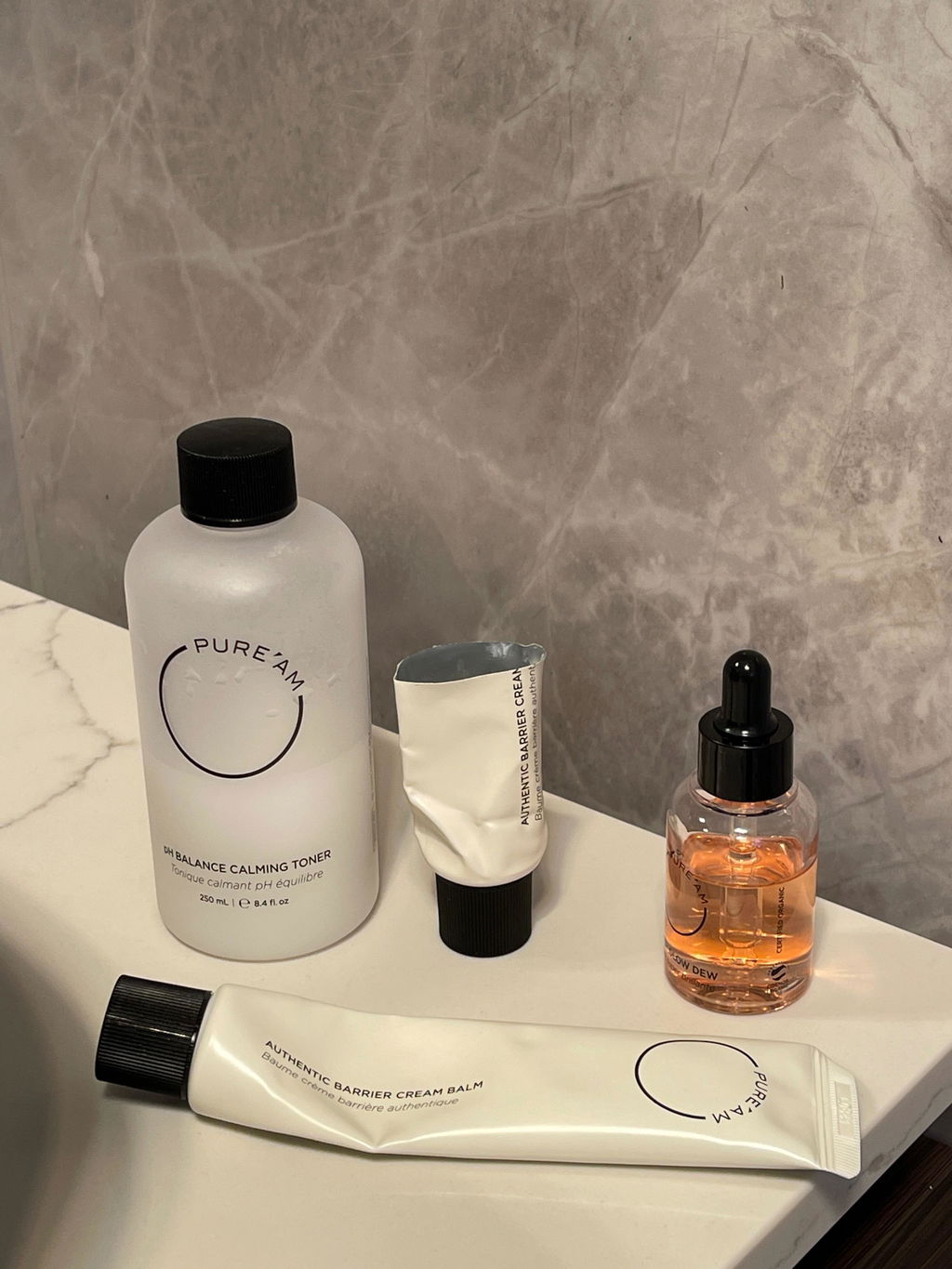
If your skin is dry and reacts easily, cleanser, toner, and cream often cover the basics, with one optional add-on, a serum or a face oil. The order is cleanser, toner (optional), serum (optional, placed before cream) or oil (optional, placed after cream), cream, then sunscreen last in the morning. Toner, serum, and oil can be skipped depending on how your skin feels, but gentle cleansing and moisturizing right after washing are the two steps we would not cut.
At PURE'AM, the first thing we look at when we design a routine isn't how many steps it has. It's what condition each step hands off to the next one. If cleansing strips too much lipid from the skin, whatever you apply afterward starts by patching a tight, dry surface instead of building on a comfortable one.
Every product you add is also a new set of ingredients your skin has to meet. The American Academy of Dermatology notes that preservatives and other skincare ingredients can trigger allergic contact dermatitis, and that skincare products are a common cause (AAD, 2021). That's part of why we lean toward fewer steps for reactive skin, not more.
The 4 Steps at a Glance: What Each One Hands Off
| Order | Job | Hands off to the next step | Optional? |
|---|---|---|---|
| 1. Cleanser | Removes sunscreen, oil, and dirt | Clean skin, no tightness | Core |
| 2. Toner | Adds moisture and calm right after washing | Damp, comfortable skin | Optional |
| 3. Serum (optional) | Reinforces moisture-oil balance before cream | Skin ready to receive cream | Optional, pick one with oil |
| 4. Cream | Moisturizes and supports the barrier | A surface that holds onto moisture | Core |
| 5. Oil (optional) | Finishes oil-moisture balance | A settled surface before sunscreen | Optional, pick one with serum |
| Morning, last step: Sunscreen | UV protection | A shield that lasts through the day | Core when you're outside |
Choosing only one of serum or oil is a rule we propose for manageability, not a medical requirement. It limits how many new ingredients your skin meets at once, which makes it easier to trace a reaction back to its cause if one shows up.
Step 1: Cleanser (Watch the Surfactant, Not the Lather)
A surfactant is the ingredient class that lets water and oil mix, which is how a cleanser lifts away sebum and grime. The issue is that it can't perfectly distinguish what it should remove from what it shouldn't. A 2012 review by Walters and colleagues in Dermatology Research and Practice found that surfactants can co-extract skin components during cleansing and remain in the stratum corneum after rinsing, which can weaken barrier properties (Walters et al., 2012).
pH matters too. pH is a 0-14 scale for how acidic or alkaline a substance is; anything below 7 is acidic. Ananthapadmanabhan and colleagues reported in Dermatologic Therapy (2004) that surfactants with lower interaction with skin lipids and proteins tend to be gentler, and that a pH 10 solution can swell the stratum corneum even without any surfactant present. Their conclusion was that a neutral-to-mildly-acidic cleanser, closer to the skin's normal pH of about 5.5, may be less damaging (Ananthapadmanabhan et al., 2004). That finding comes from surfactant and pH research, so it doesn't directly predict how any single finished product will feel on your face.
The practical guidance is simple. The AAD recommends a gentle cleanser for dry skin, and advises using only enough to remove dirt rather than working up a thick lather (AAD).
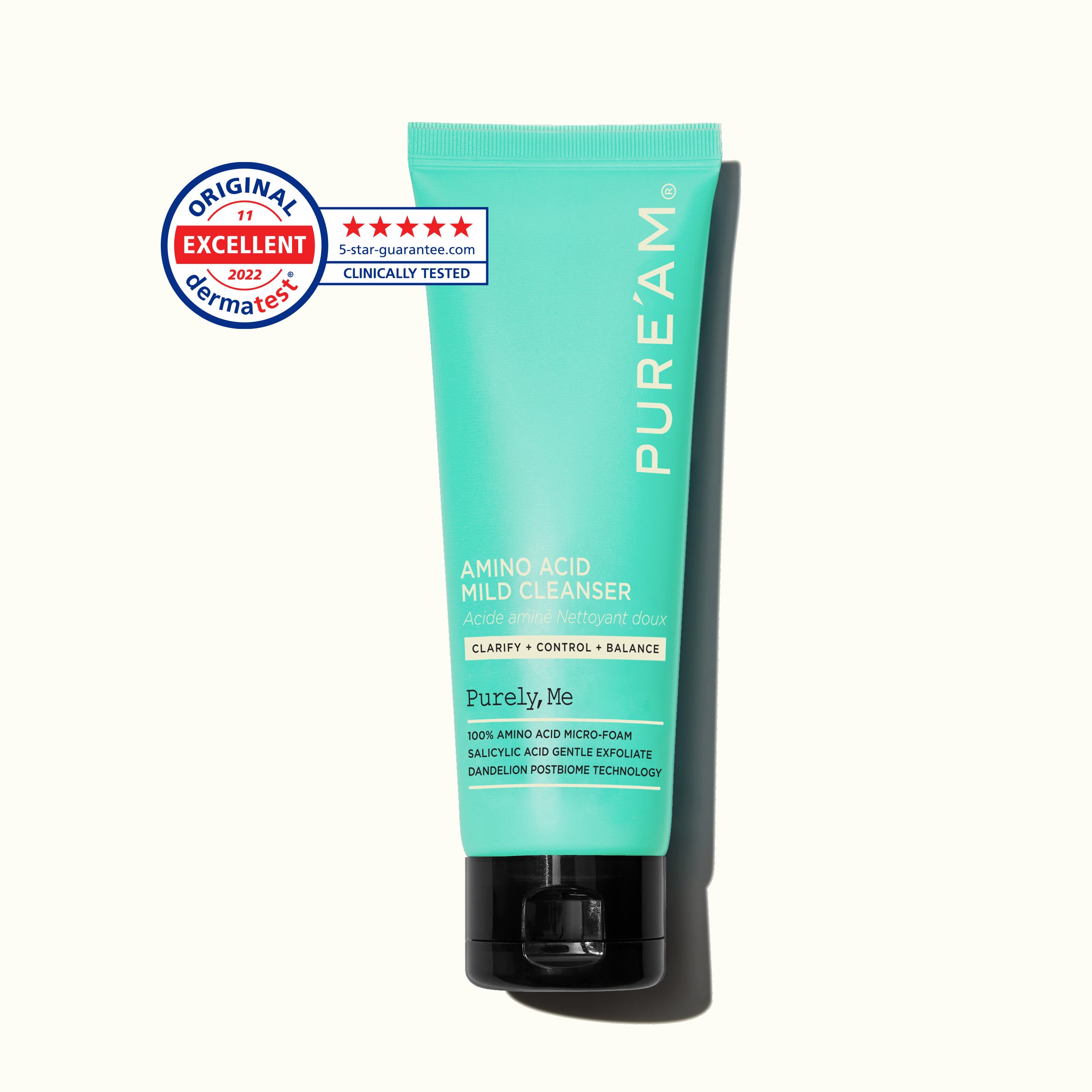
Our AMINO ACID MILD CLEANSER (120ml, $23) covers this step. One thing we want to be upfront about: its official product page lists salicylic acid in the formula. If you're taking a break from acids or on a prescription treatment, patch test it first using the introduction order below. We compare amino acid cleansers in more depth in Amino Acid Cleansers: What Actually Makes Them Gentle.
Do You Need a Toner?
A toner is a step you can skip depending on how your skin behaves. Its value is in laying down a layer of moisture before the skin fully dries after cleansing.
The AAD recommends applying moisturizer while skin is still damp (AAD). If you skip toner, patting your face dry just slightly and applying cream while some moisture remains follows the same principle.
If you do use a toner, check the alcohol content first. WebMD notes that alcohol-containing toners and astringents can dry out skin (WebMD).
Our pH BALANCE CALMING TONER (250ml, $29) handles post-cleanse hydration and calming. We cover how toner, barrier cream, and face oil fit together by routine in Toner, Barrier Cream, or Face Oil: What Order Is Right?
Serum or Oil: Pick One, and the Position Differs
Serum goes before cream. Oil goes after cream. Which one you pick depends on what your skin is dealing with right now.
Serum fits when: your skin feels dry underneath but you're also watching for breakouts. Our BLEMISH THIRST RESCUE SERUM is a lightweight, milky-to-water formula built around an ACtoin Complex of ectoin, niacinamide, and phytosqualane, plus five ceramides. The listed usage is 2-3 drops after cleansing and toning, followed by AUTHENTIC BARRIER CREAM BALM. It's designed for a light, comfortable feel, not as an acne treatment. We break down how a salicylic-acid cleanser and this serum split roles when paired in Cleanser + Serum Pairing for Sensitive Skin: 5 Ranked.
Oil fits when: cream alone leaves your skin feeling dry again quickly and you want a glossier finish. Our SUPER GLOW DEW (30ml, $39) is meant to go after your moisturizer, as the last step in the routine, and it's built for oil-moisture balance and finish.
If neither problem applies to you, skip both. Cleanser, toner, and cream is a complete routine on its own.
Step 4 (Core): Cream, Right After Cleansing While Skin Is Still Damp
The AAD said in a 2023 release that moisturizing right after cleansing helps trap water already in the skin, and that ointments and creams tend to work better and irritate less than lotions (AAD, 2023). That's part of why cream is one of the two steps we treat as core for dry, reactive skin.
Our AUTHENTIC BARRIER CREAM BALM ($37) handles moisturizing and barrier support. The name includes "balm," but the first ingredient on its full ingredient list is water, so if you were picturing an anhydrous, oil-only balm, adjust that expectation. The AAD recommends taking time to gently massage moisturizer into the skin rather than rushing the application (AAD).
If fragrance is a concern for you, get into the habit of checking for a "fragrance free" label. The AAD recommends choosing gentle, fragrance-free products (AAD, 2023).
The Last Step in the Morning: Sunscreen
The AAD recommends SPF 30 or higher, noting that SPF 30 filters about 97% of UVB rays (AAD). If your skin is reactive, the filter type is worth checking too. A 2012 study in the Journal of the American Academy of Dermatology reported that titanium dioxide and zinc oxide provide balanced UVA/UVB protection and tend to be very gentle on skin, while other ingredients such as fragrance, dyes, and preservatives can cause discomfort for sensitive skin (JAAD, 2012).
We don't carry a sunscreen in our lineup, so this step comes from another brand. For a way to remove sunscreen without over-cleansing, see Do You Need to Double Cleanse to Remove Sunscreen?
Switching Routines: Add One Product at a Time
Changing your whole routine at once makes it hard to tell which product doesn't agree with your skin. The AAD recommends testing a new product on a coin-sized patch of skin, such as the inner arm or inner elbow, twice a day for 7-10 days. For rinse-off products like cleansers, leave it on for 5 minutes or as directed, then rinse. If there's no redness, itching, or swelling, you can start using it (AAD).
Here's the order we'd suggest, applying that standard:
- Start with the cleanser. It touches your skin first every day, so it's worth checking first.
- Switch the cream next. If your current cream doesn't sting and works well for you, this step can stay the same.
- Decide on toner. If your skin still feels tight after cleansing, consider adding it.
- Add a serum or oil only if you need one. Serum for trouble spots, oil for a dry finish, never both at once.
Patch-testing each product for 7-10 days means swapping all four products takes roughly 4-6 weeks. That's slower than most people expect, but it means that if a reaction shows up, you'll know exactly which product caused it. The AAD also notes that ingredients like retinol and glycolic acid can be especially irritating for sensitive skin, so if you're using either, it's safer to hold off on introducing them while you're transitioning to a new routine (AAD).
AMINO ACID MILD CLEANSER
23 USD
Shop now
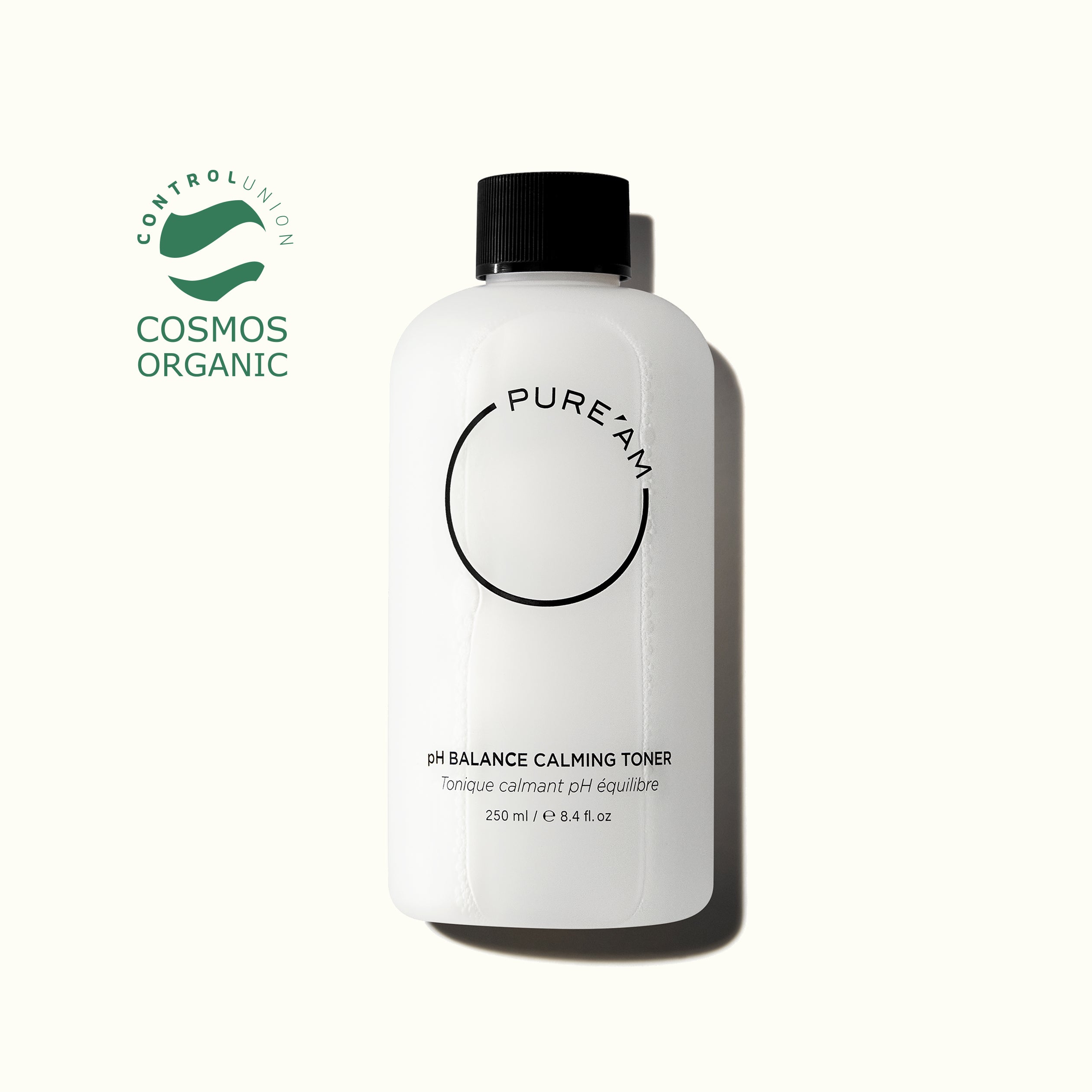
pH BALANCE CALMING TONER
29 USD
Shop now
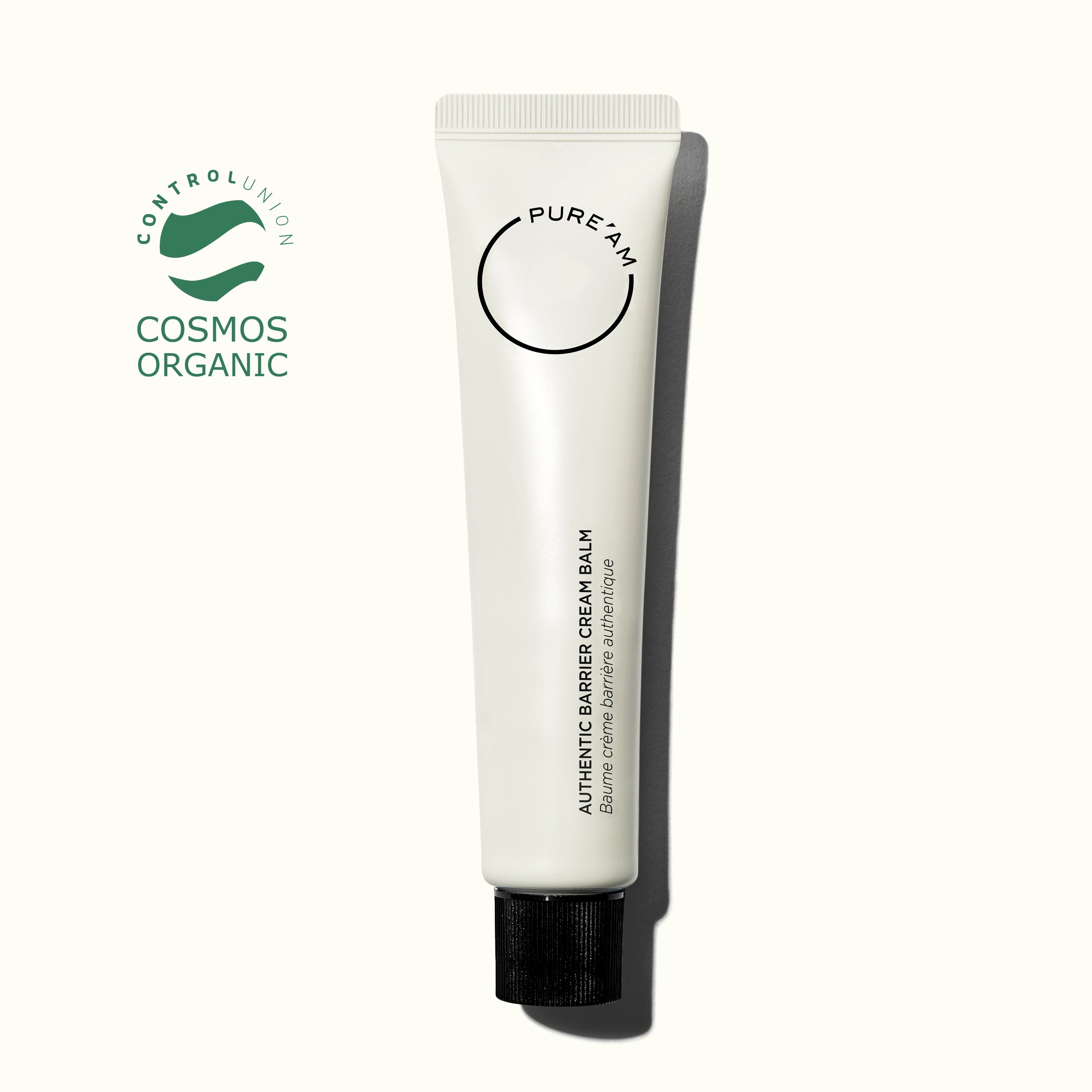
AUTHENTIC BARRIER CREAM BALM
37 USD
Shop now
FAQ
Is there research showing a 4-step routine works better than a 10-step one?
We haven't found a clinical study that directly compares step count on its own. Our reason for recommending four steps is manageability. Fewer new ingredients at once makes patch testing easier, and it narrows down the cause faster if a reaction happens.
Do "unscented" and "fragrance free" mean the same thing?
These are two separate claims. The AAD notes that "unscented" can mean a fragrance was used to mask another scent, so fragrance may still be present and still capable of causing irritation. The AAD recommends choosing products labeled "fragrance free" instead (AAD). Products marketed around plant-derived ingredients can still contain fragrance-related components, so check the full ingredient list too (AAD).
Should I change my routine in winter?
The AAD explains that as temperature and humidity drop, skin has a harder time holding onto moisture, and recommends switching to a cream or ointment instead of a lotion and washing with warm (not hot) water (AAD, 2023). Rather than adding more steps, try adjusting one thing, like using more cream or swapping a serum for an oil.
What if my skin stays dry even with consistent home care?
The same AAD release advises seeing a dermatologist if home care isn't improving things, noting that inflammation or severe dryness often needs a prescription treatment (AAD, 2023). If you're dealing with cracking, oozing, or intense itching, see a dermatologist before changing your skincare routine further.
One Thing to Try Tonight
Check the back of your current cleanser bottle for its full ingredient list, and pay attention to how tight your skin feels afterward. If a swap seems worth trying, start a patch test with AMINO ACID MILD CLEANSER, and get in the habit of applying AUTHENTIC BARRIER CREAM BALM while your skin is still damp from washing. One small change in order can be the starting point for more comfortable skin.