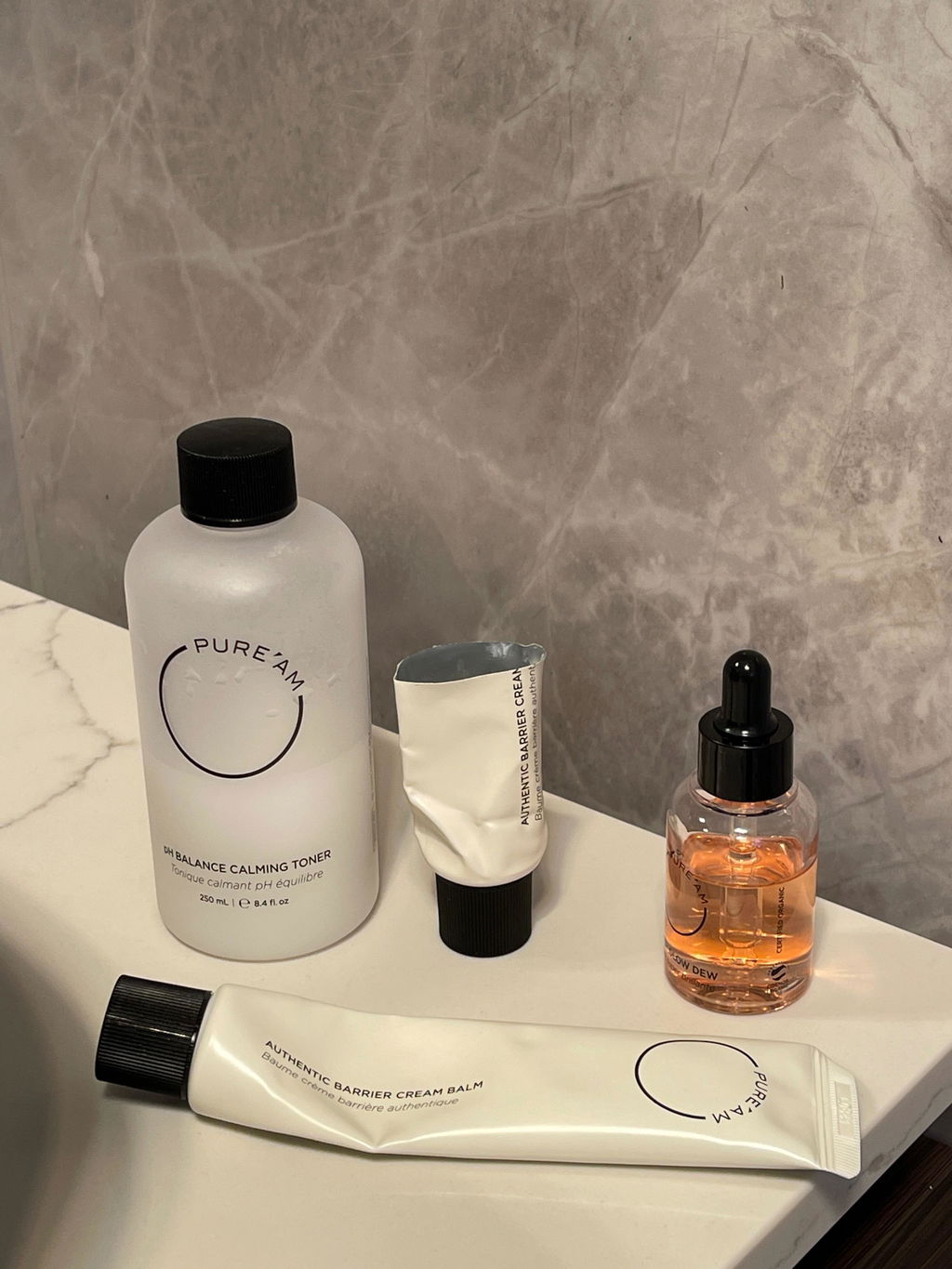
If you're trying to replace CeraVe Moisturizing Cream with something more organic, the badge on the jar matters less than three formulation checks: how much ceramide-cholesterol-fatty acid lipid trio it actually contains, whether it starts from water and humectants instead of petrolatum and dimethicone, and whether fragrance or essential oils are truly absent. We ran three ingredient-disclosed products and one bare plant-oil balm through those checks, and no organic alternative fully cleared all three. Our own AUTHENTIC BARRIER CREAM BALM met two criteria outright, scored partial credit on lipid composition, and came out on top.
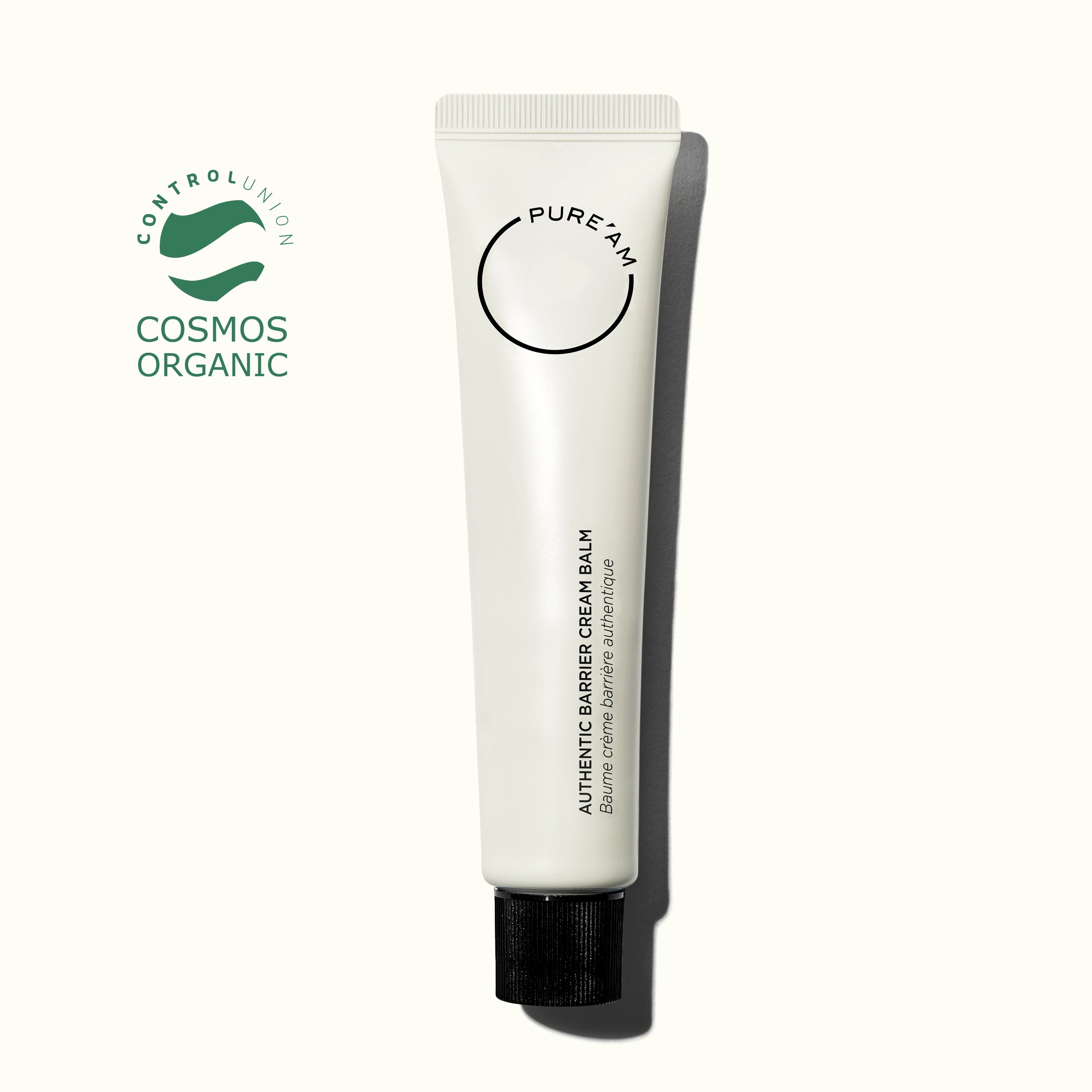
We make this cream, so we're naming that upfront. We scored our own product the same way we scored the others, including the boxes it didn't check.
Why CeraVe Is the Reference Point
CeraVe's own product page describes Moisturizing Cream as built on three essential ceramides, hyaluronic acid, petrolatum, and MVE technology, which releases ingredients over time. The page also states the formula is fragrance-free and carries the National Eczema Association's Seal of Acceptance (CeraVe). The published ingredient list for the UK version includes Ceramide NP, AP and EOP alongside cholesterol and phytosphingosine, plus petrolatum and dimethicone (CeraVe UK).
People looking for an organic swap usually want the petrolatum and dimethicone gone. The catch is that both ingredients are doing a specific job in the formula: slowing water loss from the skin surface. Removing them means something else has to take over that role, while the replacement still has to match CeraVe's lipid mix and fragrance-free status.
The Three Criteria We Scored On
Criterion 1: Does the formula have all three lipids?
By weight, the outermost layer of skin (the stratum corneum) holds roughly 50% ceramides, 25% cholesterol and 15% free fatty acids, close to a 1:1:1 molar ratio (PMC review). Man Mao-Qiang, Kenneth R. Feingold, Carl R. Thornfeldt and Peter M. Elias, publishing in the Journal of Investigative Dermatology, reported that applying only one or two of these three lipids to barrier-disrupted skin actually delayed recovery, while a mixture at equal molar ratios restored the barrier normally (Journal of Investigative Dermatology). A follow-up study from the same research group found that raising one of the four components to a 3:1:1:1 ratio sped up recovery further (Elizabeth M. Zettersten, Ruby Ghadially, Kenneth R. Feingold, Debra Crumrine, Peter M. Elias, Journal of the American Academy of Dermatology).
Those results came from refined lipid mixtures tested on experimentally disrupted skin, in mice and in young adults, and finished retail creams don't publish their lipid ratios on the ingredient list. So instead of guessing at proportions, we checked whether ceramide, cholesterol and fatty acid ingredients each appeared on the label at all. We counted plant oils separately from free fatty acids like stearic acid, since oils bind fatty acids to glycerin rather than listing them free.
Criterion 2: Does it start with water, not petrolatum?
We checked whether the ingredient list opens with water, followed by humectants like glycerin or hyaluronic acid near the front, and whether it slows water loss using plant oils, butters and fatty alcohols instead of petrolatum or dimethicone. This criterion isn't a safety judgment. It reflects the reason most people leave CeraVe in the first place.
A water-free, single-oil balm scores low here for a documented reason. A review of pediatric skin research notes that single oils like sunflower seed oil have an unbalanced lipid profile and, used undiluted, may slow barrier maturation (PMC). That research was conducted in newborn and pediatric skin, so it doesn't transfer directly to adult facial skin, but the general point, that oil alone struggles to substitute for a full cream, is worth carrying over.
Criterion 3: Is it actually free of fragrance and essential oils?
A "fragrance-free" label alone isn't enough. The term "fragrance" isn't strictly regulated in every market, so a brand can drop synthetic fragrance, keep an essential oil, and still call the product fragrance-free (Skinsort). So we looked directly at each ingredient list for Fragrance (Parfum), any plant name followed by "Oil," and fragrance components like limonene or linalool.
We didn't factor organic-ingredient labeling into the ranking itself; it appears in the table as reference information only, because certification can apply to the whole finished product or to a handful of individual ingredients, and that varies by product.
The Scorecard
● Meets · ◐ Partial · ○ Does not meet
| Rank | Product | Criterion 1: Lipid Mix | Criterion 2: Water-First Base | Criterion 3: Fragrance-Free | Organic Labeling |
|---|---|---|---|---|---|
| Reference | CeraVe Moisturizing Cream | ◐ Ceramide NP, AP, EOP, cholesterol, phytosphingosine; no free fatty acid listed (broadest of the group) | ○ Contains petrolatum and dimethicone | ● Fragrance-free | Not applicable |
| 1 | PURE'AM AUTHENTIC BARRIER CREAM BALM | ◐ Ceramide NP and phytosphingosine, plant oils and butters; no cholesterol | ● Opens with water, silicone-free | ● Fragrance-free, no essential oil listed | Select ingredients marked organic |
| 2 | Weleda Skin Food | ◐ Cholesterol (US label), lanolin, plant oils; no ceramide | ● Opens with water, no petrolatum or dimethicone (contains alcohol) | ○ Essential-oil-derived fragrance, limonene, linalool | NATRUE natural certification (per retailer) |
| 3 | First Aid Beauty Ultra Repair Cream | ◐ Ceramide NP, stearic acid; no cholesterol | ○ Contains dimethicone | ○ Eucalyptus leaf oil listed | Not positioned as organic |
| 4 | Plant-oil/butter-only balm (category) | ○ Single-oil dominant | ○ No water or humectant | Varies by product | Varies by product |
1st Place: PURE'AM AUTHENTIC BARRIER CREAM BALM
Our published ingredient list opens with Water, Yuzu Water, Glycerin and Shea Butter, followed by squalane, jojoba seed oil, sunflower seed oil, Ceramide NP, phytosphingosine, betaine, hyaluronic acid derivatives, and polyglutamic acid (INCIDecoder). Our own product page lists it as fragrance-free and silicone-free. Without petrolatum or dimethicone, plant butters, oils and fatty alcohols split the job of slowing water loss, which is why it met criteria 2 and 3.
Here's where it falls short, scored the same way:
- The lipid mix is narrower than CeraVe's. We use one ceramide type (Ceramide NP), plus phytosphingosine, a ceramide precursor. There's no cholesterol on the ingredient list, so criterion 1 is a partial pass.
- It contains several plant extracts. Rosemary leaf, sweet wormwood, neem leaf, centella asiatica extract and yuzu water are all in the formula. If you've reacted to any of these before, patch-test on your jawline first.
- It contains sweet almond oil. If you have a tree nut allergy, check before use.
- The organic marking applies at the ingredient level. An asterisk in an ingredient list marks individual ingredients, not a whole-product organic certification.
We recommend applying it after cleansing and toning, morning and evening, in a thin layer on face and neck. If you're layering a face oil, our SUPER GLOW DEW is designed to go on after the cream balm, with sunscreen on top in the morning. We cover that pairing in more detail in Face Oil After Barrier Cream: What to Check First.
AUTHENTIC BARRIER CREAM BALM
37 USD
Shop now
BLEMISH THIRST RESCUE SERUM
35.00 USD
Shop now
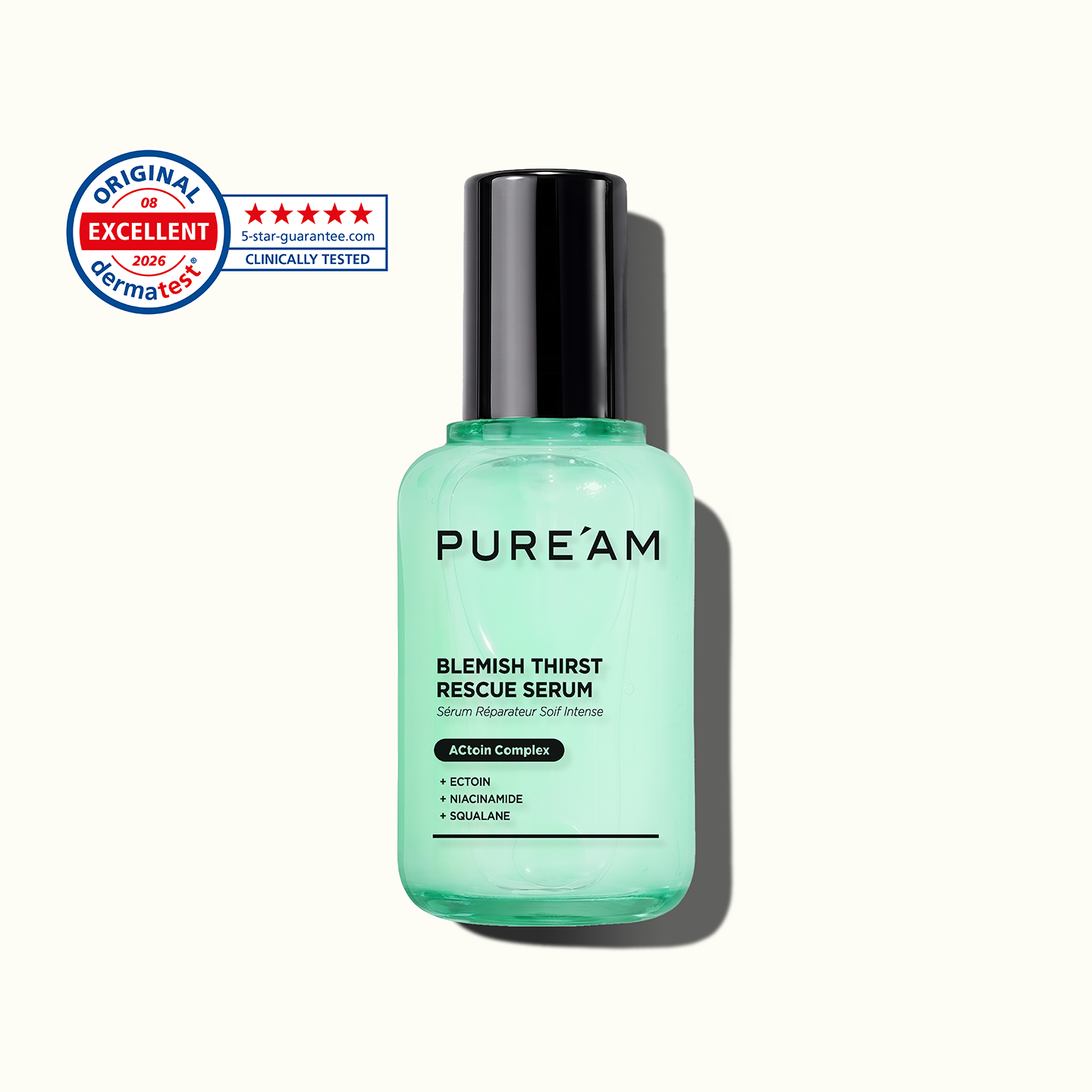
If you want a broader range of ceramide types, our BLEMISH THIRST RESCUE SERUM can go on before the cream balm. It's a lightweight, milky-to-water formula built around an ACtoin Complex (ectoin, niacinamide, phyto-squalane) plus five ceramide types, and the official use order is cleanse, tone, 2-3 drops of serum, then the cream balm, per its product page. Layering the two doesn't establish that the lipid ratio is corrected or that the effects are additive. Think of it as one option for widening your ceramide range, not a guaranteed boost.
2nd Place: Weleda Skin Food
The ingredient list posted by a US retailer shows water, sunflower seed oil, lanolin, sweet almond oil, alcohol and beeswax near the top, with cholesterol further down, and limonene, linalool, geraniol, citral and coumarin listed as "derived from natural essential oils" (Dermstore). A separate retailer states Weleda's personal care line carries NATRUE natural certification, though that retailer's own ingredient listing for the same product doesn't show cholesterol (VictoriaHealth). Formulas can vary by market or production batch, so check the ingredient list on the box you actually buy.
It meets criterion 2, since it's water-first with no petrolatum or dimethicone. It scores partial on criterion 1 (cholesterol present, no ceramide), and fails criterion 3 because of the essential-oil-derived fragrance components. A natural certification and fragrance ingredients coexisting in the same product is a useful reminder that a badge and sensitive-skin suitability are two separate questions.
3rd Place: First Aid Beauty Ultra Repair Cream
Per the brand's own product page, the active ingredient is colloidal oatmeal, and the ingredient list includes water, stearic acid, glycerin, dimethicone, squalane, hydrogenated shea butter, Ceramide NP, and eucalyptus leaf oil (First Aid Beauty). Ceramide and a free fatty acid (stearic acid) are both present, but there's no cholesterol, so criterion 1 is a partial pass.
Dimethicone knocks out criterion 2, and eucalyptus leaf oil, an essential oil, knocks out criterion 3. It isn't marketed as an organic product either. It shows up often on "clean beauty" roundups, but if dimethicone is your reason for leaving CeraVe, you'll find the same ingredient here.
4th Place: Plant-Oil-Only Balms
This entry scores a product category rather than one specific product. A water-free balm made from shea butter or plant oils alone looks the most "organic" by ingredient name, but it structurally struggles to clear two of the three criteria. Without water or a humectant, it fails criterion 2, and a single dominant oil tends to have a lopsided lipid profile, as the pediatric research above notes, so criterion 1 is weak too. Fragrance and essential-oil content varies by product and needs a separate check.
When Sticking with CeraVe Makes More Sense
If petrolatum and dimethicone don't bother you and your current cream feels comfortable, we didn't find an organic alternative in this comparison that matches CeraVe's three-ceramide-plus-cholesterol lipid mix on that single criterion. Switching is less of a hassle for your skin when you have a clear reason to do it.
How to Score Your Own Cream's Label
- Read the first five ingredients. Check whether water and a humectant like glycerin appear near the top.
- Look for Petrolatum and Dimethicone. If those are the ingredients you're trying to avoid, this step filters them out fast.
- Look for Ceramide, Cholesterol, and a fatty acid (Stearic Acid and similar). Count how many of the three actually appear.
- Look for Fragrance (Parfum), plant name + "Oil," and Limonene or Linalool. Check these independent of any "unscented" claim on the front label.
- Check whether the organic marking is at the ingredient or product level. Look for a certifying body and stated scope.
FAQ
Is petrolatum a bad ingredient for skin?
The scoring in this article reflects the reasons people commonly give for leaving CeraVe, not a safety assessment of petrolatum. CeraVe's cream contains petrolatum and is still fragrance-free and holds the National Eczema Association's Seal of Acceptance (CeraVe). Whether to use it comes down to preference and how it feels on your skin.
I switched creams and my skin still feels tight after cleansing. What now?
Check the step before your moisturizer. If you're scrubbing to remove sunscreen, start with the routine in Do You Need to Double Cleanse to Remove Sunscreen?
How should I test a new cream?
Change one product at a time, patch-test on your jawline or behind your ear for a few days, then expand to your full face. Changing several products at once makes it hard to trace a reaction back to its cause.
Can I manage ongoing redness or itching with a cream alone?
If you have persistent redness, weeping, or significant itching, see a dermatologist rather than trying to solve it by switching moisturizers. This comparison is meant for everyday dry, sensitive-skin product selection, not for diagnosing or treating a skin condition.
Next Step
Pull up the ingredient list for the cream you're using now and run it through the five checks above. If you're prioritizing a water-first base and a fragrance-free formula in a lightweight balm texture, the AUTHENTIC BARRIER CREAM BALM product page has the full ingredient list and usage instructions.