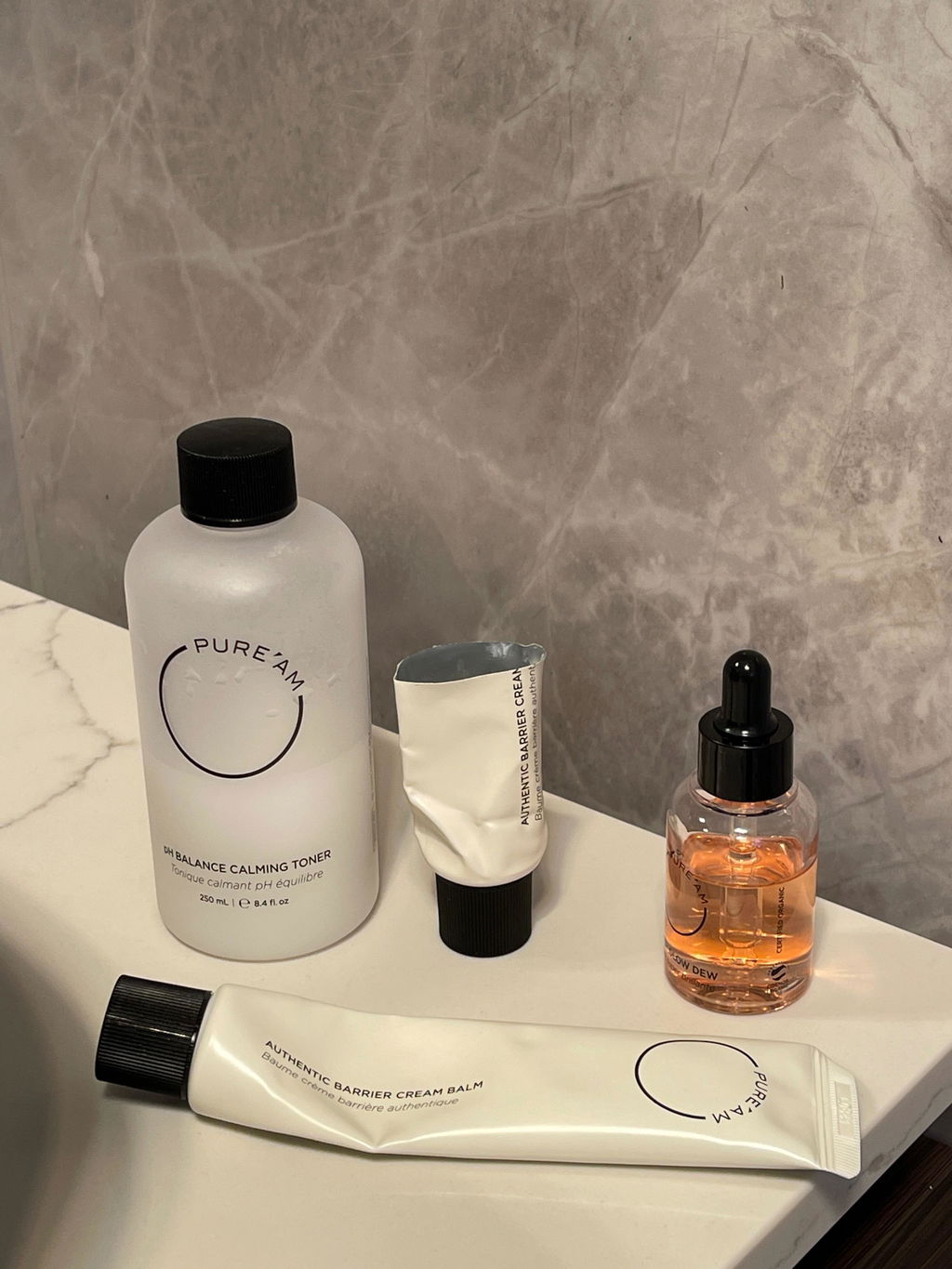
TL;DR: For dry, reactive skin, the order of your routine matters as much as the products in it: a mild cleanser that doesn't push pH upward, a toner that brings pH back down, a light oil serum applied while skin is still damp, and a barrier cream balm to seal the moisture in. Skip a step or reverse the order and the next product can't do the job it was formulated for. We built our four-step routine, from AMINO ACID MILD CLEANSER through AUTHENTIC BARRIER CREAM BALM, around that sequence.
Most routine guides read like shopping lists: a good cleanser, a good toner, a good serum, a good cream. But healthy, slightly acidic skin sits at a pH between 4 and 6, and Thayers notes that products with high pH levels can strip natural oils and leave skin more prone to irritation. If the first step in your routine pushes that pH the wrong way, every step after it is compensating for a problem the cleanser just created.
We designed our four-step routine, cleanser to toner to serum to barrier cream, so each product picks up exactly where the last one left off. This is the order we use, and the reasoning behind each handoff.
Why Sequence Matters More Than Product Count
Cleansing is not a neutral event for skin. It temporarily disrupts the acid mantle, the thin acidic film that helps skin hold moisture and resist harmful bacteria. Thayers explains that after cleansing, skin pH naturally rises and becomes more alkaline before it settles back down on its own. For resilient skin, that window closes quickly. For dry, reactive skin, it can linger long enough to affect how well everything applied afterward actually works.
Mesoderm RX frames the toner step as the corrective move that follows cleansing, not a redundant extra: the pH-balanced cleanser prevents stripping, and the toner rebuilds the skin's defenses after contact with alkaline water. Treating the four steps as an assembly line, rather than four separate purchases, is the difference between a routine that compounds and one that just adds products.
Step 1: A Cleanser That Doesn't Reset Your Skin's pH Upward
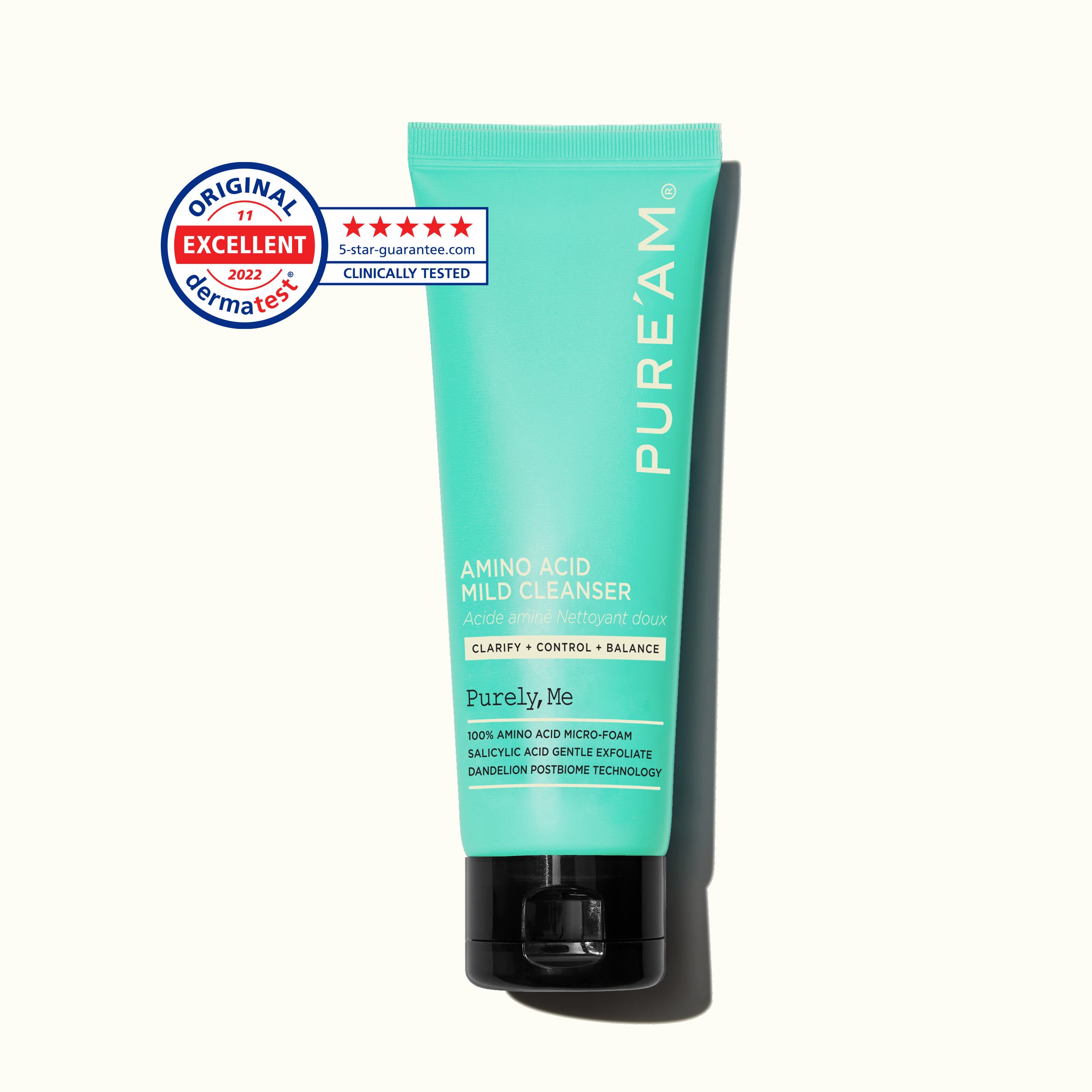
Many foaming cleansers and bar soaps are formulated with sulfate surfactants that clean effectively but push skin toward the alkaline end of the scale. Our AMINO ACID MILD CLEANSER uses amino acid-based surfactants instead, chosen because that surfactant class is gentler on an already compromised barrier.
AMINO ACID MILD CLEANSER
23 USD
Shop now
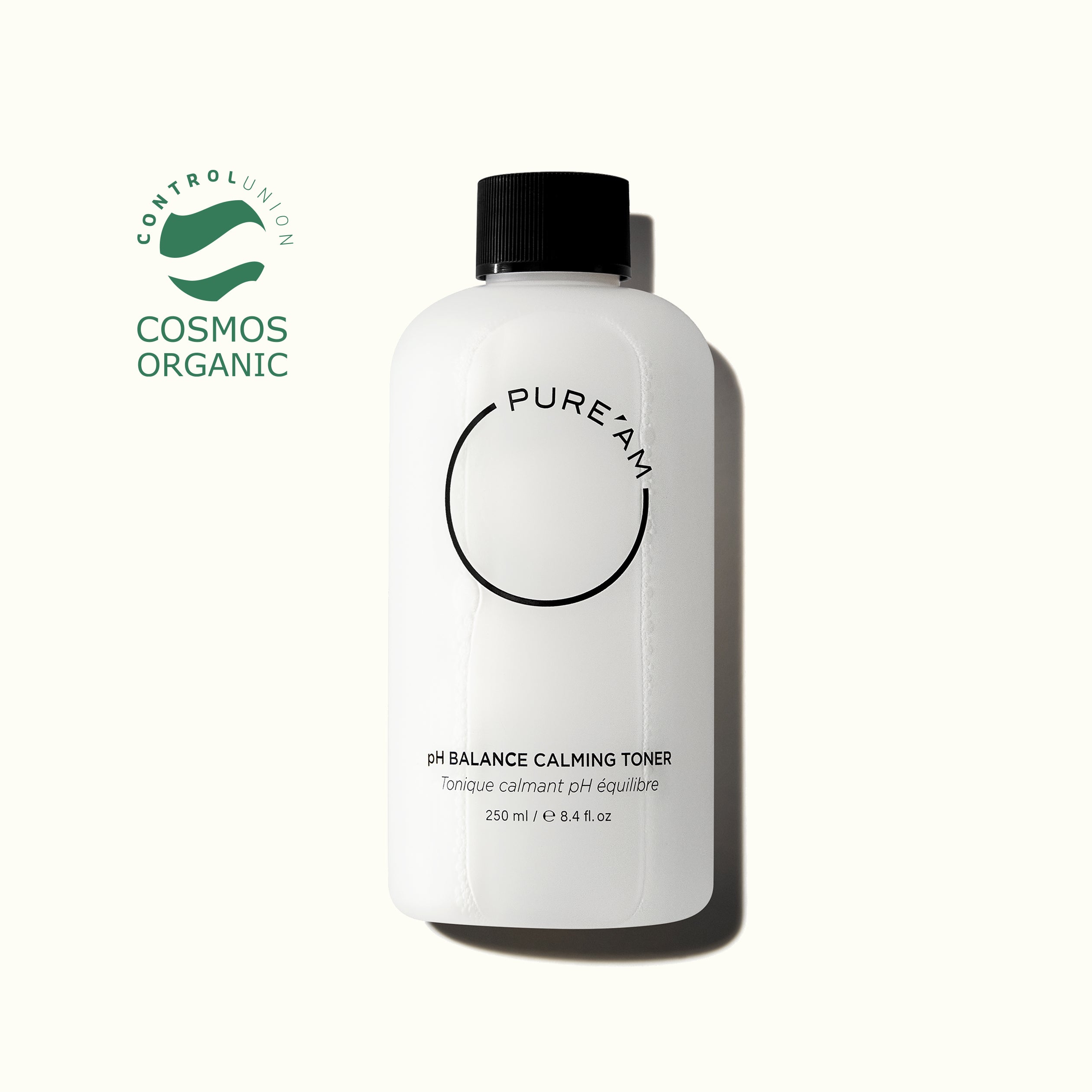
pH BALANCE CALMING TONER
29 USD
Shop now
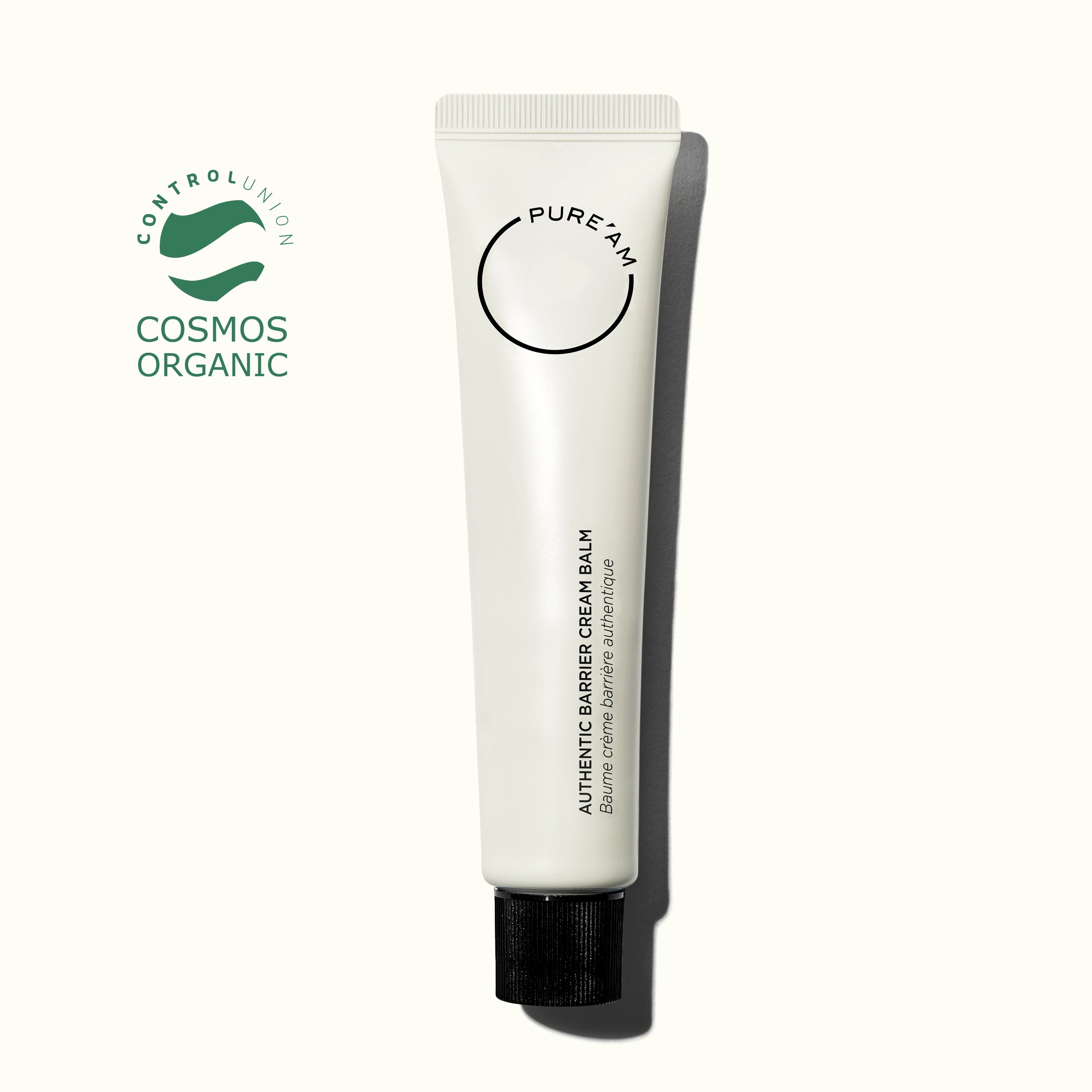
AUTHENTIC BARRIER CREAM BALM
37 USD
Shop now
If your skin feels tight right after washing, that tightness is not simply dryness. It is often a sign that the barrier has temporarily lost function, which is also why layering strong actives immediately afterward tends to sting more than usual.
Step 2: A Toner That Brings pH Back Down Before You Add Anything Else
The moment right after cleansing is when skin is most vulnerable, but it's also when it starts preparing to absorb whatever comes next. Thayers points out that toner primes skin for serums and moisturizers by giving them a cleaner surface to lie on and absorb into, and that damp, softened skin generally takes up product better than skin left to dry out completely. Treating toner as optional skips the step that sets up everything after it.
Our pH BALANCE CALMING TONER does two jobs in one pass: triple hyaluronic acid and calming ingredients replenish moisture, while the formula nudges pH back toward the slightly acidic range the skin prefers. It is the step that undoes what cleansing temporarily disrupted, restoring the pH balance the next products depend on.
Step 3: A Lightweight Oil Serum While Skin Is Still Damp
Once toner has restored pH and left skin slightly damp, that surface is ready for something light. This is where sequencing within the routine gets specific: a heavy cream applied at this point will sit on top rather than absorb, and a lightweight serum applied afterward can end up pushed around on the surface instead of sinking in. Lighter textures go on before heavier ones, not the other way around.
SUPER GLOW DEW is a squalane-based oil serum that fits this slot, forming a flexible film that gives the barrier cream something to seal in rather than trying to compete with it for the same layer of skin.
Step 4: A Barrier Cream Balm to Seal What the Earlier Steps Built
The first three steps clean, rebalance, and hydrate. The fourth step locks that work in place. AUTHENTIC BARRIER CREAM BALM is formulated to slow moisture loss after the earlier layers have done their job, and applying a thick layer of cream without those earlier steps will not reproduce the same result, because there is little moisture underneath left for the cream to trap.
This is also why we don't recommend jumping straight from a random cleanser to a rich cream and skipping the middle: the cream can only seal in what is already there.
Introducing a New Step Without Overwhelming Reactive Skin
Reactive skin responds better to one variable at a time. Rather than swapping four products at once, bring in one new step, use it for several days, and only then add the next. Patch-test anything new on the inner arm or jawline for 24 to 48 hours before applying it to the full face, since an "organic" or "natural" label on a product doesn't guarantee your skin won't react to it; checking the ingredient list and actually testing it on your own skin are two separate steps.
A practical order to introduce the routine:
- Cleanse once or twice daily with lukewarm water using AMINO ACID MILD CLEANSER.
- Pat in pH BALANCE CALMING TONER with hands or a cotton pad.
- Smooth a thin layer of SUPER GLOW DEW over damp skin.
- Finish with AUTHENTIC BARRIER CREAM BALM, reapplying at night if skin feels dry.
We take the same full-formula-over-hero-ingredient approach across the line, not just within this routine. Our comparison of how sensitive-skin brands explain their formulas goes into why naming one standout ingredient tells you less than seeing how a full formula is built.
FAQ
Can I change the order of this routine?
Serum goes on before cream because the lighter texture needs to absorb first, and the heavier layer needs to sit on top to seal it in. Reverse that order and the cream forms a film that the serum then has to push through, which usually means it sits on the surface instead of absorbing.
Should I introduce all four steps at once?
We don't recommend it. Bringing in one new product at a time, with a patch test before each, makes it possible to tell which step is responsible if your skin reacts. Changing several variables at once makes that much harder to trace.
What happens if I skip the toner and go straight to cream?
Skipping toner means the cream goes on while pH is still elevated from cleansing. Thayers ties that slightly acidic pH directly to how well the barrier holds onto moisture, so skipping the step that restores it means the cream is sealing in less than it could.
Is this routine suitable for acne-prone skin?
This sequence was built for dry, easily irritated skin rather than acne as the primary concern. If breakouts are the main issue, an active ingredient like salicylic acid is often needed alongside this structure, and where to add it depends on how your skin responds, not on this routine's base order.
Where to Start
If your current routine is a mix of brands picked up separately, start with the handoff between just two steps: AMINO ACID MILD CLEANSER and pH BALANCE CALMING TONER. Use that pair alone for a week or two and see whether the post-cleanse tightness eases before adding the serum and cream balm.