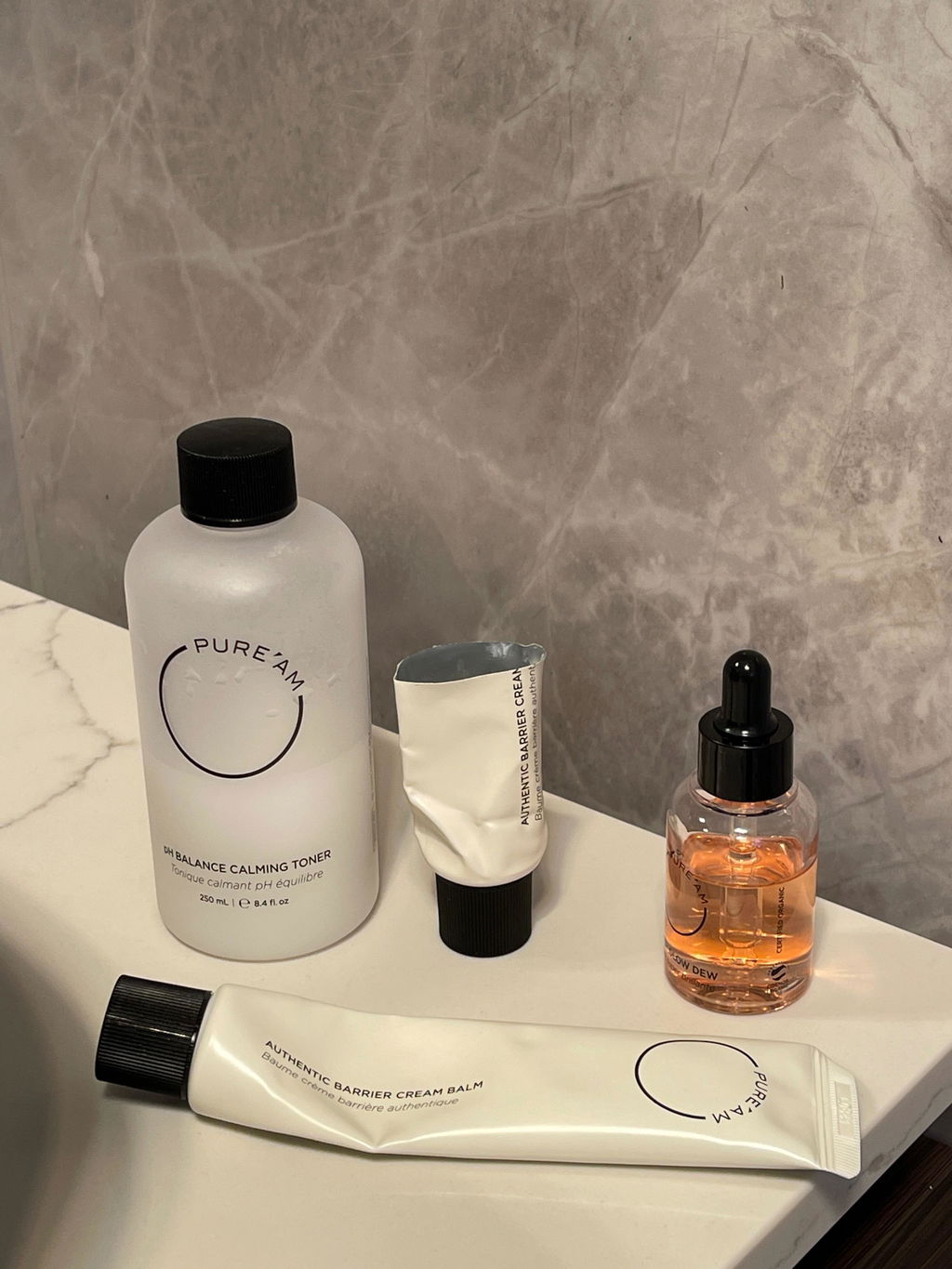
TL;DR: We built PURE'AM around four products that split a sensitive-skin routine into cleansing, light hydration, barrier moisture, and oil, so you can add or skip steps based on how your skin feels that day. The non-negotiable core is a cleanser and a barrier cream balm; the toner and face oil are optional layers for days that need more. Full order: cleanser, toner, cream balm, face oil, then sunscreen in the morning.
When skin pulls tight and flakes easily, the fix usually isn't more products. It's a routine simple enough that you can tell which step is helping and which one isn't. We're PURE'AM, a Korean skincare brand built around dry, reactive skin, and this guide walks through how our four core products work together, which steps are essential, and how to reorder them for a lighter morning or a drier night.
What We're Actually Trying to Do With This Routine
We don't lean on "organic" or "natural" labeling as a shortcut for gentle. The American Academy of Dermatology notes that natural ingredients and fragrance can still trigger reactions in sensitive skin, so the label alone tells you very little about how a formula will behave on your face (AAD — How to pick the right moisturizer for your skin). What matters more is the full ingredient list, the texture, how you use it, and how your own skin responds.
That's why our current lineup answers four narrow questions instead of promising one all-purpose fix:
- How do I finish cleansing without stripping my skin?
- Does my skin need an extra hydration step after washing?
- What weight of moisturizer actually holds up against dryness?
- Do I need an oil layer on top of cream on especially dry days?
The AAD frames everyday skin care around three basics: cleansing, moisturizing, and sun protection, and cautions that piling on many products at once can backfire by irritating skin rather than helping it (AAD — Skin care on a budget). Our routine starts from that same minimal baseline. The cleanser and cream balm form the fixed core; the toner and face oil are additions for the days your skin actually asks for them.
| Step | Product | Role | When to use it |
|---|---|---|---|
| 1 | AMINO ACID MILD CLEANSER | Removes residue and surface oil | Every wash, the fixed starting point |
| 2 | pH BALANCE CALMING TONER | Adds a light hydration layer after cleansing | When skin feels tight post-wash |
| 3 | AUTHENTIC BARRIER CREAM BALM | Anchors the moisture step | Every routine, the fixed core |
| 4 | SUPER GLOW DEW | Adds oil-based moisture and glow on top of cream | When cream alone leaves skin dry |
The full sequence, per our own usage instructions, is cleanser, toner, cream balm, then face oil. In the morning, sunscreen goes on last.
How Each Product Fits Into the Routine
1. AMINO ACID MILD CLEANSER: A Wash That Doesn't Overdo the First Step
AMINO ACID MILD CLEANSER is a creamy, micro-foaming formula built on amino acid-based surfactants. Its listed ingredients include Sodium Cocoyl Glycinate, Sodium Cocoyl Glutamate, Sodium Methyl Cocoyl Taurate, Sodium Cocoyl Apple Amino Acids, and salicylic acid.
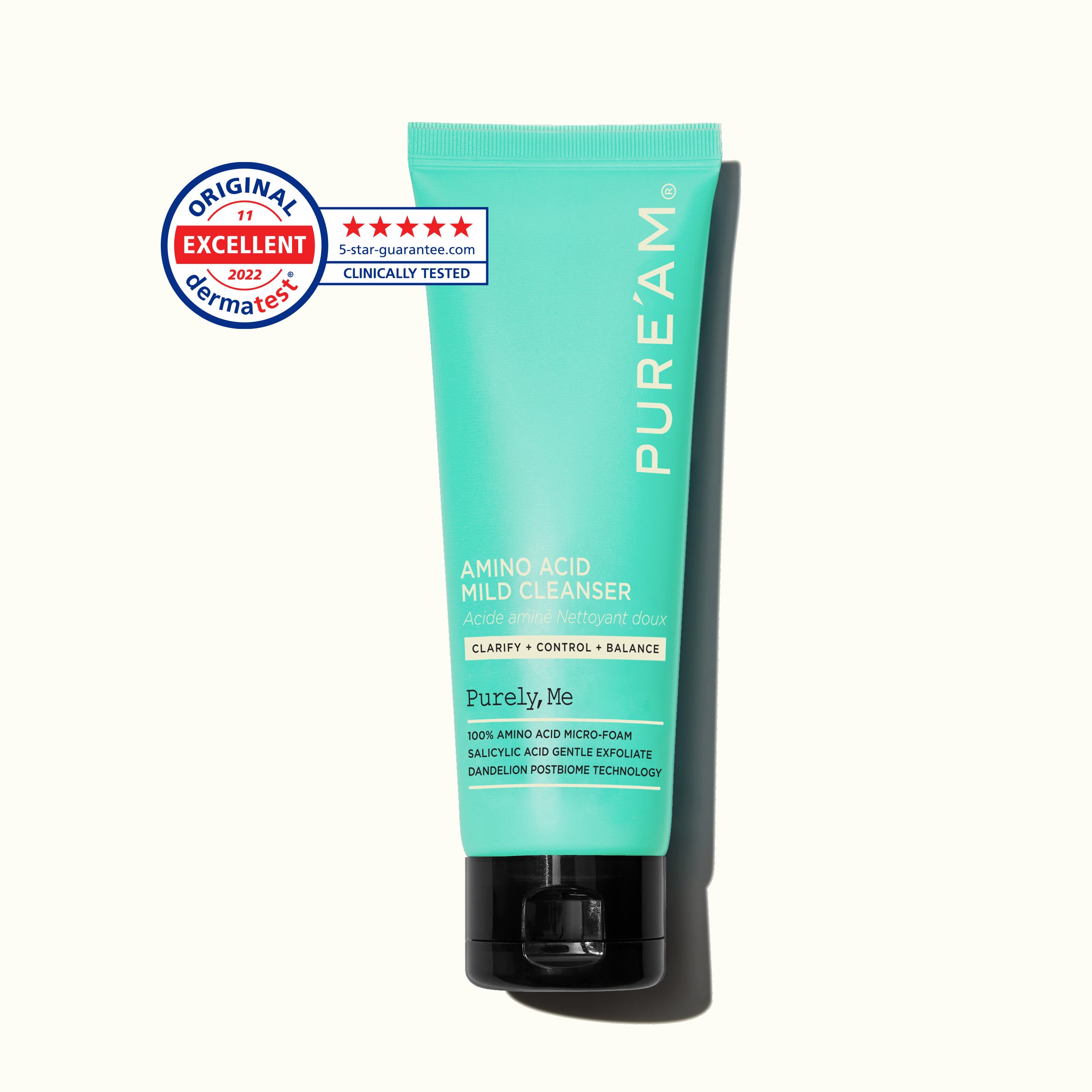
Our directions call for working a small amount into a lather with water, massaging gently over the face and neck, then rinsing with lukewarm water. That lines up with general dermatology guidance: apply a gentle cleanser with fingertips, avoid scrubbing, and rinse with lukewarm rather than hot water (AAD — Face washing 101).
"Mild" in the name doesn't mean it's guaranteed to suit every face the same way. This formula includes salicylic acid and botanical extracts alongside the amino acid surfactants. If your skin is very dry or has reacted to exfoliating acids before, ease into how often you use it, and stop if you notice ongoing stinging or burning.
Reach for it when: you want to avoid that overly squeaky, stripped feeling after washing, or you want a foaming first step in your routine.
2. pH BALANCE CALMING TONER: Only on the Days You Need Extra Hydration
pH BALANCE CALMING TONER has a milky consistency rather than the watery texture typical of many toners. Its listed ingredients include glycerin, Ceramide NP, Sodium Hyaluronate, Hydrolyzed Hyaluronic Acid, Hyaluronic Acid, and Centella Asiatica extract.
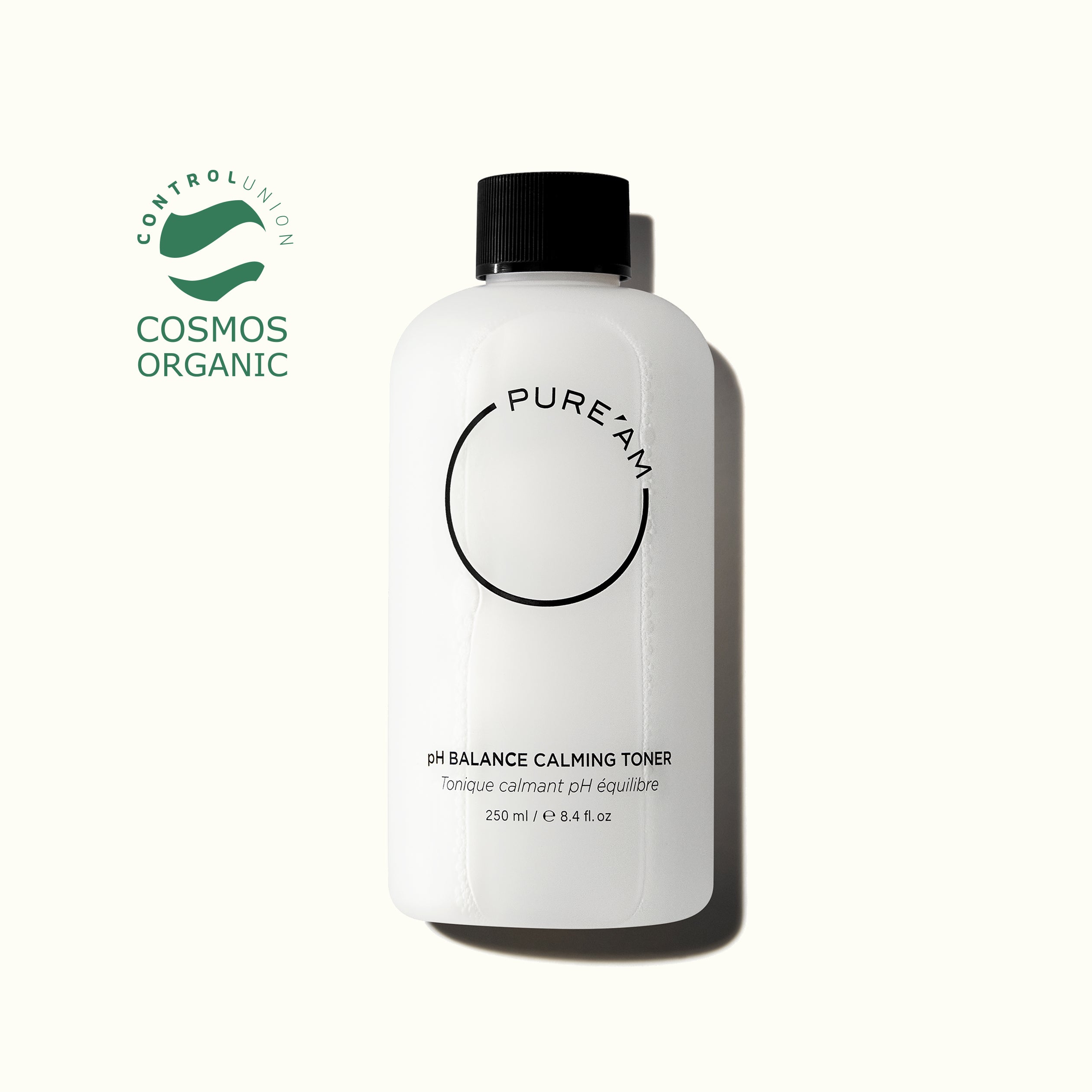
Shake the bottle before use, press a small amount into cleansed skin with your palms, then follow with the cream balm. Cleveland Clinic describes toner's typical place in a routine as right after cleansing and before a heavier moisturizer (Cleveland Clinic — What Does Toner Do for Your Face?).
This step is optional. If your skin feels comfortable going straight from cleanser to cream, skip it. If tightness shows up quickly after washing, or you want a light hydration layer before the heavier cream, add it in.
Reach for it when: you want a hydrating buffer between cleansing and cream, or you prefer a toner you press in by hand rather than sweep on with a cotton pad.
3. AUTHENTIC BARRIER CREAM BALM: The Step That Stays Even When You Cut Everything Else
AUTHENTIC BARRIER CREAM BALM is a rich, buttery moisturizer. Its listed ingredients include shea butter, glycerin, squalane, jojoba seed oil, and Ceramide NP.
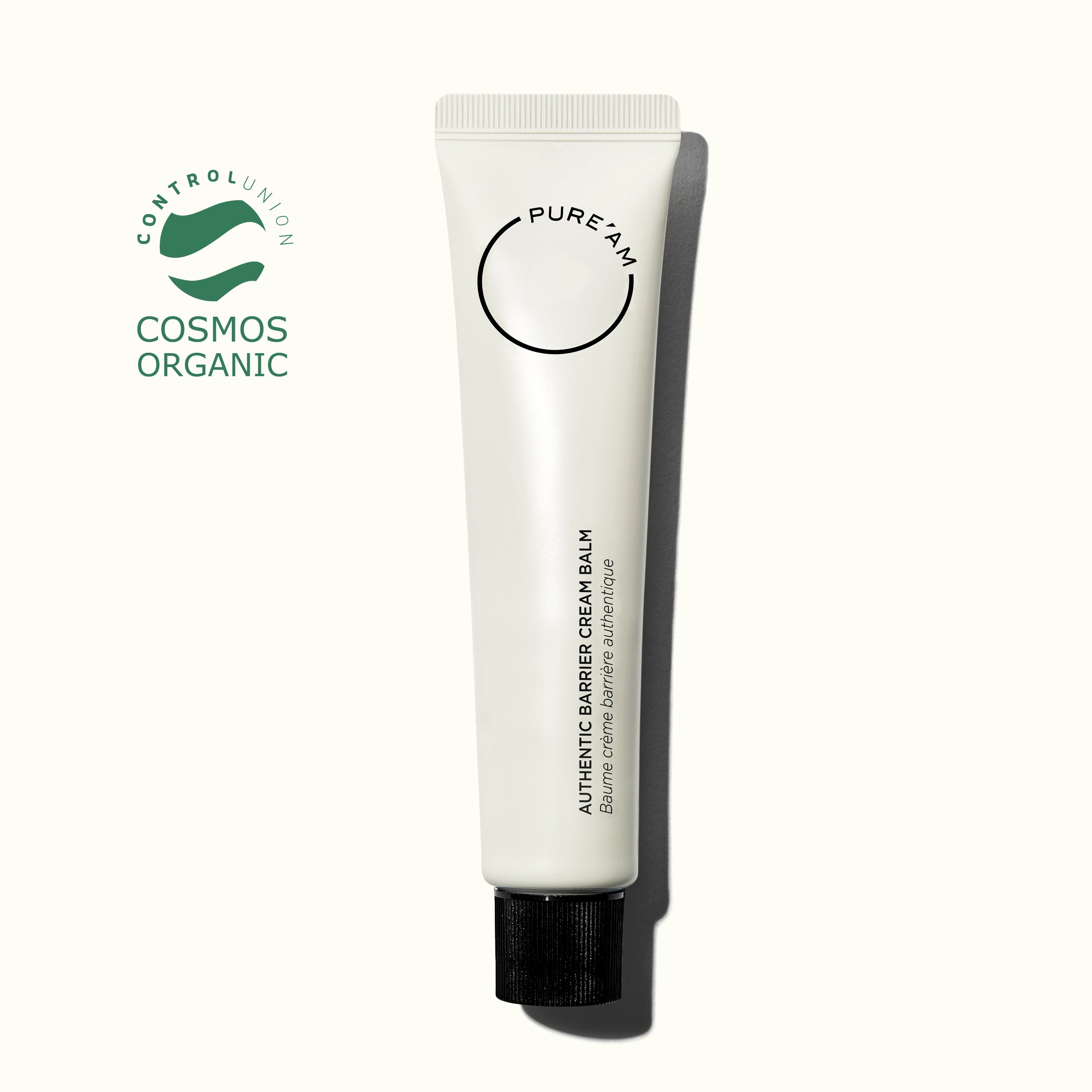
Apply a small amount evenly over cleansed skin, or skin that's already had the toner pressed in. The AAD notes that for dry skin, thicker formulas such as creams and ointments can hold moisture in better than thinner lotions (AAD — How to pick the right moisturizer for your skin).
You can go straight from cleanser to this cream balm on days you skip the toner. If you're trying to simplify without dropping the moisture step entirely, cleanser plus cream balm is the easiest two-product combination to understand. If your skin tends to look shiny or feels weighed down by a thicker texture, apply less overall and concentrate it on the drier areas instead of coating your whole face evenly.
Reach for it when: you want to cut down on steps but keep a clear moisture step, or you prefer a heavier cream texture over a lighter lotion.
4. SUPER GLOW DEW: A Few Drops on Top of Cream, Not Instead of It
SUPER GLOW DEW is a face oil built around squalane, blended with sweet almond oil, chia seed oil, sunflower seed oil, and jojoba seed oil. Our directions call for smoothing a few drops over the face and neck after moisturizer.
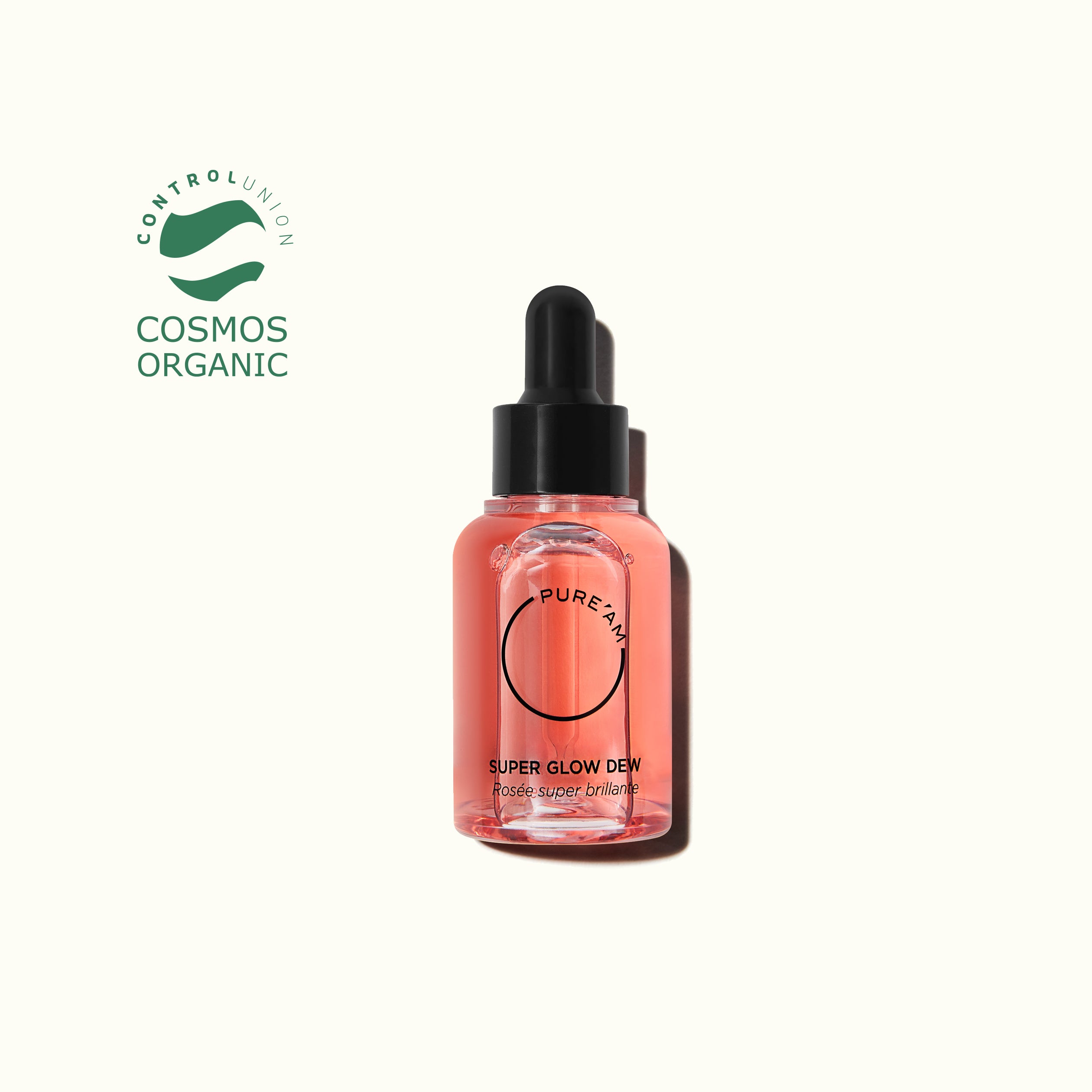
In our routine, oil comes after cream, not before it. The cream handles moisture first, then a small amount of oil on top adjusts texture and glow. In the morning, sunscreen still goes on after the oil.
This step isn't a daily requirement either. Skip it on days the cream is enough on its own, and bring it in when overnight dryness is a concern or a specific area, like the cheeks, feels persistently dry.
The ingredient list also includes rosemary leaf extract along with rose and bergamot-derived oils. If fragrant plant-derived ingredients have caused a reaction for you before, test this one on a small area before applying it to your whole face.
Reach for it when: cream alone still leaves some dryness behind, or you want to target moisture and glow on specific dry patches rather than your whole face.
How Many Steps Does Your Skin Actually Need Today?
The Simplest Version: 2 Steps
- AMINO ACID MILD CLEANSER
- AUTHENTIC BARRIER CREAM BALM
This is the baseline for days your skin isn't especially tight and layering several products feels like too much. Skipping the toner and oil still leaves you with a clear cleansing step and a clear moisture step.
Add Hydration: 3 Steps
- AMINO ACID MILD CLEANSER
- pH BALANCE CALMING TONER
- AUTHENTIC BARRIER CREAM BALM
On days your skin tightens quickly after washing, add the milky toner before the cream. Start with one application and watch how your skin responds before deciding whether it becomes a regular step.
A Drier Evening: 4 Steps
- AMINO ACID MILD CLEANSER
- pH BALANCE CALMING TONER
- AUTHENTIC BARRIER CREAM BALM
- SUPER GLOW DEW
This is the full lineup for nights when cream alone isn't holding up. Start the oil with just a few drops, and cut back or spot-treat dry areas if it starts to feel heavy or your skin looks shinier than you'd like.
What Changes in the Morning?
The order stays the same in the morning, but you can go lighter on both the cream and the oil. Finish with sunscreen. If you're layering several products, give each one a minute to settle before adding the next so you can tell whether anything is pilling.
Introducing a New Product Without Losing Track of What's Working
If you're sensitive, it's easier to add one new product at a time to a routine that's already working, rather than swapping all four at once. That way, if something feels off, you know which product to look at first.
The AAD recommends testing a new skin care product on a small area, such as the inside of your arm, twice a day for 7 to 10 days before applying it to your face. Stop and wash off the product if you notice redness, itching, or swelling (AAD — How to test skin care products).
If persistent stinging, burning, or a rash develops after adding a product, or an existing skin condition gets worse, stop using it and check in with a board-certified dermatologist rather than continuing to layer more products on top.
Where This Guide Fits In
Think of this as the hub for how our products work together. Full product details live on the linked product pages above, and a few of our other guides already go deeper on single pieces of this routine:
- Which Sensitive-Skin Brands Explain Their Whole Formula? covers what full-formula transparency requires beyond a single hero ingredient.
- The Best K-Beauty Cleanser for a Retinol-Stressed Barrier goes deeper on choosing a gentle cleanser when your barrier needs a break from actives.
- Organic Certified? 3 Questions It Never Answers covers how far certification reaches: ingredients, or the whole formula.
We'll keep adding to this list, including how a cream balm differs from a standard moisturizer and how to shift between a 2-step and 4-step routine as the seasons change.
Every one of these guides works from the same standard: helping you choose the step you need right now, not convincing you to use more products than your skin actually needs.
FAQ
What does PURE'AM's skincare routine actually address?
We built our routine for dry, sensitive skin that's prone to tightness and irritation. Instead of leading with a single hero ingredient, we explain the full formula, the texture, and the order of use, so you can scale from cleanser and cream balm up to all four products depending on how your skin feels.
Do I need to use all four products?
No. The simplest version is just the cleanser and cream balm. Add the toner if your skin feels tight after washing, and add the face oil if the cream alone still leaves dryness behind.
What order do toner, cream, and face oil go in?
Our directions place them in this order: toner, then AUTHENTIC BARRIER CREAM BALM, then SUPER GLOW DEW. The oil goes on after the cream as a final moisture step, and sunscreen follows in the morning.
Is organic skincare automatically gentle for sensitive skin?
Not necessarily. Natural or organic ingredients can still cause a reaction in some people, according to the American Academy of Dermatology (AAD — How to pick the right moisturizer for your skin). Certification status is only part of the picture. Check the full ingredient list and formula, and patch test any new product before applying it to your whole face.
What should I do if my skin stings after adding a new product?
Stop using the newest product you added and watch how your skin responds. If irritation is significant or doesn't settle, see a board-certified dermatologist. Add new products one at a time so you can tell which one is causing the reaction.
The Easiest Way to Start
A good routine isn't the one with the most steps. It's the one your skin can repeat comfortably. If you're starting with us for the first time, begin with the AMINO ACID MILD CLEANSER and AUTHENTIC BARRIER CREAM BALM, then add the toner or face oil based on what your skin tells you it needs.
On a comfortable day, two steps are enough. On a drier day, add the one step that matches what's actually happening on your skin.