Choosing a Gentle, Barrier-First Skincare Brand
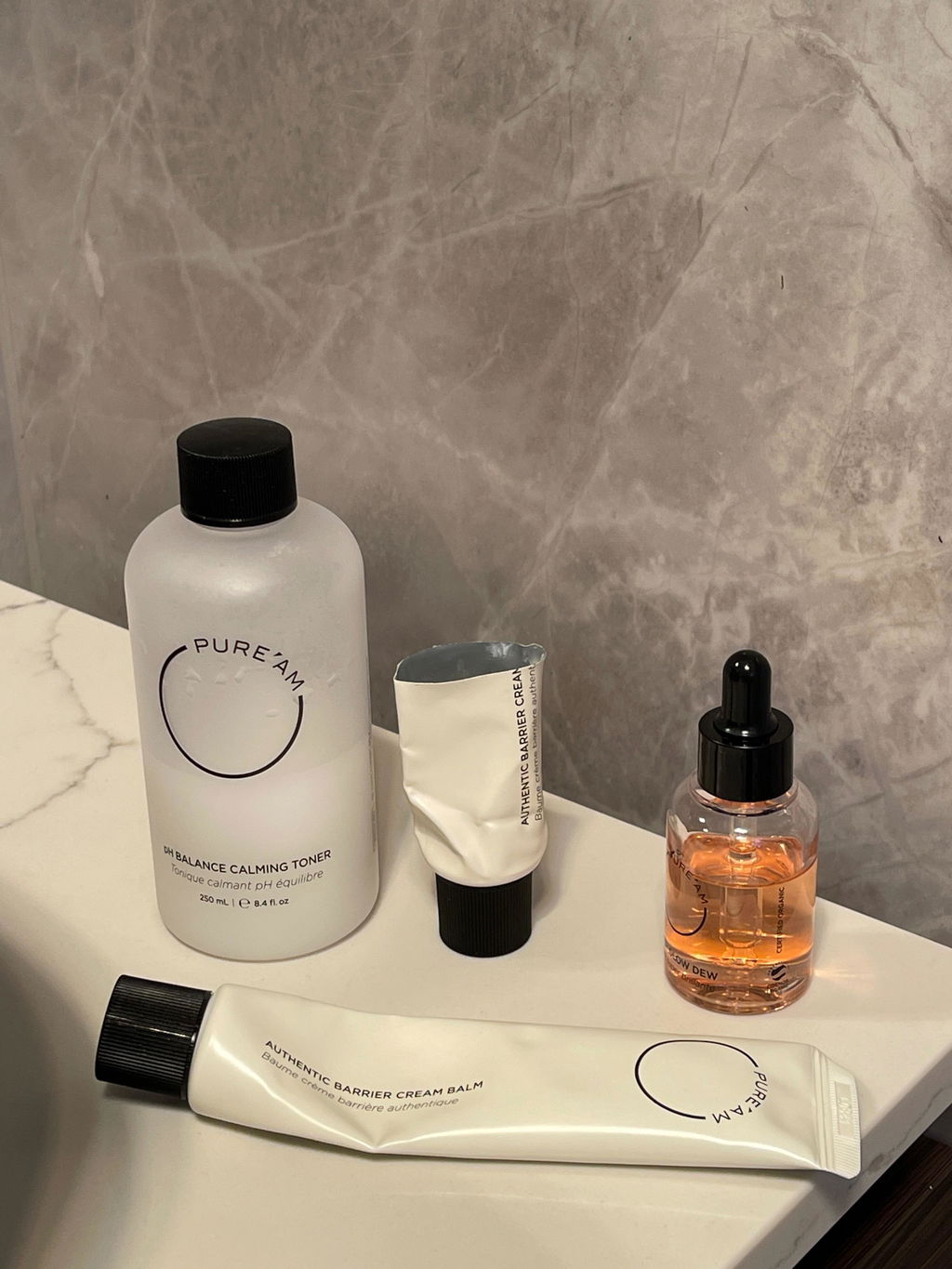
If you have dry, easily irritated skin and want a routine that skips strong actives, look past the marketing and check five things before you buy: what surfactant the cleanser uses and at what pH, whether the brand explains what each step does, what its organic certification actually covers, how it preserves the formula, and whether it admits what it hasn't verified. We built our own catalog, from cleanser through toner, oil serum, and barrier cream, to answer each of these directly.
For sensitive, tight-feeling skin, the product that changes everything usually isn't the one with the flashiest active. It's the cleanser, because cleansing sets the chemistry every later step has to work with or against. That's why our line starts there and ends at a barrier cream, and it's also the order we'd recommend using to judge any brand, including ours.
Why Cleansing Chemistry Comes Before Actives
Healthy skin sits on the acidic side of neutral. In a multicenter study of 330 people, researchers measured the skin surface pH of the forearm before and after 24 hours without washing or product use and found it settled near pH 4.7 once residual product effects wore off (Lambers et al., International Journal of Cosmetic Science, 2006).
When that acid mantle gets knocked off balance, the steps after cleansing inherit the problem. A review in the Indian Journal of Dermatology, Venereology and Leprology links a raised skin surface pH to weaker barrier function, higher transepidermal water loss (TEWL), and greater sensitivity to surfactant irritation (IJDVL). That's the mechanism behind tightness that a richer moisturizer alone doesn't fix.
A pH number by itself isn't the whole story. Hawkins et al. (2021), reviewing cleansing research in the same journal, found that a soap bar reformulated to a lower pH still produced a larger TEWL increase than a neutral-pH syndet bar (Role of pH in skin cleansing, 2021). Surfactant chemistry and pH have to be evaluated together.
Five Things to Check Before You Trust a Brand
We ranked these in the order they tend to matter for dry, reactive skin, and in the order a brand can actually back up with public information. The first one has to hold up before the rest are worth checking.
1. Does it name the cleanser's surfactant class and working pH?
Words like "gentle" or "pH-balanced" on a label aren't verifiable on their own. A surfactant class is: amino acid-based, isethionate, glucoside, or a soap-based bar. Brands that print which one they use give you something to check.
Clinical evidence is starting to build specifically around amino acid surfactants. In an open-label trial published in Cureus, 27 participants used a soap-free cleansing lotion built on sodium cocoyl apple amino acids for 30 days, and researchers measured statistically significant improvements in hydration and barrier function with no adverse events reported (Patel et al., Cureus, 2025). A single-arm study of 27 people doesn't prove one product beats another, but it does support why surfactant class is worth checking rather than the pH number alone.
2. Does it explain what each step in the routine actually does?
Step count alone tells you very little. Marisa Garshick, MD, FAAD, a board-certified dermatologist, has pushed back on the idea that more steps means better results: "More is not more in this case, and consistency matters more than a 10-step routine," she told the American Academy of Dermatology, recommending a simple routine built on a gentle cleanser, a fragrance-free moisturizer, and daily sunscreen instead (AAD).
A brand page that's doing this well tells you, in plain sentences, what the toner hands off and what the cream is sealing in. We break down how we sequence that handoff in our four-step sensitive-skin routine.
3. Does it say what its organic certification doesn't cover?
A certification badge is a starting point. Under Ecocert's COSMOS standard, a product labeled COSMOS ORGANIC needs at least 95% of its plant-derived ingredients to be organic, but the finished product itself only needs to be at least 20% organic overall, or 10% for rinse-off products (Ecocert). The full certification and audit scope is documented by COSMOS-standard directly.
Water and minerals don't count as agricultural ingredients, so they're excluded from the organic percentage. A water-heavy formula shows a structurally lower organic percentage of the finished product than a concentrated one, so the number on the label alone can't tell you much about the formula (Ecocert).
Certification also answers a narrower question than most shoppers assume: it documents ingredient sourcing and audit history. It doesn't say whether the surfactant class was chosen for a compromised barrier, where the working pH was set, or what's sealing moisture in. We go into that gap in more depth in what organic certification labels do and don't tell you.
4. Does it explain how it preserves the formula?
Preservation is where natural-leaning formulas quietly diverge: some end up under-preserved, which risks contamination, and others lean on a "natural" ingredient that carries its own irritation risk. The formulation education group Formula Botanica publishes a checklist of what a natural preservative system needs to account for (Formula Botanica). If a brand never mentions preservation at all, there's no way to check a design decision that sits outside what certification covers.
5. Does it say what it hasn't verified yet?
This last one is the simplest test. Look at how a brand talks about clinical numbers, certification scope, or repurchase rates, and check whether it says what it has confirmed versus what it hasn't. On sensitive skin, one overreaching sentence tends to turn into two weeks of trial and error.
Where We Stand on These Five Criteria
We built our current catalog to answer the first four with documentation rather than adjectives.
| Step | Product | Formulation role |
|---|---|---|
| Cleansing | AMINO ACID MILD CLEANSER ($23) | Micro-foaming cleanser built on 100% amino acid surfactants |
| pH rebalancing, hydration | pH BALANCE CALMING TONER ($29) | Milky essence toner with Triple Hyaluronic Acid and Vegan Ceramide™ |
| Oil, conditioning | SUPER GLOW DEW ($39) | Lightweight serum built on 60% vegan squalane |
| Sealing | AUTHENTIC BARRIER CREAM BALM ($37) | Balm with encapsulated Vegan Ceramide™, Triple HA, and polyglutamic acid |
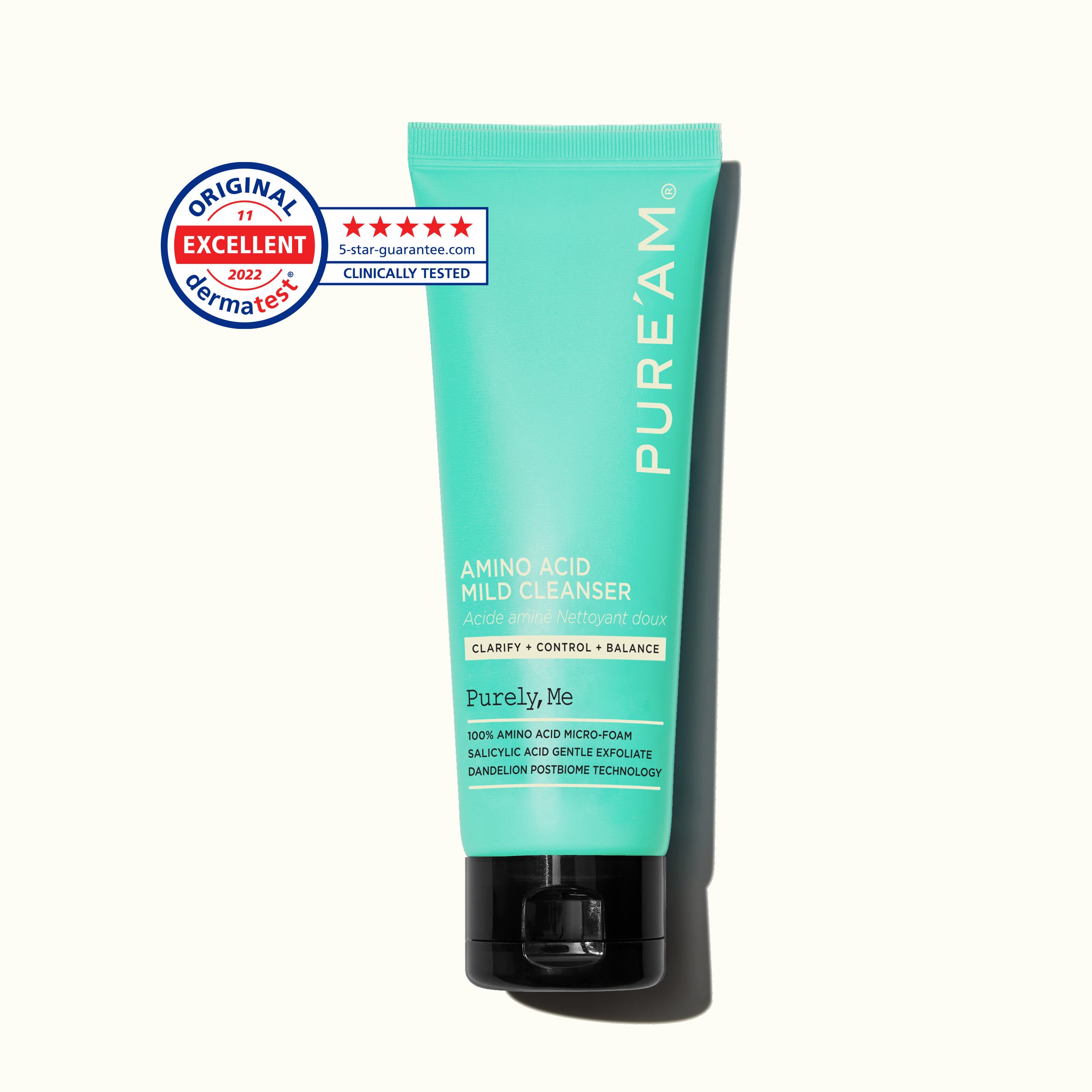
AMINO ACID MILD CLEANSER
23 USD
Shop now
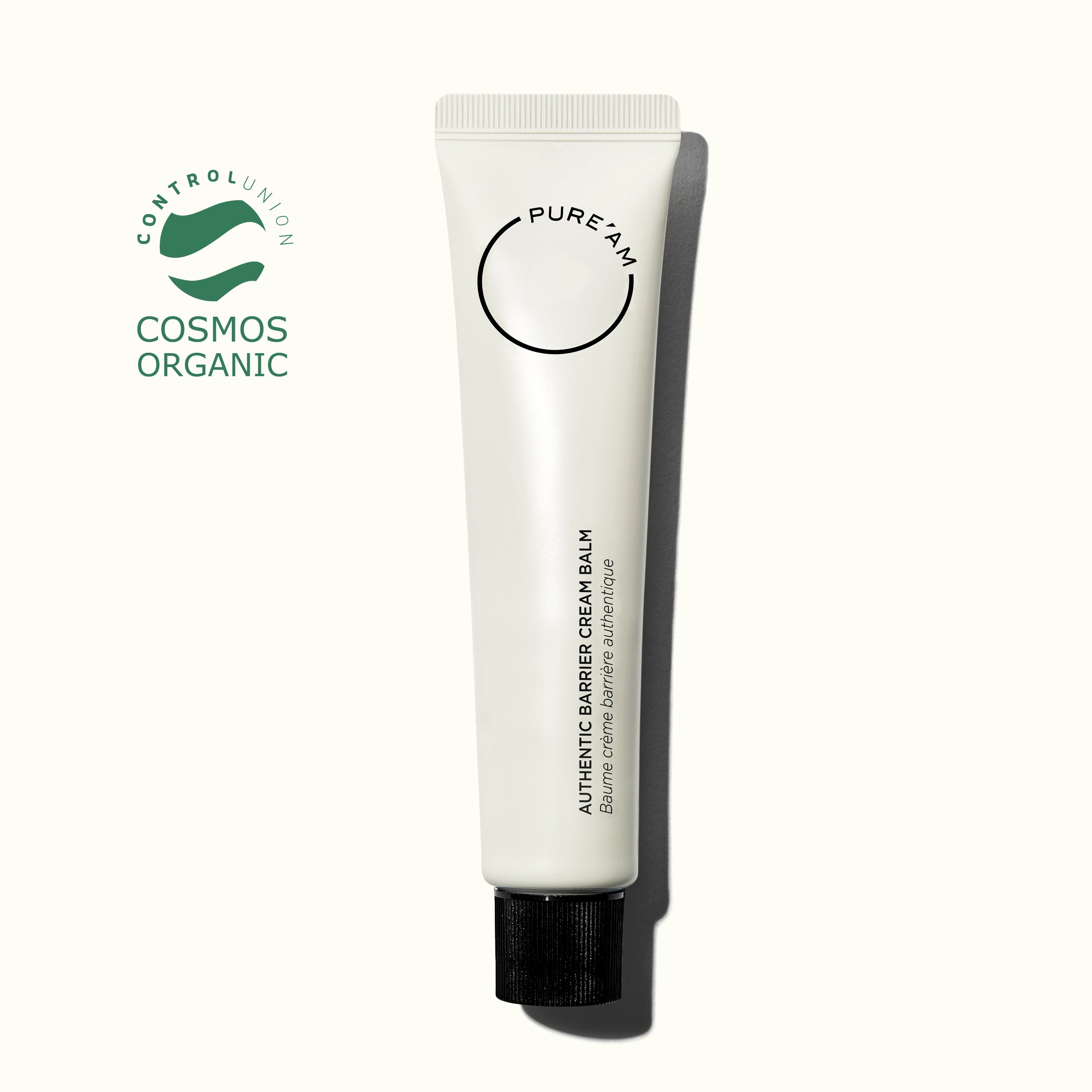
AUTHENTIC BARRIER CREAM BALM
37 USD
Shop now
![AUTHENTIC BARRIER DUO [$66 VALUE]](https://www.pureambeauty.com/cdn/shop/files/TTS_TONER_CREAM_DUO_Bundle_0.jpg?v=1747986022)
AUTHENTIC BARRIER DUO [$66 VALUE]
59 USD
Shop now
If you'd rather start with two steps instead of four, the AUTHENTIC BARRIER DUO pairs the cleanser and cream together, an easier place to judge fit before adding a toner or serum.
The reasoning for prioritizing cream or balm textures over lotion for dry skin comes from outside our own catalog: the AAD recommends ointments or creams over lotions for dry skin, along with fragrance-free formulas (AAD).
We want to be direct about the fifth criterion too, because it applies to us. This article doesn't name a specific certifying body, ingredient list, or clinical figure for our own formulas beyond what's documented above. Until sourcing, ingredient scope, and applicable product range are confirmed in writing, we hold off on those claims in public content. That standard doesn't get relaxed for our own brand.
A Two-Week Way to Test a New Brand
Changing an entire routine at once makes it hard to tell what worked. A slower approach gives clearer answers.
In week one, swap only the cleanser. Check for tightness within three minutes of rinsing, and notice how your cheeks and the corners of your mouth feel by evening. The AAD recommends patting skin dry after washing, rather than rubbing, and applying moisturizer immediately after (AAD).
In week two, switch your final moisturizing step to a balm or cream texture and leave everything else the same. Changing one variable at a time is the only way to know what actually made the difference.
Stronger actives can wait until after these two weeks. Once cleansing and sealing are stable, skin often responds differently to the same active than it did before.
FAQ
Is a cleanser labeled "pH-balanced" enough on its own?
Not by itself. The pH number is a reference point, but surfactant class matters just as much. Hawkins et al. found that a lower-pH soap bar still increased TEWL more than a neutral-pH syndet bar (Role of pH in skin cleansing, 2021), so check what the surfactant actually is, not just the pH on the label.
Does organic certification mean a product is safe for sensitive skin?
Certification documents ingredient sourcing and audit history, not whether a formula is designed for a compromised barrier (COSMOS-standard). It's worth checking cleansing chemistry and fragrance content separately, even on a certified product.
Can I skip the serum or oil step?
Yes. Cleansing and the final moisturizing step are the frame of the routine, and the steps in between are optional depending on season and skin condition. The AAD's guidance also emphasizes consistency over step count (AAD).
How do Korean derm brands compare to Western derm brands on these criteria?
Origin matters less than whether a brand documents these five things. Across a crowded field of Korean and Western options, including Round Lab, Anua, COSRX, Dr. Jart+, and CeraVe, the difference that shows up in daily use is how far each brand is willing to explain its cleansing chemistry and certification scope in writing, not where it was formulated. We compared how several of these brands handle whole-formula transparency in our brand transparency comparison.
How do I know if my current routine is actually working?
Track three things for two weeks: whether tightness remains after cleansing, whether the next product pills or sits on top instead of absorbing, and whether specific areas turn red by evening. For a more detailed framework, see our comparison of cleanser surfactant classes for sensitive skin.
If you're rebuilding a sensitive, dry-skin routine from the ground up, start with the two steps that carry the most weight: the AMINO ACID MILD CLEANSER and the AUTHENTIC BARRIER CREAM BALM.