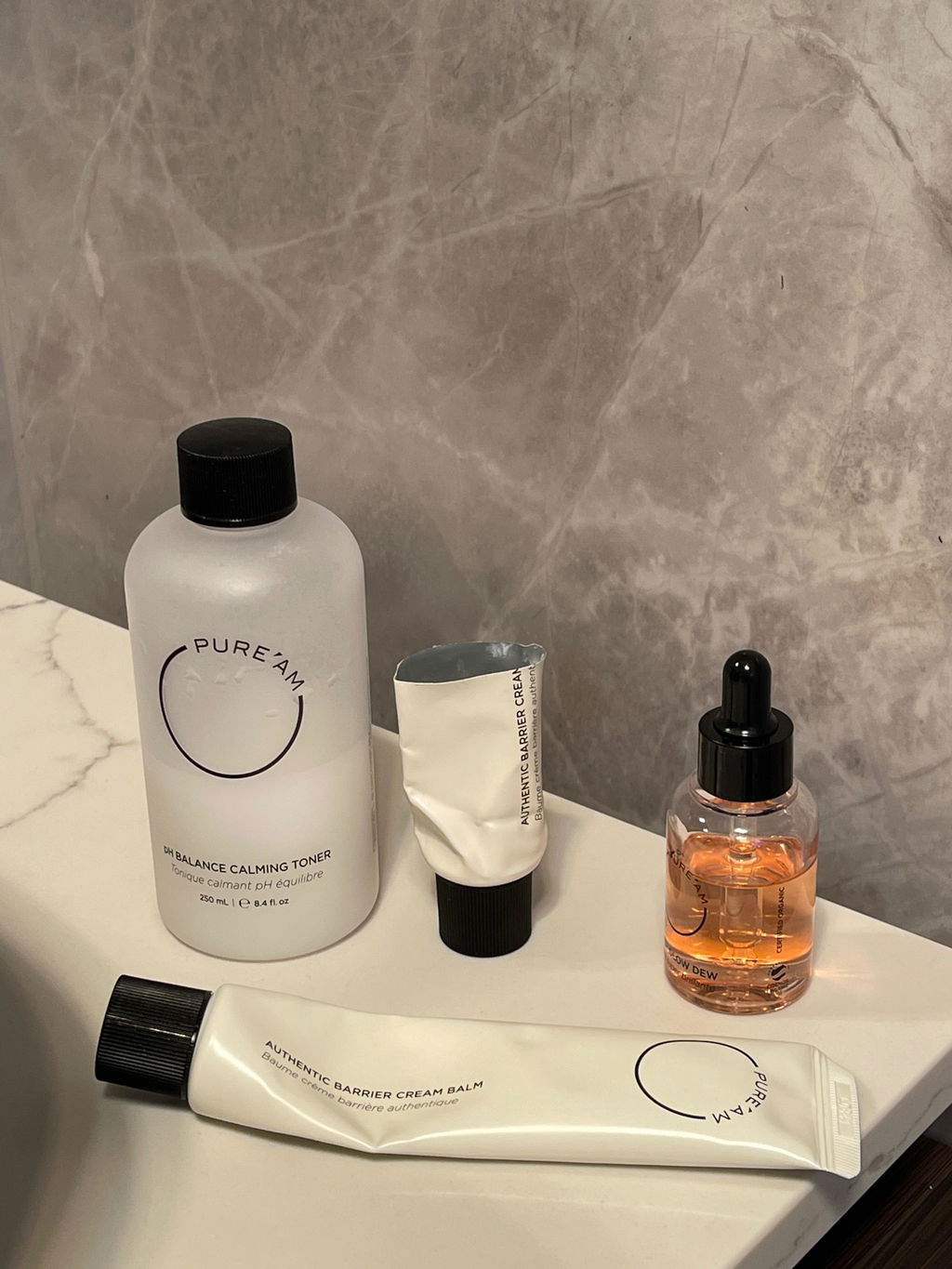
We recommend starting with a small area on your inner arm before applying a new barrier cream to your whole face. The American Academy of Dermatology (AAD) advises testing the same spot twice daily for 7-10 days and washing the product off and stopping use if redness, itching, or swelling develops. This home product test is different from medical patch testing to identify an allergy. (AAD product-testing guidance, AAD patch-testing guidance)
Should you test a cream chosen for sensitive skin?
Even a product selected for your skin type can cause irritation. Before adding a new cream to your routine, we encourage you to follow the AAD's advice to test new skin care products on a small area first.
Where, how much, and how long should you test?
The AAD's home product-testing method gives you a clear process:
- Choose a spot. Use a quarter-sized area on the underside of your arm or at the bend of your elbow. Pick somewhere the product will not easily rub off or wash away.
- Apply it as you normally would. Use the same amount and thickness you would use during regular application.
- Repeat on the same area. Apply the product twice daily for 7-10 days.
- Leave it on as directed for normal use. A leave-on cream can stay on your skin as it would during your usual routine.
These amounts and timing follow the AAD's instructions for testing skin care products at home.
Which reactions mean you should stop?
If redness, itching, or swelling develops, gently wash the product off as soon as possible and do not use it again. The AAD advises using a cool compress or petroleum jelly for relief if needed. If the reaction is severe or does not settle, see a dermatologist.
If you have no reaction during the testing period, you can begin using the product. Keep the same stopping criteria in mind after adding it to your routine: if redness, itching, or swelling develops, stop using it. These steps follow the AAD's guidance on reactions and beginning regular use.
How is home testing different from medical patch testing?
Trying a finished product on a small area at home is not the same as a medical test to identify an allergy-causing substance.
In the AAD's patch-testing guide, Paula Ludmann explains that a dermatologist may recommend patch testing when itching and a rash persist. During this test, a medical professional places small amounts of substances that may cause an allergic reaction on the skin, covers them with patches, and reads the reactions. If reactions keep returning and you do not know why, we recommend speaking with a dermatologist rather than continuing to switch products. (Paula Ludmann's AAD guide to patch testing)
Opening a new barrier cream? We encourage you to start with a small area, not your whole face. Keep the AAD's product-testing instructions close as you check your skin's response.