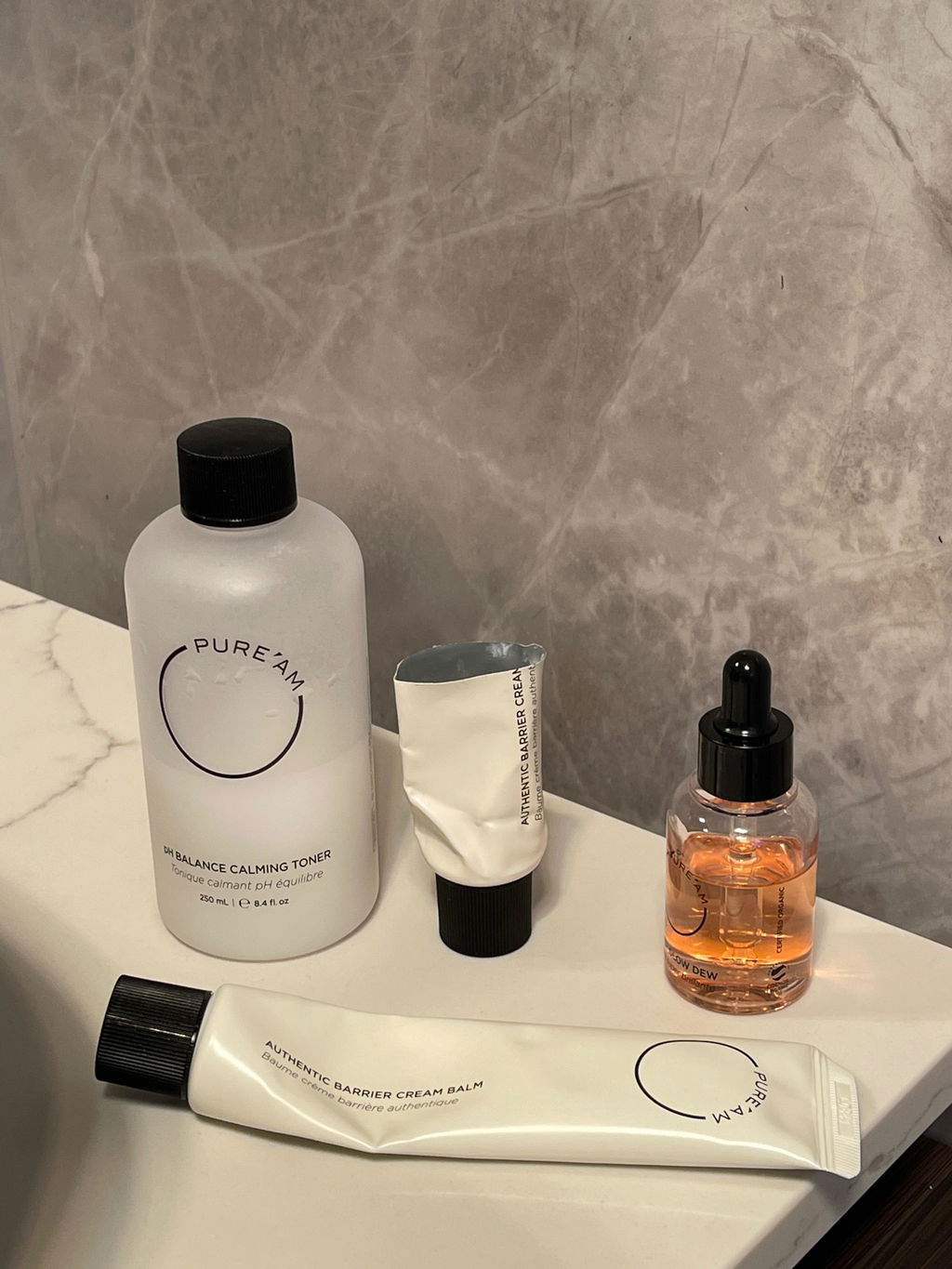
For sensitive skin, we recommend checking who certifies an organic claim, what it covers, and the full ingredient list. Keep GMO-Free labeling separate from organic certification and finished-product testing, then choose a toner or cream according to the step and texture you want. Labels do not establish how your skin will respond, so try a new product on a small area before applying it across your face.
What should you check beyond the organic label?
Choosing organic ingredients and choosing a product that suits your skin are related but separate decisions. Start by checking which ingredients or products a certification covers. Then read the full ingredient list for anything you already know has caused a reaction.
The American Academy of Dermatology (AAD) notes that products containing botanical ingredients can also contain fragrance-related ingredients. If you have reacted to a particular ingredient, checking for it matters more than relying on the word “organic.” If you cannot identify the cause of a reaction, a dermatologist can help and may recommend medical patch testing. See the AAD’s guidance on ingredients and skin reactions.
Does organic certification cover an ingredient or the product?
When you see an organic claim or certification logo, read the surrounding details:
- Certifying organization and standard: Who issued the certification, and under which standard?
- Scope: Does the statement refer to a particular ingredient or to the finished product?
- Ingredient-list asterisks: Which ingredients are marked, and what does the accompanying footnote say?
Our pH BALANCE CALMING TONER offers an example. Its ingredient list marks ingredients including yuzu water, glycerin, and aloe leaf extract with asterisks. The accompanying note identifies those marks as certified-organic ingredients. The page also carries separate organic-certification wording naming CUK. You can read both on our toner ingredient and certification page.
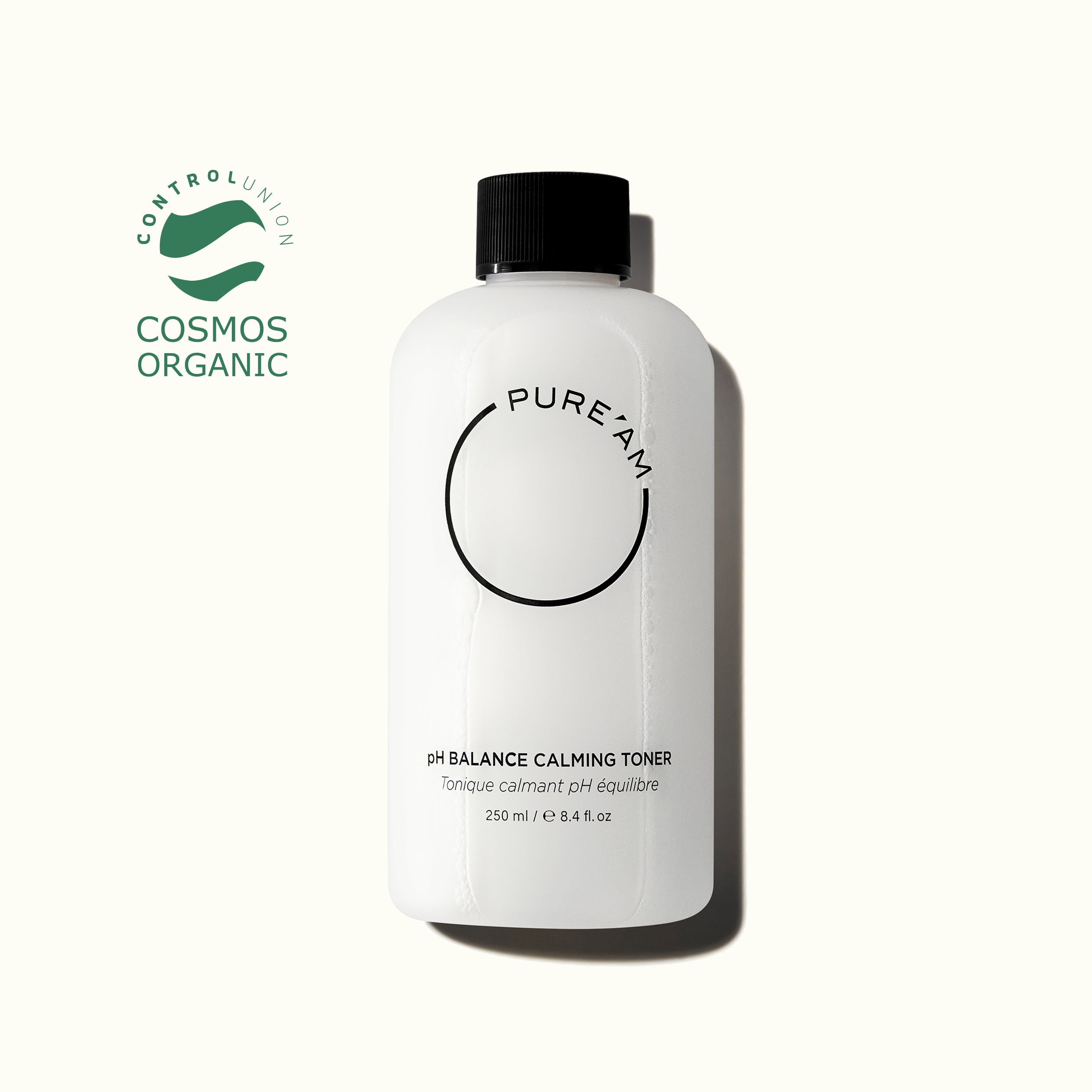
Read the ingredient markings separately from the product-level certification statement. A mark beside one ingredient does not extend that certification to every ingredient. For a finished-product certification claim, check the certifying organization and the scope that applies to that product.
How is GMO-Free labeling different from certification or testing?
Our AUTHENTIC BARRIER CREAM BALM product page carries the brand label “GMO-Free.” Do not read that wording alone as a separate Non-GMO certification. Look for an explanation that identifies a certifying organization and the product covered. See our cream balm’s GMO-Free labeling.
These details answer different questions and should not stand in for one another:
| Information | What to check |
|---|---|
| Organic certification | Certifying organization, standard, scope, and ingredient-list markings |
| GMO-Free labeling | What the brand says the label covers and whether separate certification details are provided |
| Finished-product testing | The product tested, participants, duration of use, and the outcome actually measured |
If your question is about GMO-Free labeling, check that claim’s scope. If your question is about moisturizing performance, look for testing of that finished product’s moisturizing effects. Organic or GMO-Free wording alone does not establish the size of a moisturizing benefit or predict your individual response.
How do you choose between a toner and a cream?
Once you have reviewed the labeling and ingredients, return to the role and texture you want in your routine. A toner and a cream do not need to compete on the same terms.
Do you want a milky liquid step after cleansing?
We describe our pH BALANCE CALMING TONER as a milky essence toner. The directions are to shake the bottle after cleansing, dispense the toner into your palms, and gently pat it into your skin. If you want to add a liquid step, consider whether that texture and application method suit your preferences. Find the details in our toner texture and directions.
Do you want a creamy moisturizing step?
Our AUTHENTIC BARRIER CREAM BALM has a creamy, buttery texture. Its directions are to apply it evenly to the face and neck after cleansing and toning. If you are looking for a cream moisturizer, consider both the texture and how it fits into your routine. See our cream balm texture and directions.
When using both products, apply the toner before the cream balm. That does not mean everyone needs both steps every time. Choose according to the products you already use, the moisturizing step you want, and your preferred textures.
How can you check your skin’s response before full-face use?
The AAD recommends trying new skincare on a small area first. For leave-on products such as a toner or cream, its guidance on testing skincare products includes these steps:
- Choose a small area where the product is unlikely to be washed or rubbed off, such as the underside of your arm or the bend of your elbow.
- Apply your usual amount and thickness twice daily for 7-10 days. Follow the product’s normal directions for how long to leave it on.
- If no reaction develops during that period, you can begin using the product on your face.
- If redness, itching, or swelling develops, gently wash the product off and stop using it. See a dermatologist if the reaction is severe or does not settle.
This is an at-home check of your skin’s response. It is different from medical patch testing used to identify an ingredient causing a reaction.
After checking certification scope and the full ingredient list, choose the texture that fits the step you want. Explore our pH BALANCE CALMING TONER and AUTHENTIC BARRIER CREAM BALM to compare ingredients and directions at your own pace.