An organic badge tells you where the ingredients came from and what was banned, but it doesn't tell you whether a formula skips essential oils, which surfactant the cleanser uses, or what post-cleanse pH the brand targeted. We compared four brands, Pai Skincare, Whamisa, KORA Organics, and our own PURE'AM, on two separate layers: certification scope disclosure and formulation-decision disclosure.
Most people choosing an organic product for sensitive skin stop checking as soon as they find the badge. The mark confirms the product is "organic" in some sense, but it doesn't answer the question that matters for reactive skin: does this formula actually work for my routine? We wanted to separate what certification proves from what a brand has to say for itself.
How We Compared: Two Layers, Not One Score
We ranked each brand on the combined disclosure level across both layers below. Popularity, sales volume, and product performance weren't part of the criteria. We held our own products to the same standard, which is why PURE'AM doesn't rank first on this list.
Layer 1. Certification scope disclosure
- Does the brand name the certification grade (COSMOS ORGANIC vs. COSMOS NATURAL) and the certifying body?
- Does it state whether certification covers the full range or only select products?
- Does it explain what certification does not guarantee (possible essential oils, no efficacy claim)?
Layer 2. Formulation-decision disclosure
- Does it disclose the surfactant class and whether acids are present in the cleansing step?
- Does it explain each routine step's role and order?
- Can you tell whether a formula is water-based or anhydrous?
What a Certification Badge Actually Guarantees, and What It Doesn't
COSMOS ORGANIC status comes with real numeric thresholds. According to Ecocert, at least 95% of plant-based ingredients must be organic, and organic ingredients must make up a minimum of 20% of the total formula, dropping to 10% for rinse-off products. Soil Association Certification confirms the same split: 20% for leave-on, 10% for rinse-off.
That split matters for a sensitive-skin routine because the first step, the cleanser, is a rinse-off product. Its organic-content floor starts at half the leave-on threshold. A certification badge on a cleanser and the same badge on a cream don't represent the same percentage underneath.
Water and minerals are excluded from the math entirely. Ecocert notes that water and minerals aren't considered organic because they're not agricultural, so a water-heavy formula will show a lower organic percentage by design. Within the same brand's line, a water-based toner will generally post a lower organic percentage than an anhydrous oil, simply because of formula structure rather than product quality.
The fragrance question matters most for reactive skin. Per Velora Naturals, COSMOS bans synthetic fragrance but still permits scent from natural essential oils. Certified doesn't mean unscented, and it doesn't mean essential-oil-free. If your skin reacts easily, checking the ingredient list directly for named essential oils is more reliable than trusting the badge alone.
Certification also has a boundary it doesn't cross. Vexx Skincare explains that COSMOS labeling verifies ingredient origin and processing standards, not clinical efficacy. The same source points out that natural fragrance compounds can still trigger allergic reactions.
Labeling rules do work in the shopper's favor, though. Expanscience Ingrédients notes that a COSMOS Organic finished product must display the percentage of organic ingredients, the COSMOS logo, and the name of the certifying body. If a product shows a badge with no grade and no certifier named, that's worth asking about directly. Velora Naturals adds a useful caveat: the words "natural" and "organic" themselves are unregulated marketing terms in both the US and the EU.
1. Pai Skincare: Certification and Test Conditions Together
Pai discloses the most verifiable detail across both layers. The brand's official About page states COSMOS organic and natural certification, Vegan Society certification, and Leaping Bunny certification, and notes that all certifications are audited annually. That's a meaningfully different claim than a one-time badge; it frames certification as a status that has to be maintained.
For sensitive skin specifically, the standout detail is testing conditions. The same page states that every product undergoes a 96-hour patch test on sensitive skin, described as four times the industry standard. This figure comes from the brand's own page rather than a published third-party report, so it's worth reading as a disclosure signal rather than an independently verified benchmark.
There's also an external record of operational transparency: B Lab Global's company profile lists Pai's B Impact score at 87.1, against a median of 50.9 for companies that complete the assessment. That score reflects overall business operations, not product formulation, which is a distinction worth keeping in mind alongside it.
2. Whamisa: Clear Certifying Bodies and Formulation Principles
Whamisa names its certifications specifically. The brand's official FAQ states BDIH and COSMOS organic and natural certification, identifies BDIH as a Germany-based certifying organization, and lists what that standard excludes: synthetic fragrance, silicones, and petroleum-derived ingredients like paraffin. Naming both the certifying body and the scope of what it governs in the same place is exactly what earns a brand a strong Layer 1 score here.
Formulation structure is also easy to find. The same FAQ states the brand uses 100% naturally derived ingredients, including a naturally derived preservation system, and flags which product lines contain barley-derived ingredients. That's usable information for anyone who needs to screen out a specific ingredient by product line.
Layer 2 detail thins out for sensitive-skin specifics, though. The FAQ describes products as generally suitable for sensitive skin without going further into the cleansing step's surfactant class or a target post-cleanse pH.
3. KORA Organics: Certification and Traceability, Less on Formulation
KORA Organics spends real space distinguishing "certified organic" from "clean." The brand's own content argues that certified organic claims are backed by audits and documentation that allow brand-to-brand comparison, while "clean" varies by retailer, region, and brand with no consistent standard behind it. Telling shoppers which claims are independently verifiable is a genuinely useful Layer 1 contribution.
Layer 2 disclosure is comparatively thin. The emphasis stays on ingredient traceability and certification status, with less written about surfactant class or the role each step plays, the kind of detail that actually helps someone build a routine.
4. PURE'AM: Formulation and Step Roles Disclosed, Certification Scope Still Pending
Applying the same criteria to ourselves gives an honest result: we're relatively detailed on Layer 2, and we still have work to do on Layer 1.
Here's what we currently disclose:
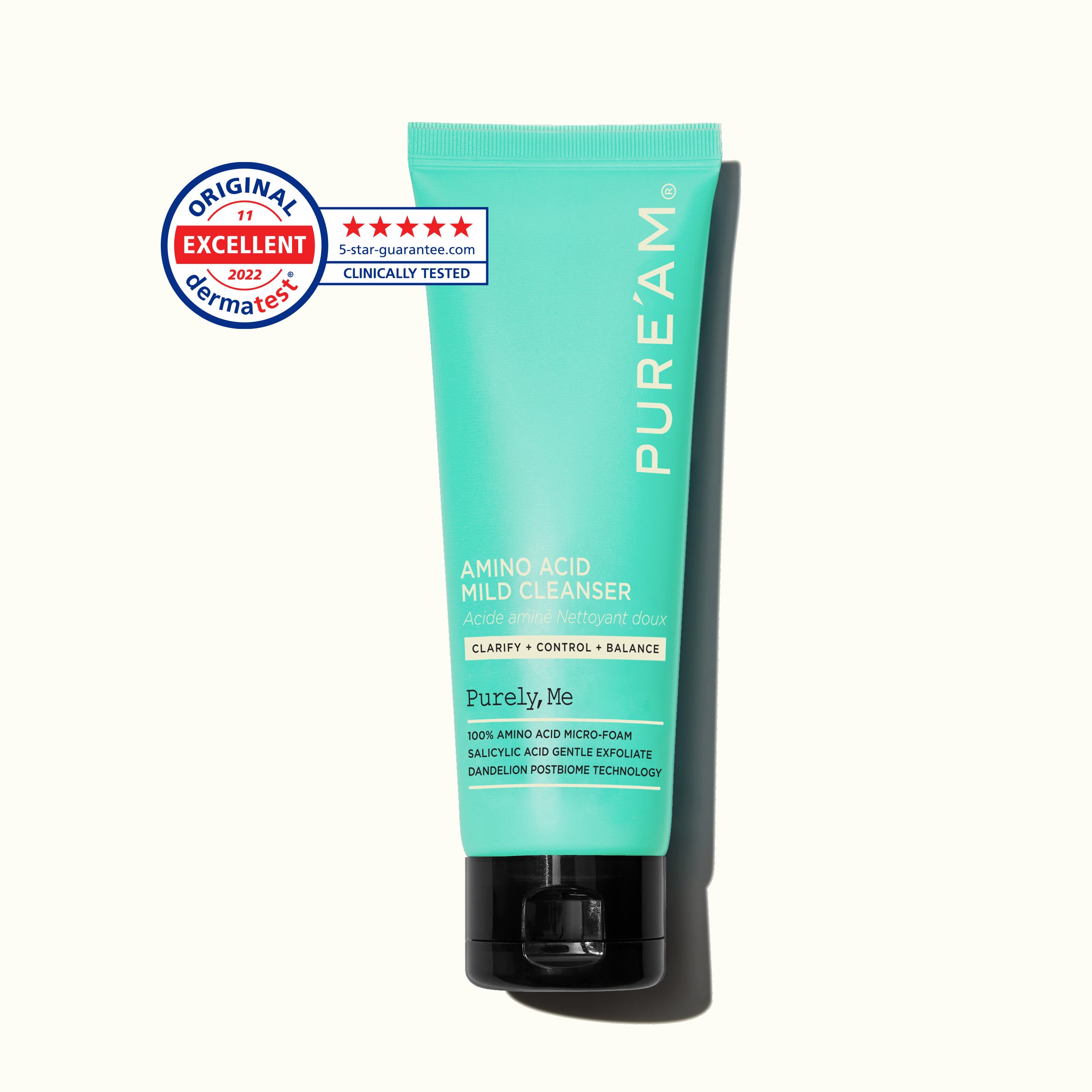
- Cleansing step ingredients. The AMINO ACID MILD CLEANSER product page states that it contains salicylic acid. "Gentle" describes the scent and texture, not the ingredient list. If you're taking a break from actives, checking for salicylic acid here is the detail to look at first. It's $23 for 120ml.
- Formula structure. AUTHENTIC BARRIER CREAM BALM's ingredient list opens with Water. Despite the name, this is a water-and-lipid cream balm rather than an anhydrous one, priced at $37.
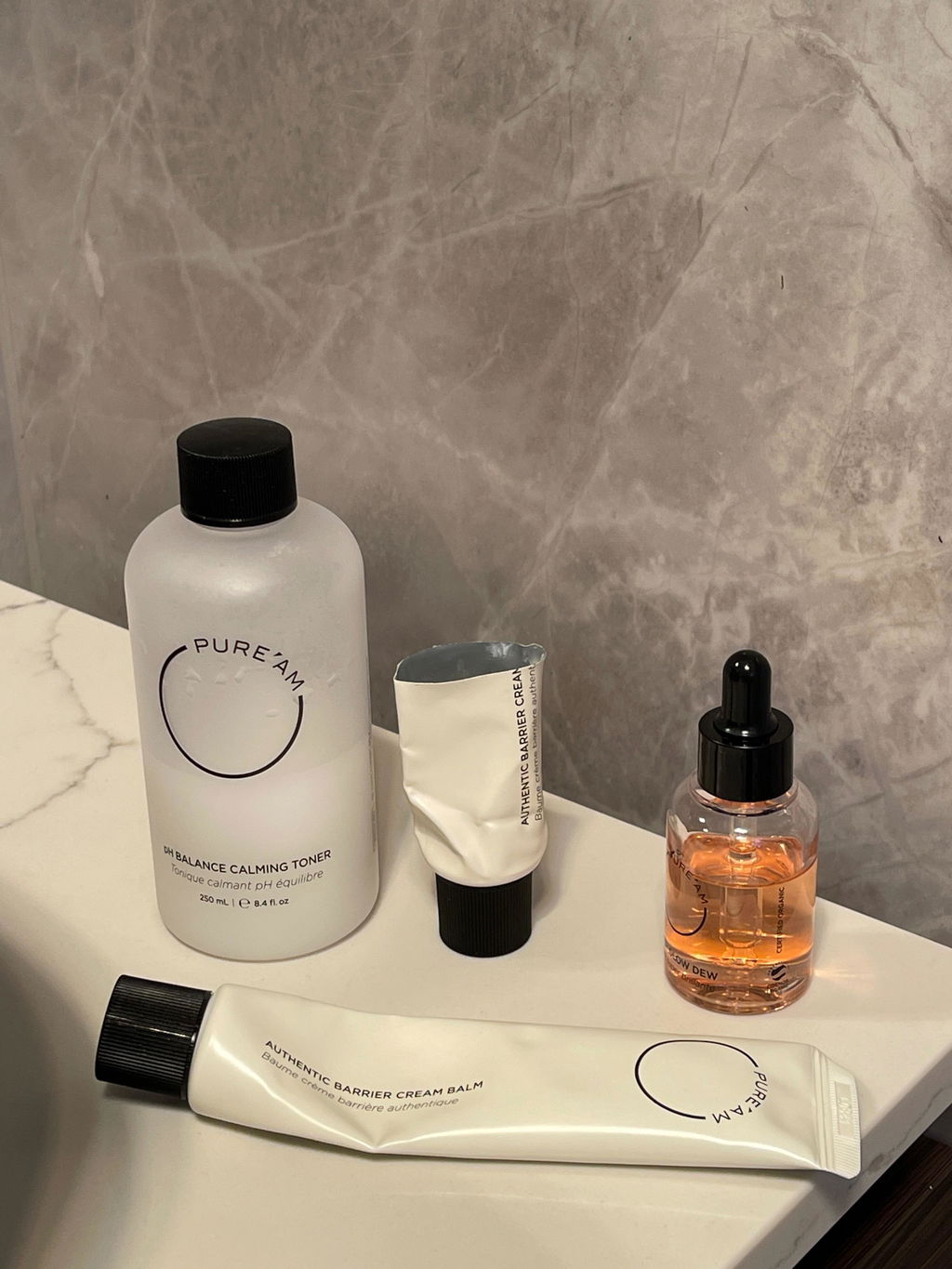
- Step roles and order. We recommend cleanser (cleansing) → pH BALANCE CALMING TONER (post-cleanse hydration and calming, $29) → barrier cream balm (moisture and barrier support) → SUPER GLOW DEW (oil-based hydration balance and finishing step). Sunscreen goes on last in the morning. These four steps aren't required for everyone every time; the combination can be shortened based on skin condition and texture preference.
AMINO ACID MILD CLEANSER
23 USD
Shop now
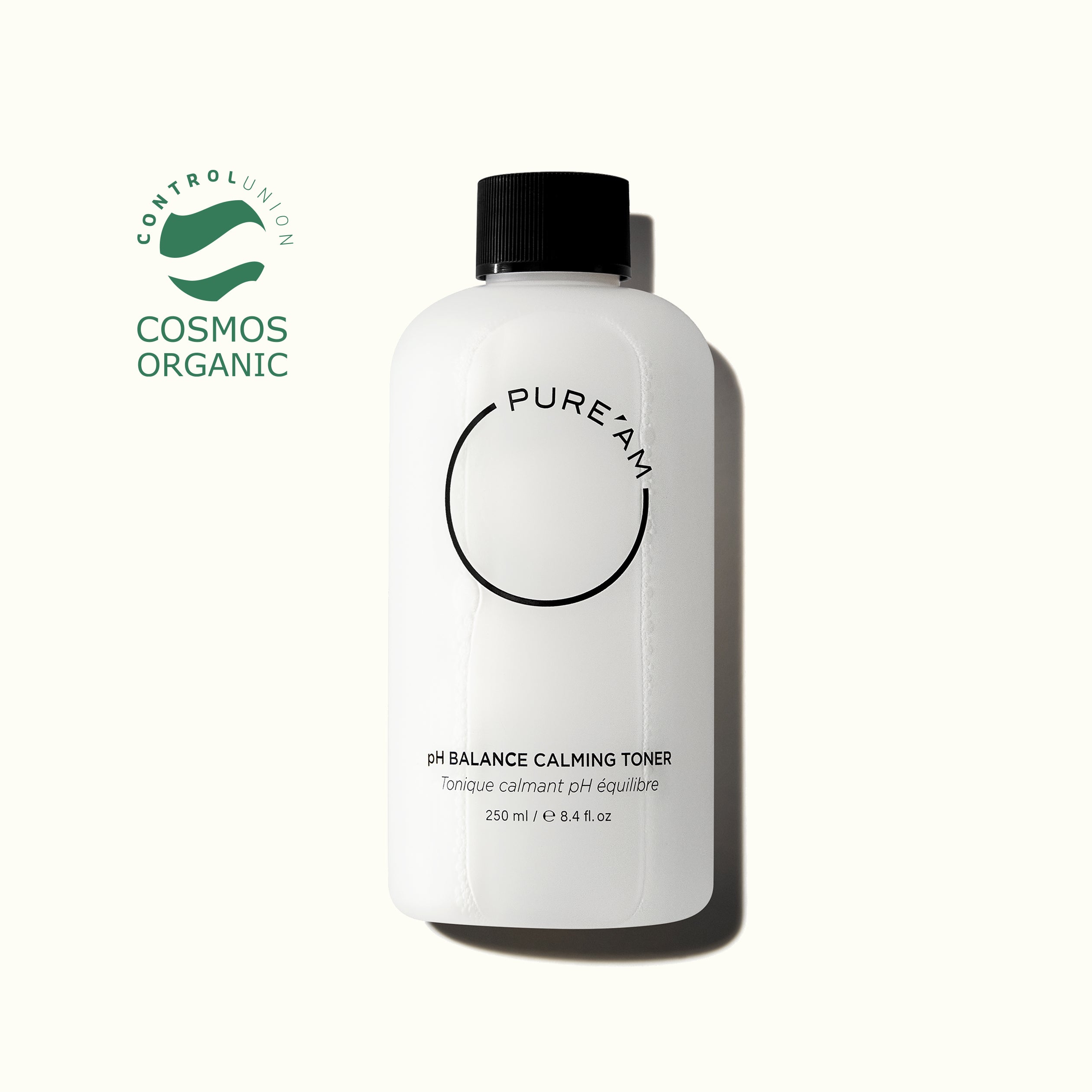
pH BALANCE CALMING TONER
29 USD
Shop now
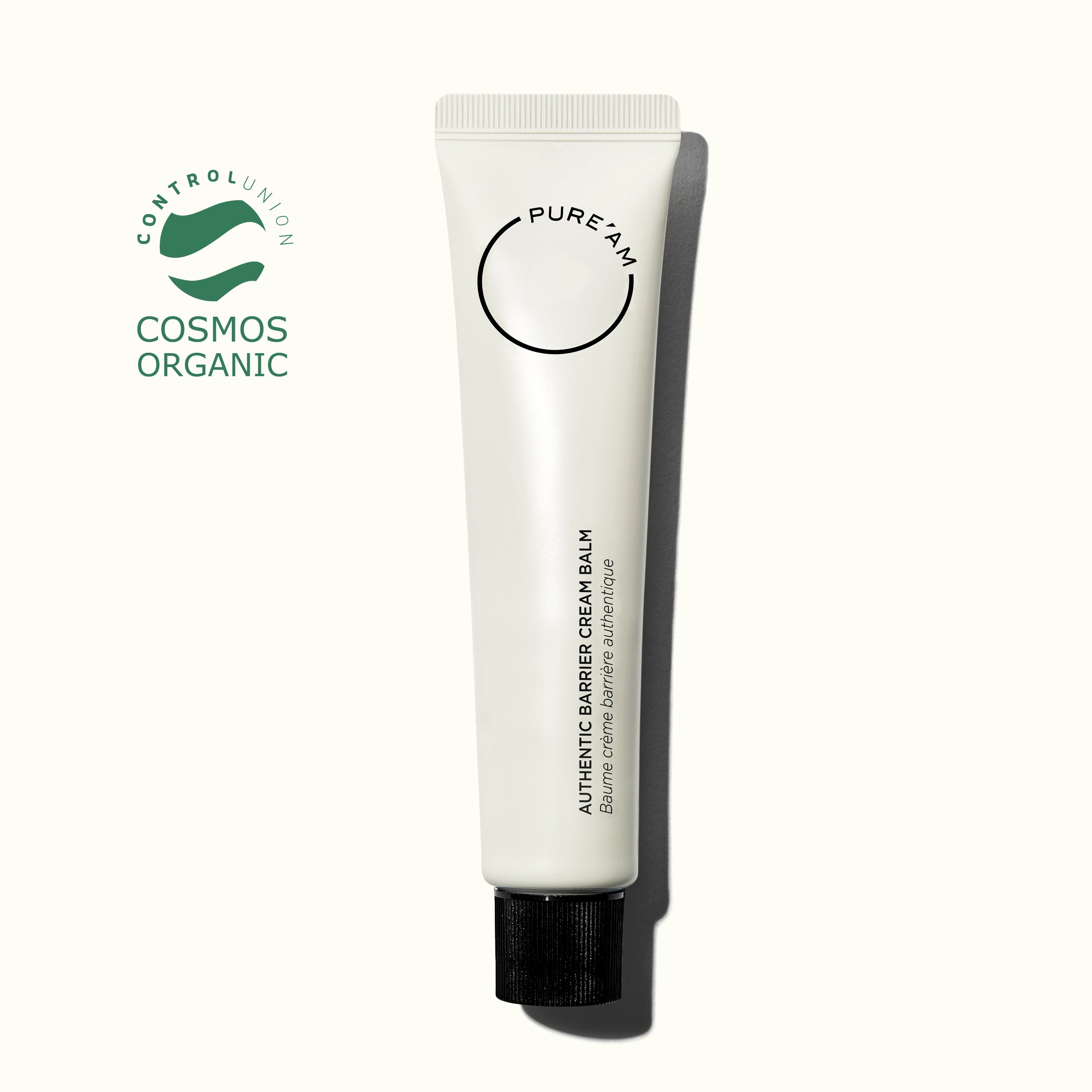
AUTHENTIC BARRIER CREAM BALM
37 USD
Shop now
Here's what we haven't disclosed yet. We don't currently have a certifying body, target ingredients, or product scope organized in published form. Until that verification is complete, our policy is not to describe products by referencing certification, which is why our Layer 1 score is lower here. Once that's finalized, we'll publish the grade, the certifying body, and the scope it covers.
Four Things to Check on the Label and Brand Page Yourself
If you'd rather check items than brand names, this is the order that works:
| What to check | Where to look | What you miss without it |
|---|---|---|
| Certification grade | ORGANIC vs. NATURAL | Organic-content thresholds differ; treating both as the same badge is a mistake |
| Certifying body | Names like Ecocert, Soil Association, BDIH | No way to confirm who's actually auditing the claim |
| Essential oils / natural fragrance | Ingredient list | Certified products can still contain fragrance-triggering compounds |
| Surfactant class and acids | Cleanser ingredient list | You can miss an irritant right at the first step of your routine |
We go deeper on applying this checklist to specific products in Choosing Sensitive Skincare That Discloses Its Organic Certification Scope. If you're weighing cleansing and barrier-care brands more broadly, How to Choose a Gentle, Barrier-First Skincare Brand covers that side.
One Thing You Can Do Today
Pick one product you're currently using and check the back label. You only need to confirm two things: is the certification grade and certifying body visible, and are there named fragrance ingredients? Once you've done that, if you're considering swapping anything, start with your cleanser. Cleansing sets up every step that follows, so irritation introduced there tends to outlast whatever toner or cream you use next. Our AMINO ACID MILD CLEANSER page lists its full ingredients and acid content the same way, so it's a fine one to compare against.
FAQ
Is checking the certification logo on a brand's homepage enough?
The logo is a starting point. Vexx Skincare's explainer recommends verifying the certificate number or checking the certifying body's searchable registry directly. If the certifying body isn't even named on the page, asking customer support for the grade and certifier is the faster route.
Does COSMOS certification mean the product's efficacy is verified?
No. The same explainer states that COSMOS labeling verifies ingredient origin and processing standards, not clinical efficacy. Judgments about hydration or calming results are separate from certification status and should be based on product-specific evidence and your own skin's response.
My skin still stung even though the product was certified. What should I check?
Start with the ingredient list for essential oils and plant extracts. COSMOS bans synthetic fragrance but allows scent from natural essential oils, and natural fragrance compounds can still cause allergic reactions. Patch-testing anything new on your inner arm and waiting at least a day before full use is a reasonable way to check.
Should I change my whole routine at once?
Changing several steps at the same time makes it hard to tell which product caused which reaction. We'd recommend changing one step at a time, spaced about two weeks apart. Starting with the step most likely to leave visible change on your skin, like cleansing, makes the result easier to read.