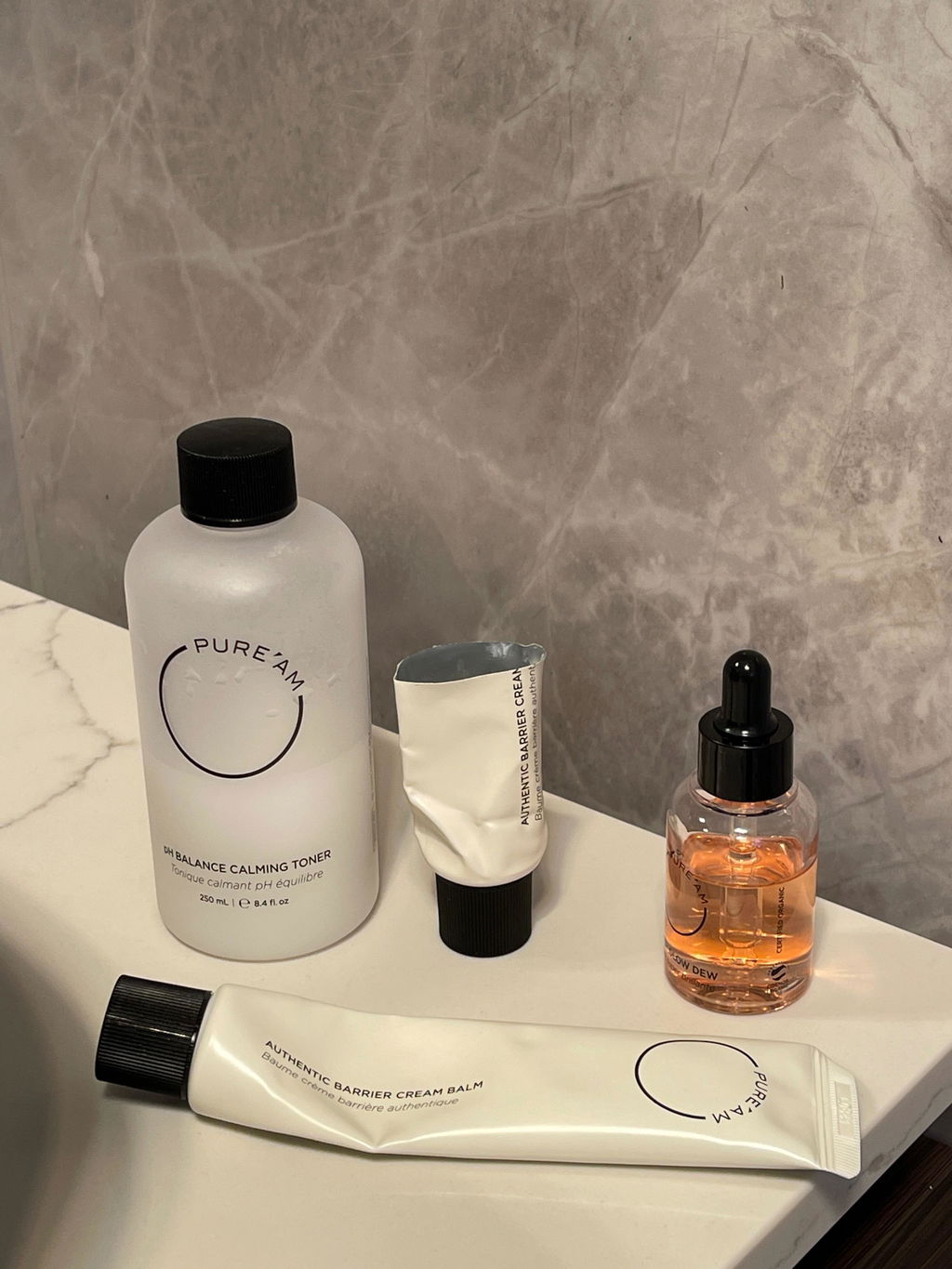
Tightness between skincare steps almost always means one step failed to hand off the right pH, moisture, or oil to the one after it, not that your skin needs more products. Cleansing has to leave behind mild, slightly acidic skin. Toner has to catch that skin while it is still damp. An oil or serum only fills a gap if one exists. Cream balm has to seal moisture in before it evaporates. Get those four handoffs right and four steps are enough.
We rebuild a lot of routines for dry, reactive skin, and the first thing we check is never the product list. It is what condition each step leaves the skin in for the one that follows. A cleanser, toner, and cream can each be well formulated on their own and still fail as a sequence if the handoff between them breaks down.
The Problem With Treating a Routine as a Product List
Most "gentle routine for sensitive skin" recommendations are really just curated shopping lists: a cleanser from one brand, a toner from another, a cream from a third. Each product might perform well in isolation, but almost none of these lists are built so that what one step leaves behind is what the next step needs to work.
The skin's surface acid mantle is not just a passive coating. According to a review in the Indian Journal of Dermatology, Venereology and Leprology, lipid-processing enzymes in the stratum corneum are activated in an acidic environment and inhibited as pH rises, which disrupts the formation of the skin's permeability barrier when the surface goes alkaline. (IJDVL, acid mantle review) A 2024 review in the Journal of Investigative Dermatology reaches a similar conclusion: shifts in surface pH can compromise barrier properties and also influence the skin microbiome and inflammatory signaling. (Journal of Investigative Dermatology, 2024 pH review)
If cleansing leaves skin pushed toward alkaline, everything applied afterward starts its work later than it should. Seeing a routine as a chain of handoffs, rather than a set of unrelated products, makes it much easier to decide which step actually matters for a given complaint.
Step 1: What Cleansing Has to Leave Behind
Cleansing is not finished when dirt and makeup are gone. Its job is to leave skin at a pH and lipid level the next step can build on.
This is where surfactant chemistry decides the outcome. A 2019 review in Tenside Surfactants Detergents by K. P. Ananthapadmanabhan compared amino-acid surfactants, such as acyl glutamates and glycinates, to conventional alkyl sulfates and carboxylates, and found the amino-acid class generally milder: less aggressive interaction with stratum corneum proteins and less stripping of barrier lipids. (Ananthapadmanabhan, 2019)
Real-world data points in the same direction. An open-label 30-day trial of an amino-acid cleansing lotion, published on PMC, followed 27 participants with dry, oily, and sensitive skin types and reported statistically significant improvements in skin hydration and barrier function markers by day 30. (30-day open-label study, PMC) It is a small, single-brand, open-label study of one company's formula, so it cannot prove every amino-acid cleanser behaves the same way. What it does show is that a gentle surfactant design can clean without working against barrier markers.
That is the reasoning behind our AMINO ACID MILD CLEANSER: the surfactant class is chosen to protect the pH and lipid handoff for the next step, which is also what gives it a soft feel on skin. We broke down how surfactant classes compare in Best Cleanser Surfactant Classes for Sensitive Skin.
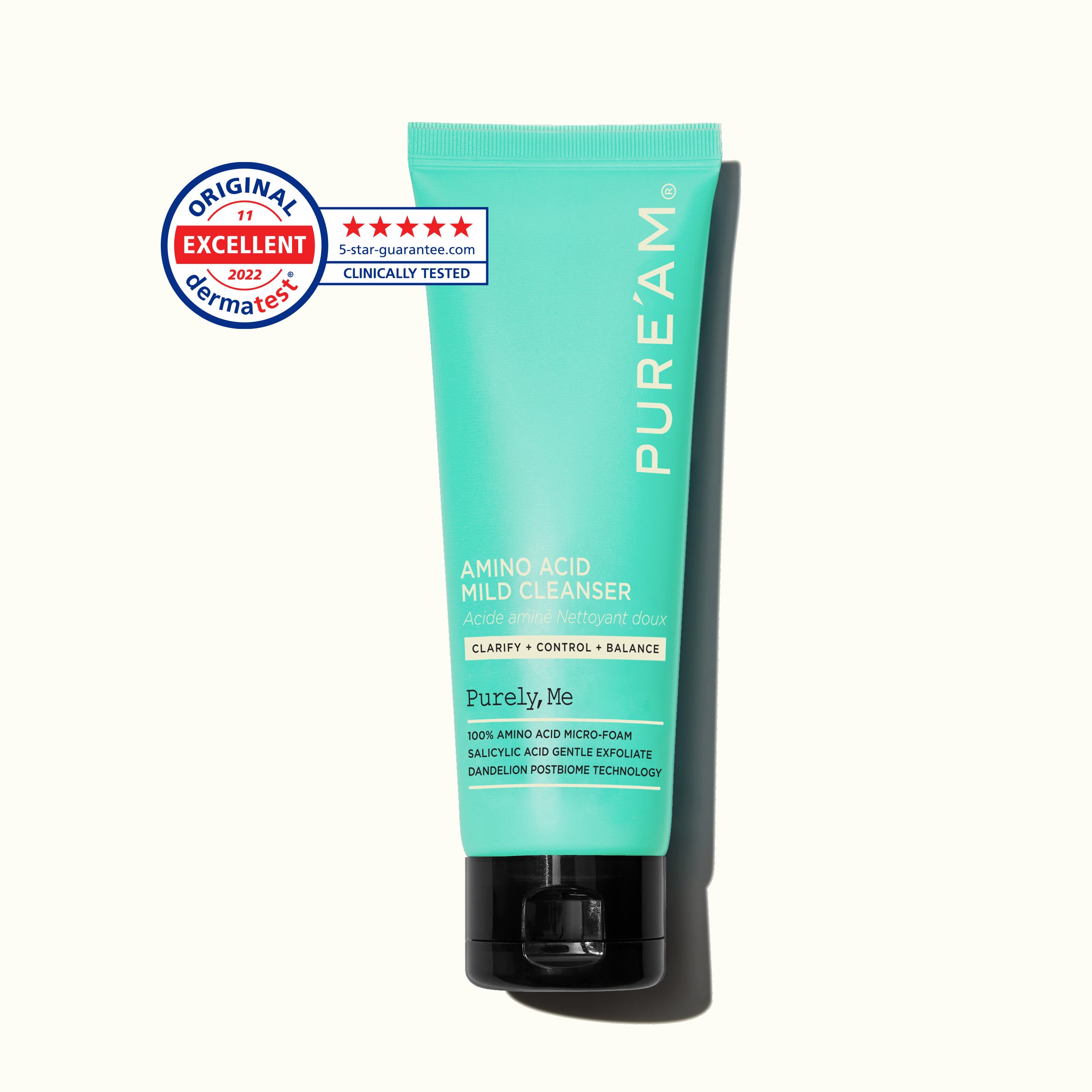
AMINO ACID MILD CLEANSER
23 USD
Shop now
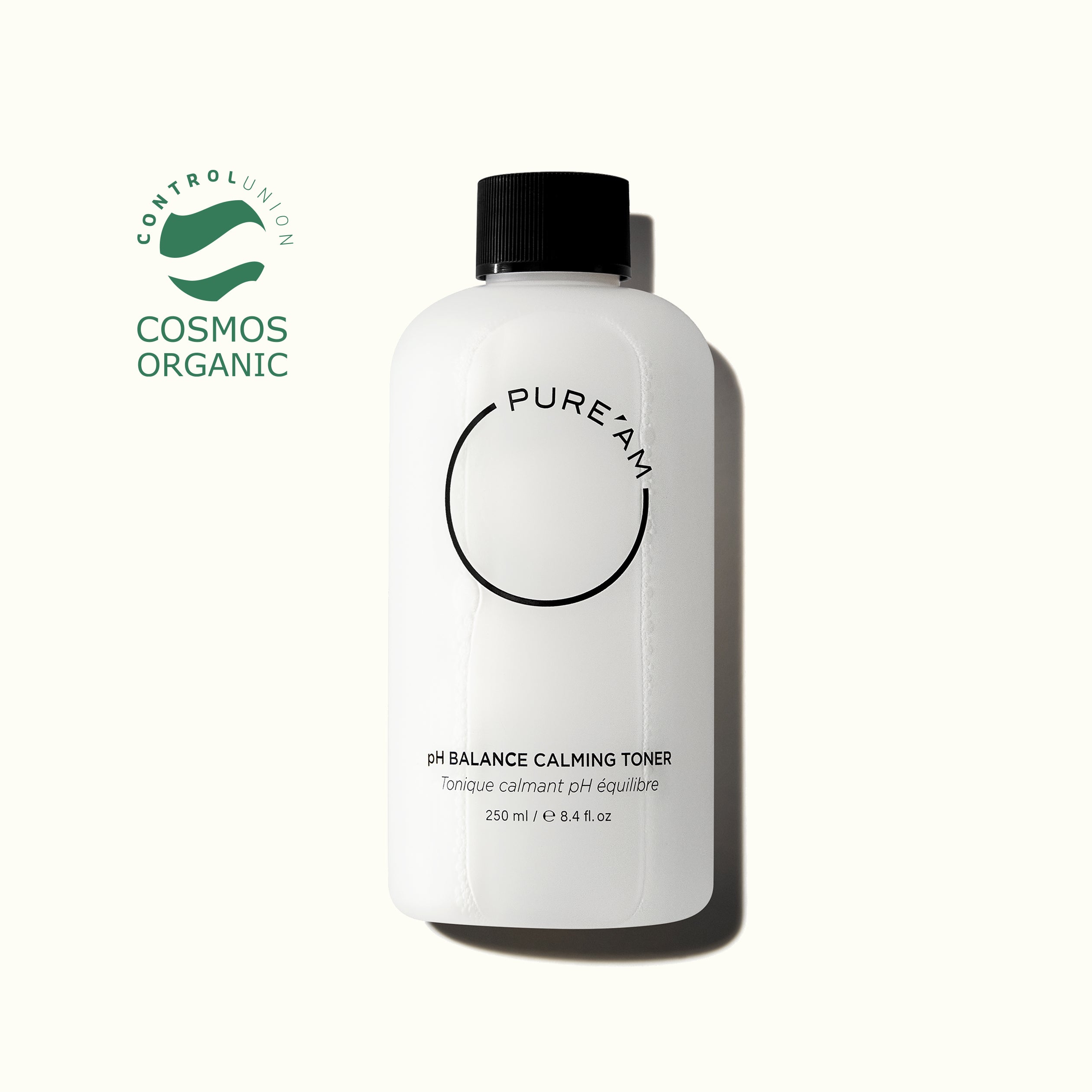
pH BALANCE CALMING TONER
29 USD
Shop now
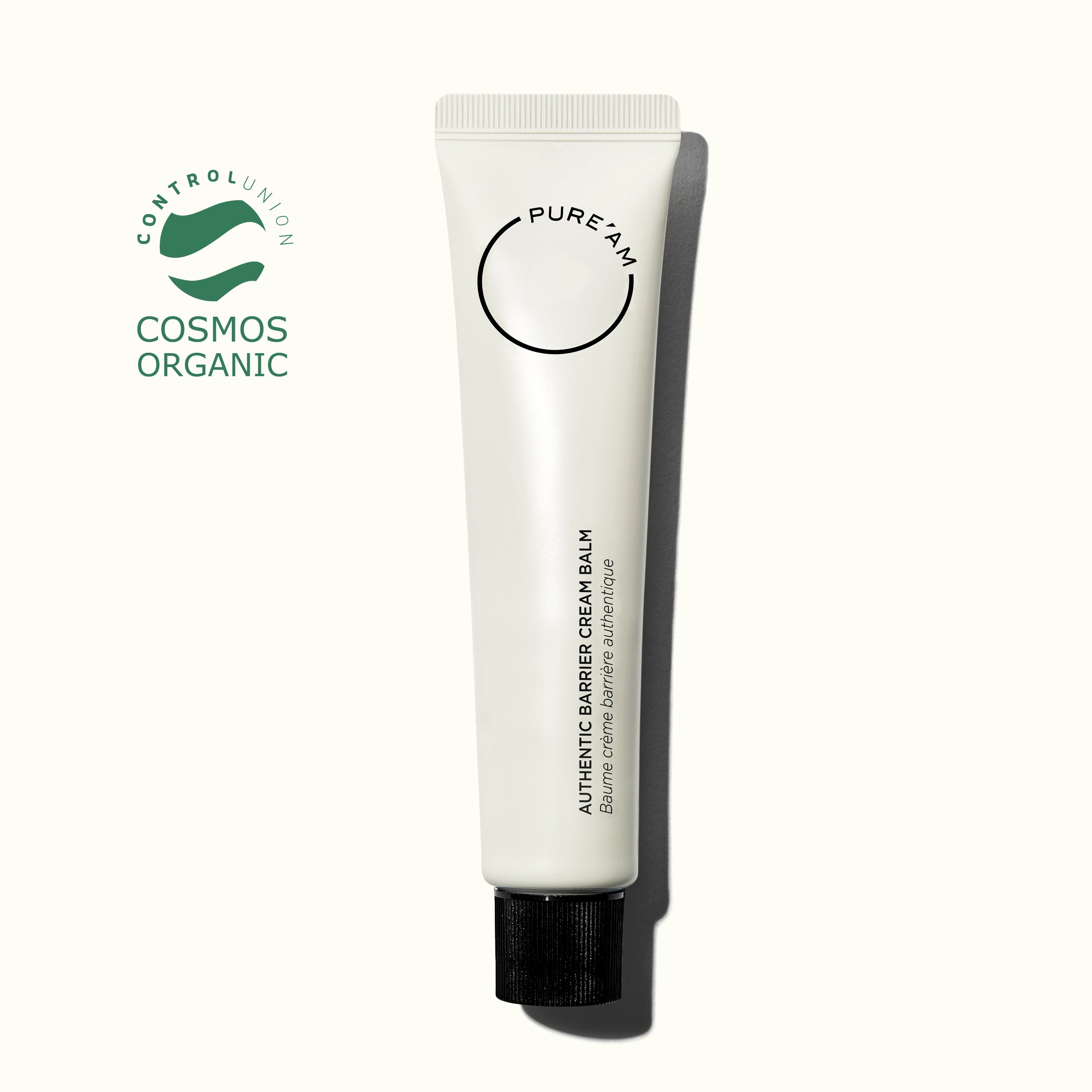
AUTHENTIC BARRIER CREAM BALM
37 USD
Shop now
A quick self-check: if your face feels tight or faintly stinging within five minutes of rinsing, look at the cleanser before you touch the cream.
Toner's Real Job Is Timing, Not Hydration (Step 2)
It is easy to treat toner as an optional hydration boost, which makes it the first thing people cut. Looked at as a handoff, toner does something more specific: it reopens the damp window that cleansing just closed.
The American Academy of Dermatology recommends applying moisturizer while skin is still damp after washing, because a damp surface changes how a product locks in water compared to a fully dried one. (AAD, dry skin tips) The problem is that towel-drying erases that window within a minute or two. Toner rebuilds it.
Our pH BALANCE CALMING TONER exists for that handoff: restoring surface pH after cleansing and re-creating the damp condition the next step needs to absorb well.
How you apply it changes the outcome, too. Wiping with a cotton pad adds friction the skin doesn't need. Pressing it in with clean palms and moving to the next step before it fully dries keeps more of that window open.
Oil or Serum Is Optional, and That's the Point (Step 3)
The third slot in a routine is where the most individual variation belongs. Toner has already restored moisture, so what's left to decide here is oil, not water.
If skin is dry and tight but not currently reacting, a light oil serum smooths the texture gap between a water-based toner and a richer cream. Our SUPER GLOW DEW is built around vegan squalane for that role: adding oil on top of the toner's moisture without adding another active that could compete for attention.
If skin is currently red or stinging, this is the step to leave out first. Removing one variable makes it much easier to tell what actually caused a reaction, and it is simple to add back in later. We don't recommend starting all four steps on day one for exactly this reason.
In hot or humid months, this step can also become a night-only addition rather than a twice-daily habit. It is the one slot in the sequence built to flex with the season: skip it on humid weeks, add it back when skin feels tight.
Cream Balm Depends on Timing More Than Ingredients (Step 4)
Cream balm shopping tends to start with the ingredient list, but the variable that decides whether it actually works is when you apply it. The AAD's advice to moisturize while skin is still damp applies here most directly: if the moisture the earlier steps built up has already evaporated, a cream is sealing very little. (AAD, dry skin tips)
Ingredients still matter, just second. Look for barrier lipids like ceramides, a humectant to hold water, and an occlusive layer on top to slow evaporation, all present together rather than any one alone.
Our AUTHENTIC BARRIER CREAM BALM is built to close out the sequence: it seals whatever the first three steps have already set up, rather than trying to hydrate on its own from a dry start. We go deeper on the exact ingredient ratios in What to Check Before Buying a Barrier Cream Balm.
If overnight dryness is severe, applying a thinner layer twice rather than one thick layer tends to absorb better. A single heavy application often leaves a residue of unabsorbed oil sitting on the surface, which reads as heaviness rather than relief.
A Sample Morning and Evening Sequence
| Time | Step | What it hands off |
|---|---|---|
| Morning | Cleanse (water rinse or Amino Acid Mild Cleanser) | Mild pH, overnight oil cleared without stripping |
| Morning | pH Balance Calming Toner | Damp surface, restored pH |
| Morning | Super Glow Dew (if needed) | Oil layer under sunscreen |
| Morning | Authentic Barrier Cream Balm, thin layer | Sealed moisture before SPF |
| Evening | Amino Acid Mild Cleanser | Sunscreen and pollutants removed, pH intact |
| Evening | pH Balance Calming Toner | Restored pH, damp surface |
| Evening | Super Glow Dew | Oil layer before sealing |
| Evening | Authentic Barrier Cream Balm | Overnight moisture retention |
Morning cleansing is the step most worth adjusting to how your skin actually feels. If there is barely any oil on your face and it already feels tight, a water-only rinse can be enough.
Adding Steps Without Losing the Thread
Changing every product at once makes it impossible to know what caused a reaction if one shows up. We suggest adding one step at a time and patch-testing anything new on a small area, such as the inside of the forearm, even when it is labeled organic or natural. Individual ingredient sensitivities can still exist inside a gentle formula.
- Week 1: Replace the cleanser only. Check whether post-wash tightness eases.
- Week 2: Add the toner. Watch absorption speed and whether any stinging shows up.
- Week 3: Add the cream balm. Track how overnight dryness changes.
- Week 4: Add the oil serum, only if skin still feels short on oil.
This order follows the same logic as the routine itself: each week tests whether the earlier handoff is solid before adding a step that depends on it. Starting with the cream and working backward means judging a step on top of a foundation that hasn't been verified yet.
When This Framework Isn't Enough
Persistent itching, oozing, or patches of skin that repeatedly flake in the same spot are not something a routine change should be expected to fix. Conditions like atopic dermatitis or seborrheic dermatitis need a diagnosis, and skincare plays a supporting role once treatment is underway. Seeing a dermatologist before changing products again is usually the faster path in that case.
If you have a known allergy to a specific ingredient, checking the full ingredient list comes first. A mild surfactant design lowers the odds of general irritation, but it does not prevent a reaction to an ingredient you are individually allergic to.
FAQ
Can I skip toner and go straight to three steps?
You can, with one condition: you need to apply the cream within a minute or two of cleansing, while skin is still damp, since that is the window toner is designed to reopen. If you typically towel dry and wait a few minutes before your next step, toner is doing real work by restoring that window.
Will an amino acid cleanser remove sunscreen on its own?
It depends on the sunscreen formula. Lightweight chemical sunscreens are usually cleared by one wash with a gentle surfactant. Mineral or water-resistant formulas may need a second cleanse or a pre-cleansing oil step first. We cover how to judge this in Can Sensitive Skin Skip Double Cleansing With Sunscreen?
If I can only use one, oil serum or cream balm, which one matters more?
Cream balm. It is the step that seals in whatever moisture the earlier steps already built up, so if that slot is empty, there is nothing holding water in overnight. An oil serum only supplements oil, so it can be added or skipped depending on how your skin feels that week.
How soon should I expect to notice a difference?
Immediate sensations like post-wash tightness often change within a few days of switching the cleanser. Barrier-level changes take longer, since they depend on the stratum corneum turning over, which is measured in weeks rather than days. The 30-day study cited above measured its outcomes at the one-month mark for that reason.
Can I mix these steps with products from other brands?
Yes. What matters is whether the product in each slot honors that step's handoff; the brand on the label is secondary. If the cleanser you're using pushes skin toward alkaline, everything layered afterward is starting from a worse position, regardless of which brand made the cream.
If you want the fuller picture of how these four steps fit together as a set, A Simple Sensitive-Skin Routine: PURE'AM's 4 Essentials covers the product-by-product basics. Start with whichever handoff is breaking down for you right now. For most people, that's the cleanser.