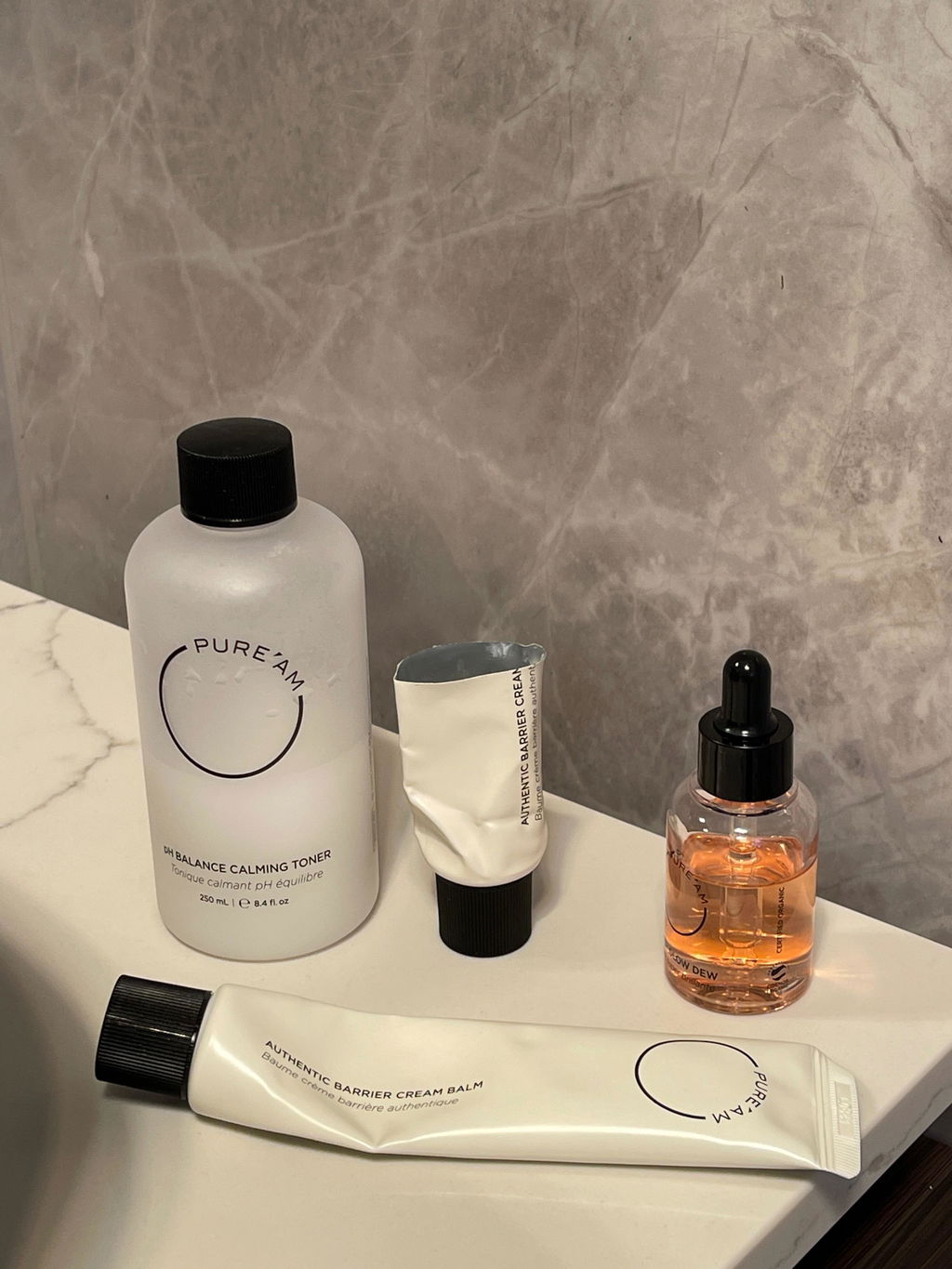
For PURE'AM, use toner after cleansing, follow with AUTHENTIC BARRIER CREAM BALM, and apply SUPER GLOW DEW after the moisturizer when you include all three leave-on products. The toner provides water-based hydration, the cream adds a richer moisturizing layer, and the squalane-based oil finishes the routine. Choose the combination and amount for your skin's needs, and apply sunscreen after skincare in the morning; this product-specific order does not make every layer compulsory.
We build our own routine around this same order because each step has one physical job, and that job only works once the step before it has finished. Skip the wait, and the layers fight each other instead of working together.
What Each Layer Is Actually Doing
The hydration you feel in healthy skin is water held inside the stratum corneum. Humectants like hyaluronic acid and glycerin do the holding; the lipid layer around them decides how long that water stays put.
That lipid layer depends on more than one ingredient working together. A physiological lipid mixture study in the Journal of Investigative Dermatology found that applying only one or two of ceramides, cholesterol, and free fatty acids actually delayed barrier recovery, while applying all three in an equimolar ratio let repair proceed normally. Later clinical reviews have built on that finding, treating a ceramide-cholesterol-fatty acid ratio near 3:1:1 as a working standard for dry or damaged skin, and linking ceramide-dominant formulas to measurably lower transepidermal water loss, or TEWL, in a PMC review.
That splits the three-step job cleanly:
| Step | Job | What to check |
|---|---|---|
| Toner | Resets post-cleanse pH and lays down humectants so later steps can absorb | Alcohol and fragrance load, texture, more than one molecular weight of humectant |
| Barrier cream balm | Replaces missing lipids and physically covers the surface | Whether ceramides appear alone or together with cholesterol and fatty acids |
| Face oil | Reinforces the seal on top of the cream and finishes the texture | Oil type, fragrance content, absorption speed |
The oil goes last because it isn't supplying water. It's slowing the rate at which water already in the skin gets out, which only matters once that water and the lipids meant to trap it are already in place.
Why the Oil Goes On After the Cream, Not Before
Put oil on before a cream balm and the cream's water-based ingredients now have an extra lipid film to cross. Put the cream on first and finish with oil, and the oil only has to do one thing: seal. That means less of it gets the job done.
Mornings add a second reason to keep oil last, or off the list entirely. Layering a face oil underneath sunscreen can dilute the sunscreen formula and reduce how well it protects, according to 100% Pure. When that's the concern, the simpler fix isn't finding the right order. It's using a minimal amount or moving the oil to the evening routine instead.
For a barrier that's already compromised, the general guidance leans toward fewer steps rather than more: when a barrier cream balm handles most of the sealing on its own, the oil on top only needs to finish a job that's mostly already done, per DermApproved.
Why We Start With Squalane
The bigger risk with adding an oil to sensitive skin usually isn't insufficient moisture. It's a new irritant showing up in the mix. Squalane compares well on that measure specifically: ingredient database Skinsort lists it as an ingredient with no reported irritation even at 100% concentration.
Texture differs too. Squalane absorbs faster than plant oils like argan, rosehip, or marula, and leaves less of a greasy residue behind, per Mirai Skin. That lightness matters specifically because it's going on top of a cream balm. A heavy oil stacked over a rich balm oversaturates the surface and makes everything harder to blend.
Sourcing is worth a second look. Olive-derived squalane can carry residual fatty acids or plant waxes, which is a concern for anyone managing Malassezia-related breakouts, and sugarcane-derived squalane is the recommended alternative in that case, according to Skinsort.
The Risk Hiding Behind "Calming" Oil Blends
Plenty of face oils marketed for sensitive skin lead with lavender, tea tree, rose, or ylang-ylang as an essential oil blend. The label promises calm. The allergy literature tells a different story about that exact ingredient group.
DermNet explains that essential oils can trigger allergic contact dermatitis through delayed hypersensitivity, and lists several oils with confirmed allergen status. A 2016 review in Dermatitis found roughly 80 essential oils implicated in contact allergy overall, and among 55 tested in patients with suspected contact dermatitis, nine, including laurel, turpentine, orange, tea tree, citronella, ylang-ylang, sandalwood, clove, and costus root, crossed a 2% patch-test positivity threshold.
A history of atopic dermatitis sharpens the call further. A Contact Dermatitis (2023) study from the French Dermatology Allergy Group found that more than half of sensitized patients had a personal history of atopy or atopic dermatitis, and concluded that essential oil use isn't advisable for people with that history.
The takeaway for the oil step specifically: this is the layer where adding the fewest new variables matters most. On skin that's already reactive, one strongly fragranced oil can make it impossible to tell what actually caused the next flare-up.
Giving Each Layer Time to Land
Pilling, the white flaking that shows up when products won't blend, is one of the most common complaints about layering three steps. It happens when a new layer goes on before the last one has absorbed. The standard fix is a three-to-five-minute wait between layers, per Smytten.
In practice, we find this sequence easiest to hold onto:
- Pat the toner onto slightly damp skin right after cleansing.
- Once the toner has absorbed and the surface looks matte again, smooth on a thin layer of cream balm.
- Wait three to five minutes, then roll two to three drops of oil between your palms and press it over the face.
- Pat one more drop of oil into any spot that still feels tight, usually around the eyes, cheeks, or mouth.
Folding that wait into something else, brushing teeth or drying hair, makes it easier to actually keep.
Morning and Evening Aren't the Same Routine
Evenings can carry a heavier stack since nothing goes on top afterward. Mornings have sunscreen and makeup layered on next, which changes the math.
| Time | Order | How to handle the oil |
|---|---|---|
| Morning | Cleanser → toner → cream balm (thin layer) → sunscreen | Skip it, or use one drop only on dry patches |
| Evening | Cleanser → toner → cream balm → face oil | Full seal, two to three drops |
If a morning genuinely calls for oil, keep it to a small, localized amount, give it time to absorb, and apply sunscreen after. If tightness is already starting at the cleansing step, the oil isn't the first thing to fix. That question gets its own breakdown in Can Sensitive Skin Skip Double Cleansing With Sunscreen?
How We Fill These Three Spots
Here's how our own line maps onto these three roles, within what's stated on each product page.
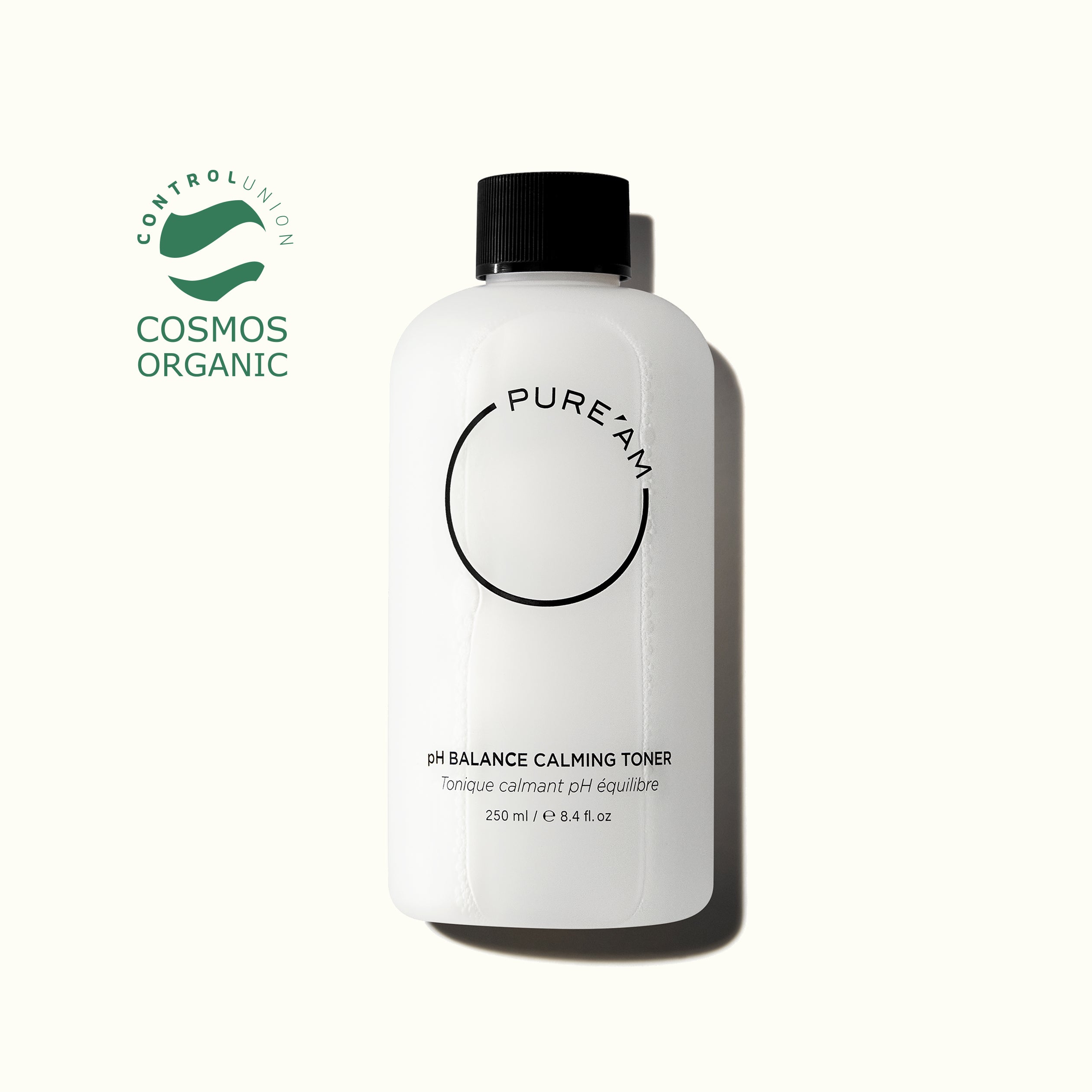
Toner: pH BALANCE CALMING TONER (29 USD). A milky essence toner with triple hyaluronic acid, Vegan Ceramide™, and organic Wando yuzu water. It resets post-cleanse pH and lays down humectants at several molecular weights before anything richer goes on.
Barrier cream balm: AUTHENTIC BARRIER CREAM BALM (37 USD). A buttery balm formulated with encapsulated Vegan Ceramide™, triple hyaluronic acid, and polyglutamic acid. Because it's a balm texture, it carries most of the sealing job on its own, which lightens the load on whatever oil goes on top.
Face oil: SUPER GLOW DEW (39 USD). A lightweight oil serum built on 60% vegan squalane, blended with sweet almond oil and Lithospermum (jacho) root extract. The high squalane share is why it sits comfortably as the final layer over a rich balm instead of competing with it.
pH BALANCE CALMING TONER
29 USD
Shop now
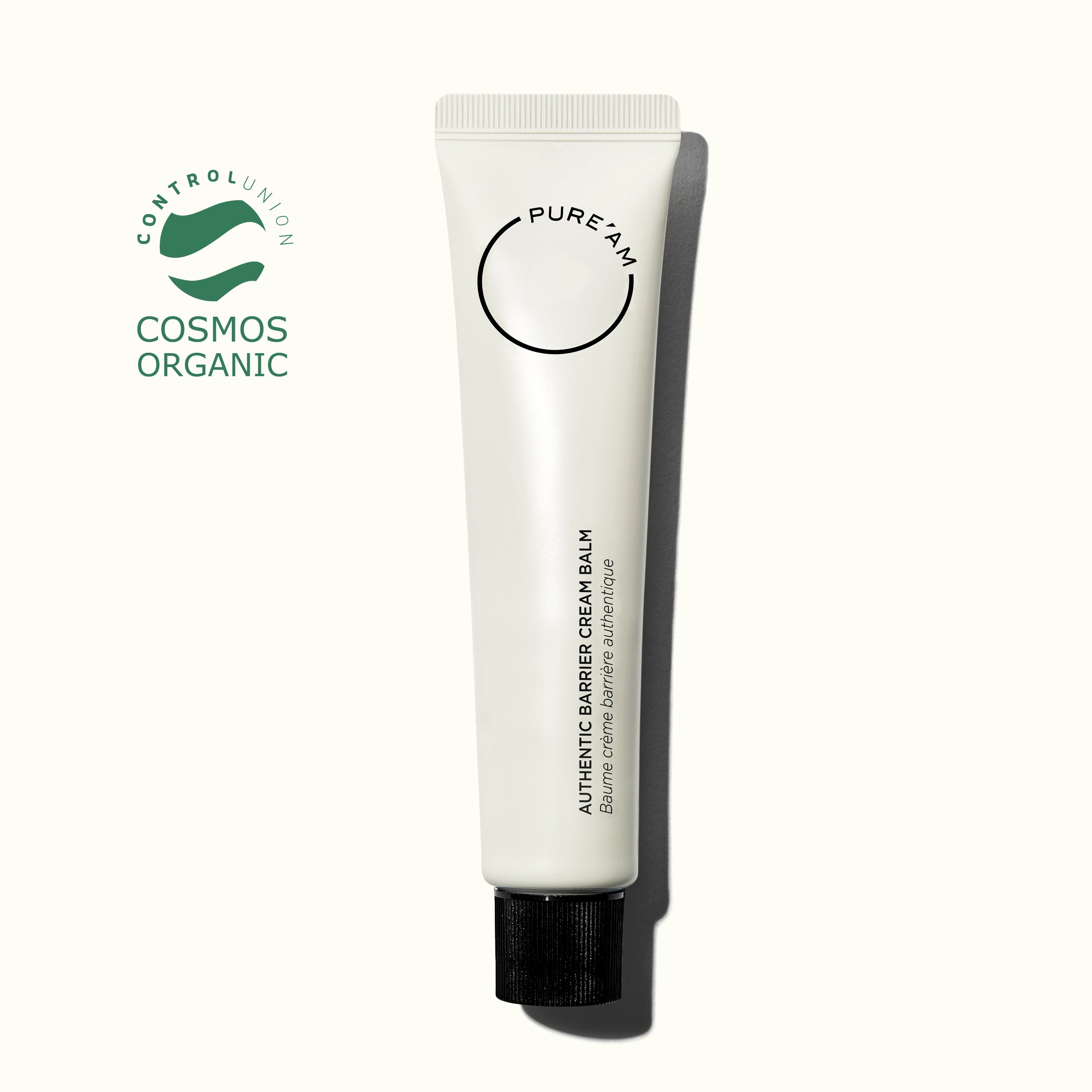
AUTHENTIC BARRIER CREAM BALM
37 USD
Shop now
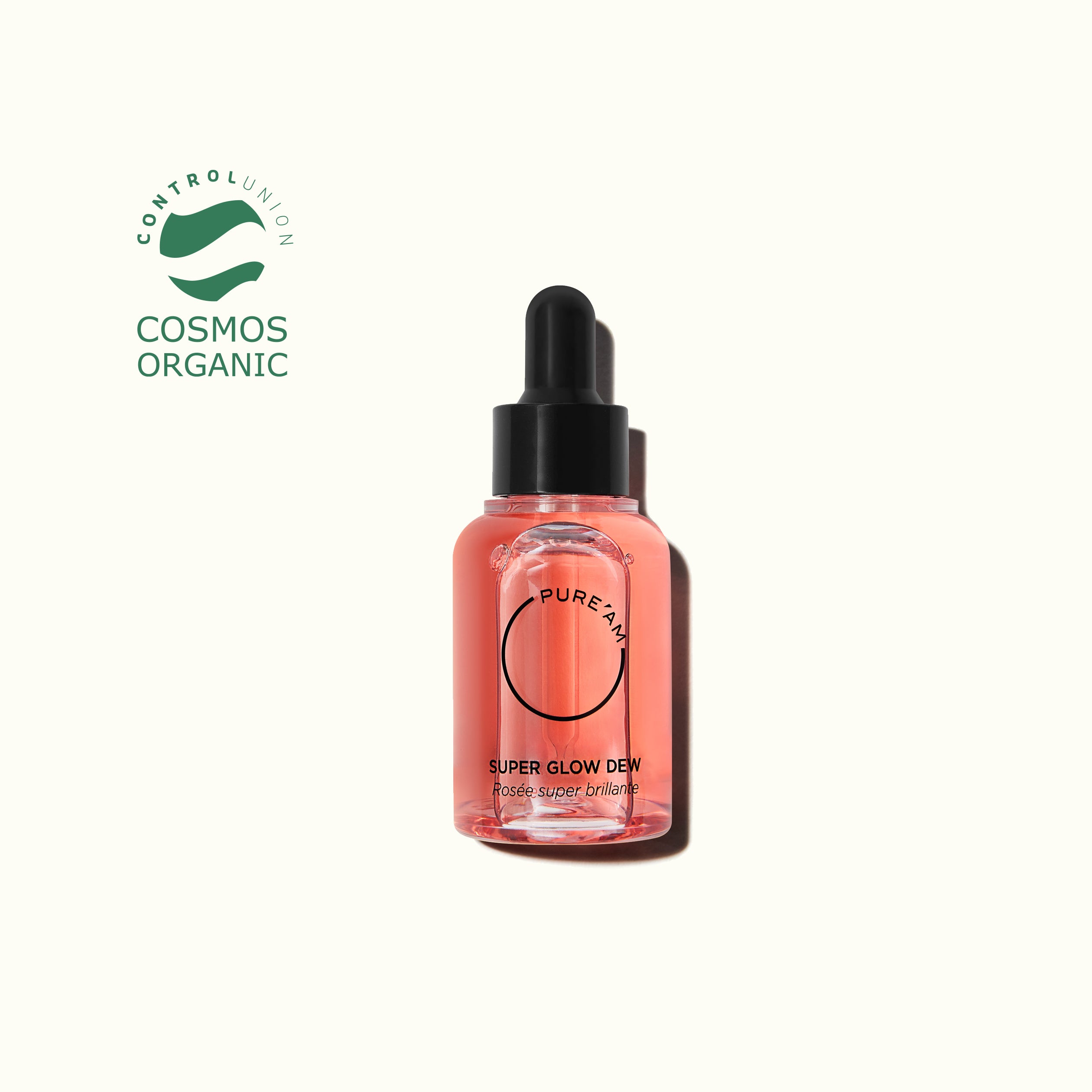
SUPER GLOW DEW
39 USD
Shop now
Filling the toner and cream balm spots first, then adding the oil later based on season or how tight skin feels, works just as well. Getting each step to do its one job matters more than the total count.
When This Three-Step Combination Isn't the Fit
This layering order solves a specific problem: dry, water-hungry skin that needs its lipid layer rebuilt. Other skin types often need far less.
- Skin that already runs oily and clogs easily often does fine with toner and cream alone, no oil step needed.
- Active eczema, contact dermatitis, or visible inflammation calls for a clinician's input before adding another product, not another layer. Squalane itself has a low irritation profile, but its job here stays limited to moisture and sealing.
- A history of reacting to fragranced products means checking the toner and cream balm ingredient lists too, not just the oil.
- If redness or stinging shows up after adding a new step, remove just that one addition and watch for a few days. Changing two things at once makes the cause impossible to isolate.
If the tightness keeps showing up between steps rather than after the full routine, the issue may sit in the handoff itself rather than the products chosen. We cover that in more depth in Is Barrier Cream Enough for Deep, Tight Sensitive Skin?
FAQ
Can I use an essence or serum instead of a toner?
The name matters less than the job. What the step needs to do is reset pH after cleansing and lay down humectants before a richer layer goes on. A high-alcohol formula that dries down fast usually can't hold up that end of the job, regardless of what it's labeled.
How many drops of face oil should I actually use?
As a final seal over a cream balm, two to three drops across the whole face is a reasonable starting point, topping up only where it still feels tight. Squalane absorbs quickly and leaves little residue, per Mirai Skin, but too much still risks pilling under sunscreen or makeup.
Do I need all three steps in summer too?
Adjust the amounts rather than dropping steps outright. In humid months, use less cream balm and reserve the oil for dry patches or skip it; in dry months, keep the oil as the final evening layer. Let how tight skin feels that day guide the decision more than a fixed step count.
Should I avoid squalane oil if I'm prone to fungal acne?
Check the source rather than avoiding squalane outright. Olive-derived squalane can carry residual fatty acids or plant waxes that are a concern for Malassezia-related breakouts, while sugarcane-derived squalane is the recommended alternative, according to Skinsort. If breakouts persist, pause the oil step and stay with cream balm alone for a while.
Wouldn't a combined oil-and-cream product be simpler?
It can simplify the shelf, but it removes the ability to adjust each amount separately. For skin where different areas need very different amounts of oil, keeping the cream balm and face oil as separate steps makes it easier to manage tight and shiny areas at the same time.
Start by watching the wait time between toner and cream balm, then between cream balm and oil, tonight. If you want to begin both the toner and cream balm spots at once, the AUTHENTIC BARRIER DUO pairs them together.