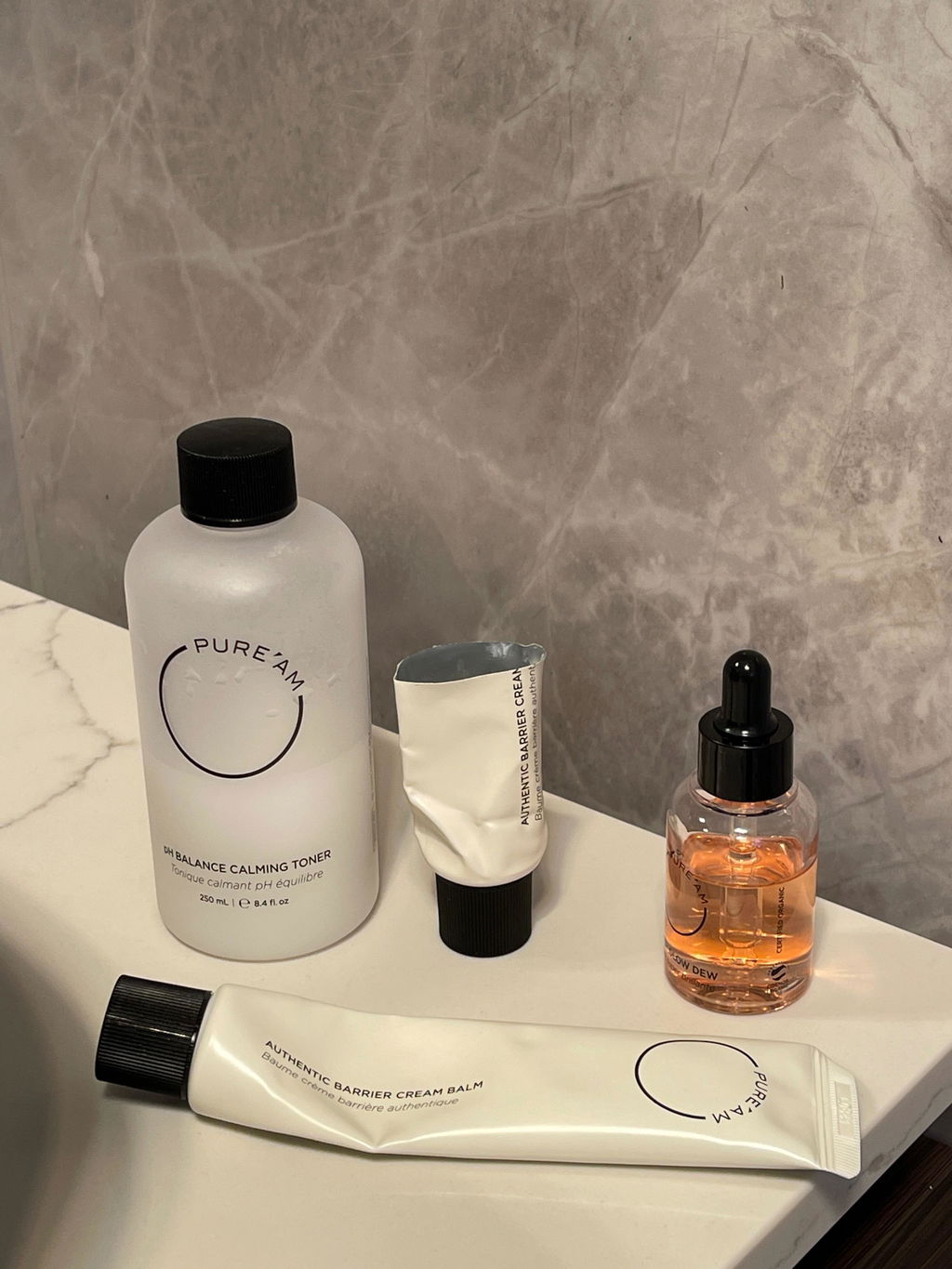
The Three Steps Behind Real Barrier Cream Results
TL;DR: If your skin feels tight right after washing and still feels dry hours later, the fix usually isn't a stronger cream. It's the order of your routine: a mild, pH-balanced cleanse that stops stripping water-binding molecules, a hydrating layer that gives water somewhere to sit, and a ceramide-rich cream that seals it in while skin is still damp. Skip the first two steps and even a well-formulated barrier cream has little left to lock in.
When someone searches for the best barrier cream, we think the more useful question is what happens before the cream goes on. Deep dryness and tightness depend less on the strength of one product and more on the condition of the skin that product is asked to work on. If the outer layer has already lost its water-binding molecules during cleansing, no amount of cream afterward gives it something to hold.
We build our routine, from cleanser to barrier cream, as one connected system, and this piece walks through why.
Deep Dryness Isn't the Same as Surface Tightness
Skin doesn't hold water simply because it sits in fatty tissue. Amino acids, pyrrolidone carboxylic acid, and lactic acid inside skin cells, collectively called natural moisturizing factor (NMF), physically bind water molecules. Around those cells, lipids arrange into stacked lamellar layers that keep the bound water from evaporating. Signature MG's overview of skin structure describes these two systems as water storage and water defense working together.
When NMF is repeatedly washed away, there's less to hold water in the first place. When the lamellar structure is disturbed, whatever water remains escapes faster. That's why surface tightness right after cleansing and a deeper dry feeling later in the day can show up at the same time from two different mechanisms.
This is also why piling on a heavier oil or cream doesn't always work. An occlusive layer on skin that has lost its water-binding molecules seals in very little, because there isn't much water left underneath to seal. Real dryness relief needs both a fill step and a seal step, not just a thicker seal.
Cleansing pH Comes First
Skin's surface functions best in a mildly acidic range, so the pH of a product used once or twice a day, every day, is one of the first variables worth checking.
According to Health Kyunghyang, Dr. Eun Hyung Kim, a dermatology professor at Dankook University Jeil Hospital, explains that over-cleansing can disrupt the skin's pH balance and, once barrier function is compromised, allow water, electrolytes, and proteins to escape from within the skin. Kim recommends mildly acidic cleansers in the pH 4.5 to 6.5 range for skin that stays hydrated below the surface, not just on it.
That recommendation carries weight specifically because of frequency. One alkaline wash rarely causes lasting damage on its own. Repeated at intervals shorter than skin's recovery time, though, the outer layer starts each new cycle already depleted.
That's why we treat the cleanser, not the cream, as the first checkpoint. Our AMINO ACID MILD CLEANSER (23 USD) is a micro-foaming formula built on 100% amino acid surfactants, designed to clean without pulling skin away from its natural pH and microbiome balance. If you want the surfactant chemistry behind why some cleansers leave skin tight and others don't, we cover it in Why Cleansing Leaves Skin Tight: A Surfactant Guide.
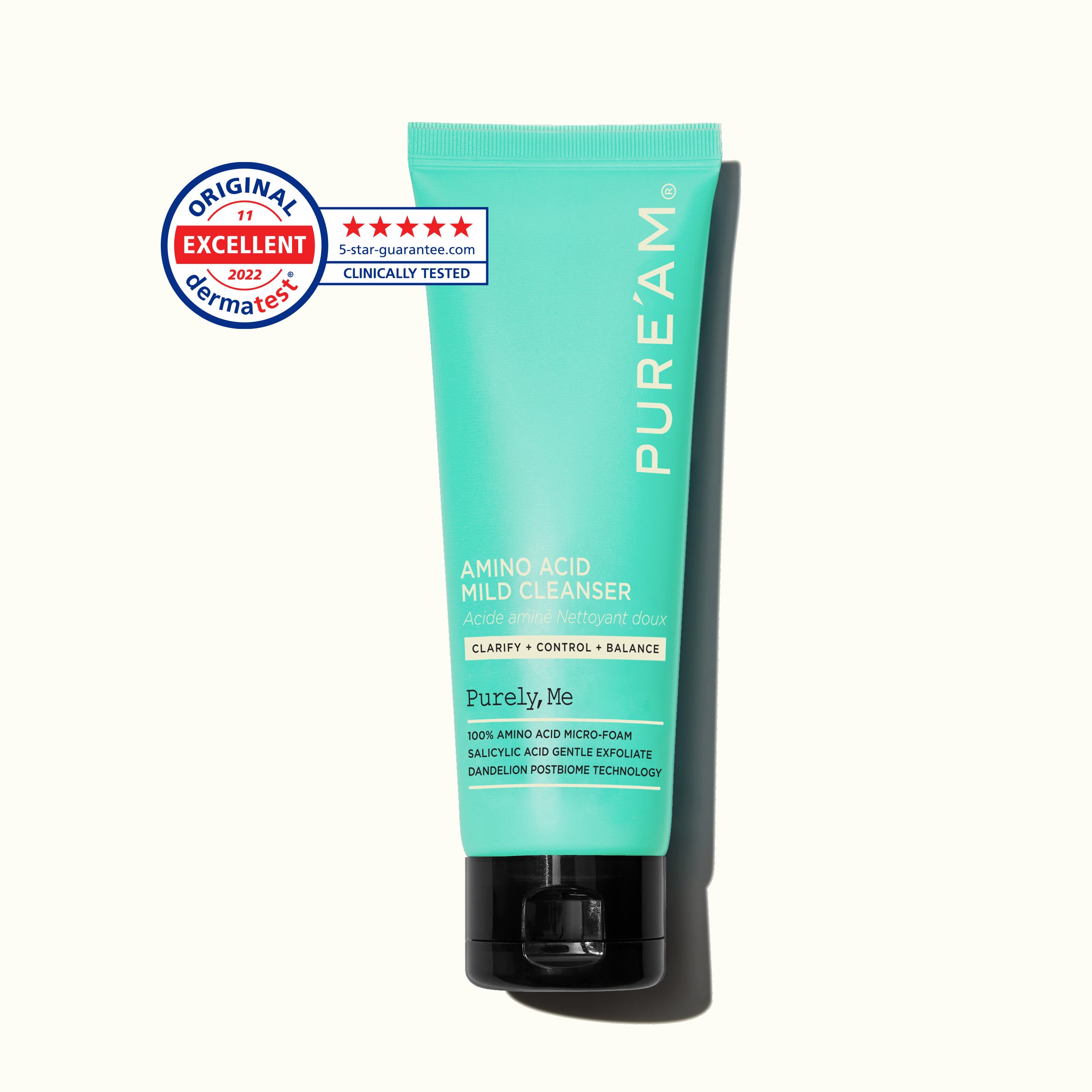
Why It's Special
- 100% Vegan Amino Acid Surfactants: biodegradable, non-stripping cleansers that lift away impurities without pulling apart the lipid barrier.
- Salicylic Acid, Low Concentration: supports gentle pore clarity without the harsher exfoliation of a full-strength acid cleanser.
- Dandelion Postbiome Technology: a postbiotic complex aimed at calming and balancing skin prone to redness and reactivity.
The Fill Step: Giving Water Somewhere to Stay
Right after cleansing, skin absorbs water most readily and also loses it fastest. What goes on in that window decides how much a barrier cream has left to work with later.
Formulation approach matters here. Beauticslab's barrier cream comparison separates products built to rebuild lipid structure directly from those built to add humectants that pull water into the outer layer. A related Beauticslab guide to moisture creams for sensitive skin suggests identifying which problem is more urgent first: calming, layered hydration, or barrier rebuilding, before choosing a product.
| Symptom pattern | Priority issue | Step to reinforce |
|---|---|---|
| Tight only right after cleansing, eases in 30 minutes | Cleansing strength | Switch cleanser |
| Dry all day, makeup lifts by afternoon | Water-binding | Toner or essence layer |
| Flaking, redness, and stinging together | Lipid structure | Barrier cream seal |
| Cream helps for two hours, then dryness returns | Both fill and seal | Connect all three steps |
Our pH BALANCE CALMING TONER (29 USD) is designed for this fill step. It's a milky essence toner combining Triple Hyaluronic Acid with Vegan Ceramide™ and organic Wando yuzu water, meant to restore post-cleanse pH and layer hydration before the next step.
The Seal Step: What a Barrier Cream Actually Does
The case for sealing has clinical backing. A split-face study published in Skin Research and Technology exposed healthy female participants to indoor winter heating for at least six hours a day and applied a ceramide cream to one side of the face only.
CLINICALLY PROVEN FACTS
- Study: Park, Jo, Jeon, and Na, published in Skin Research and Technology, 2023
- Design: Randomized, split-face; healthy female participants with normal skin; at least 6 hours of daily indoor heater exposure in winter
- Measured: Skin temperature, hydration, sebum, transepidermal water loss (TEWL), elasticity, texture, pores, redness, wrinkles
- Outcome: After 6 hours, facial roughness, redness, pore size, and wrinkles increased significantly, and forearm TEWL rose significantly. The ceramide-treated side of the face showed significantly better elasticity, texture, pores, and wrinkles than the untreated side.
- In plain terms: A ceramide cream measurably limited heating-related skin changes within a single day, in participants who already had normal, undamaged skin.
That last point matters. The study measured healthy skin over a short exposure window. It doesn't establish a recovery timeline for already-compromised, sensitive skin. What it does show is that a dry indoor environment produces measurable changes fast, and a ceramide-based cream measurably limits some of them.
Timing the cream matters as much as the formula. The American Academy of Dermatology advises applying moisturizer while skin is still damp from washing, reaching for a cream or ointment rather than a lotion, and choosing fragrance-free formulas for dry, sensitive skin. A rich cream balm, applied at the right moment, follows that same logic.
Our AUTHENTIC BARRIER CREAM BALM (37 USD) is built around this seal step: liposome-encapsulated Vegan Ceramide™ combined with Triple Hyaluronic Acid and polyglutamic acid in a buttery balm texture, meant to handle sealing and water retention together. For the ingredient ratios and certifications worth checking before buying any barrier cream, see What to Check Before Buying a Barrier Cream Balm.
AMINO ACID MILD CLEANSER
23 USD
Shop now
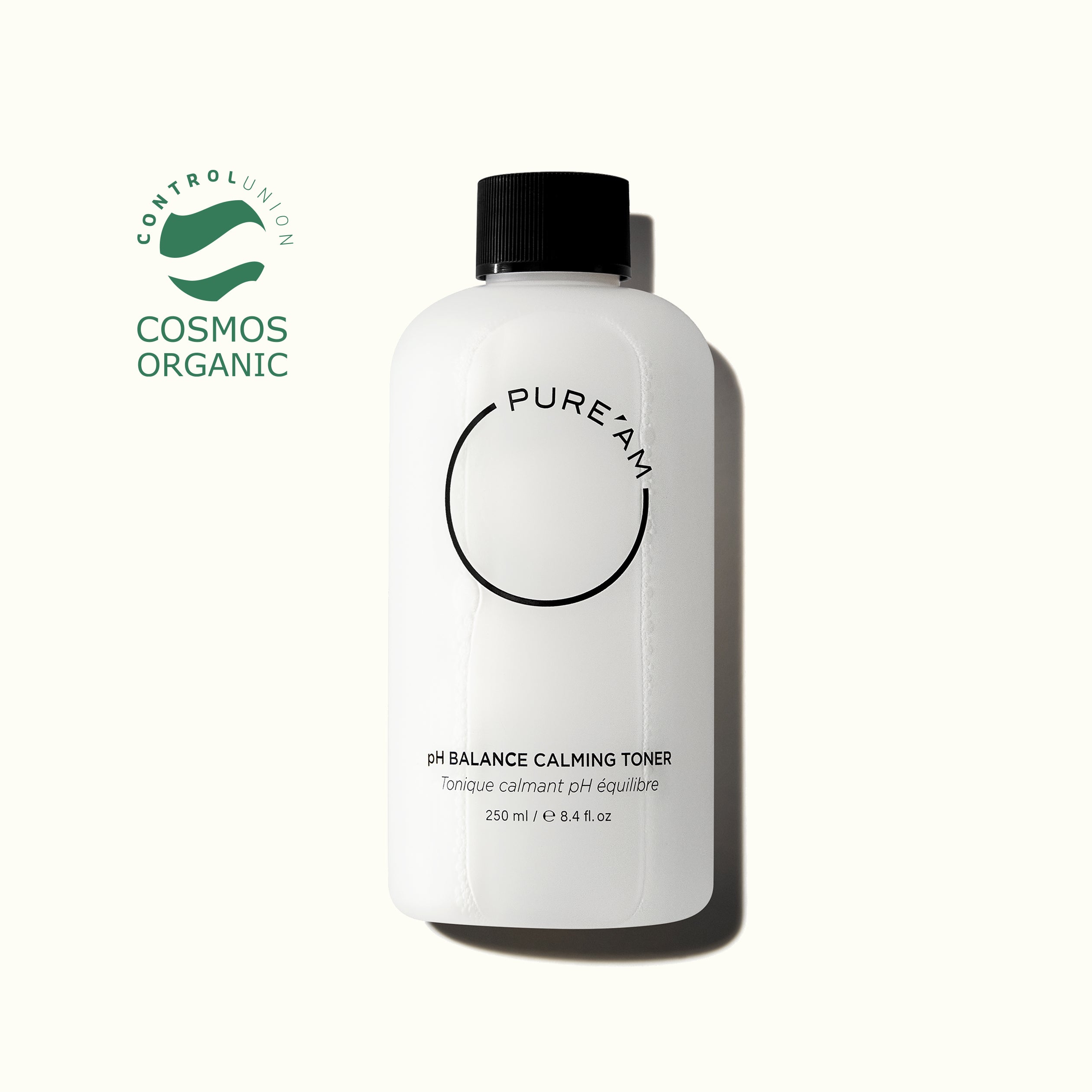
pH BALANCE CALMING TONER
29 USD
Shop now
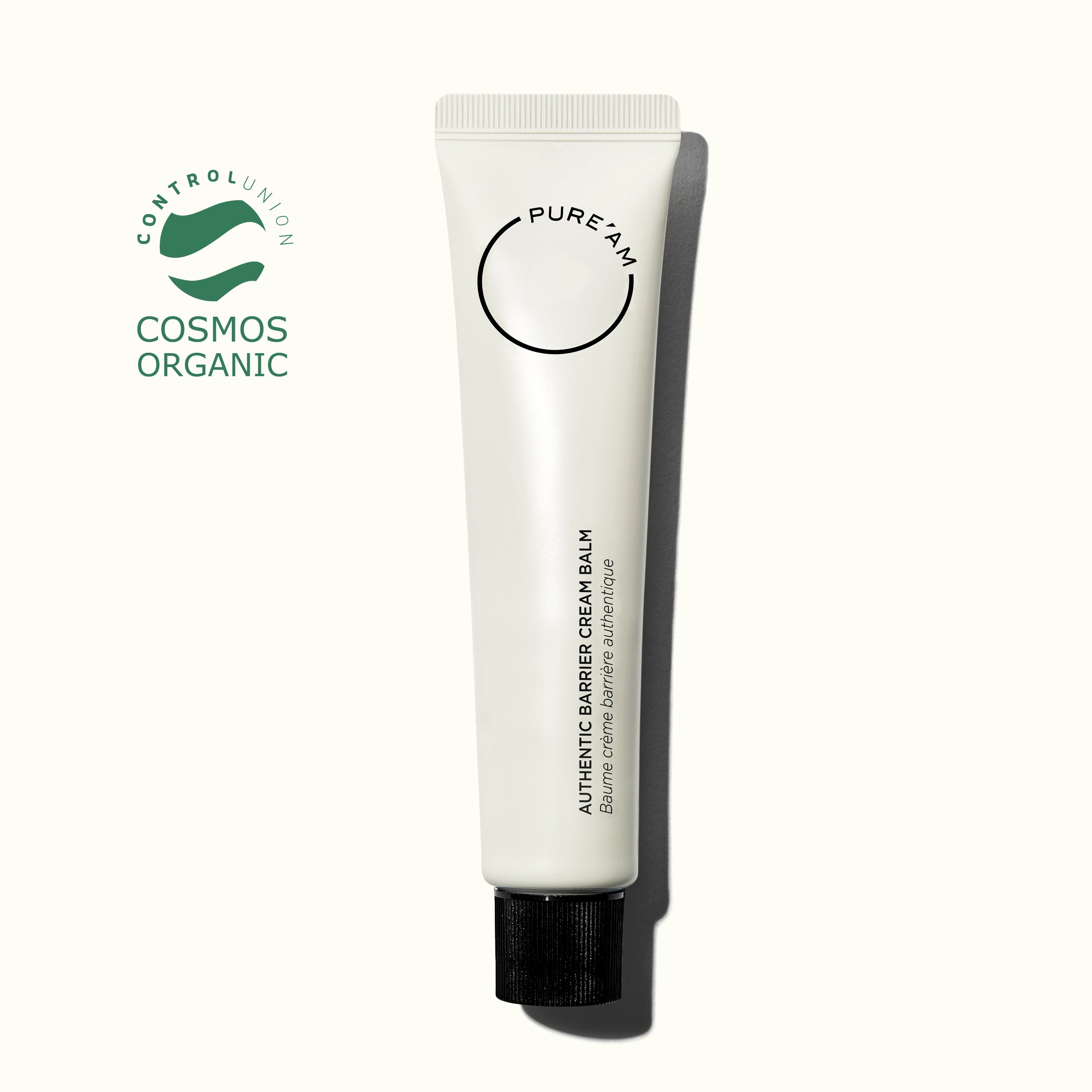
AUTHENTIC BARRIER CREAM BALM
37 USD
Shop now
Formula Contains
- Vegan Amino Acid Surfactants: Anti-strip cleansing
- Triple Hyaluronic Acid: Layered hydration
- Vegan Ceramide™ (liposome-encapsulated): Barrier repair, water retention
- Polyglutamic Acid: Surface moisture binding
- Wando Organic Yuzu Water: pH restoration support
The Three-Step Order, Night by Night
STEP 1: Cleanse with lukewarm water for a short time using the amino acid cleanser. Judge the finish by comfort, not by a squeaky-clean feel.
STEP 2: While skin is still damp, pat on the toner in two thin layers rather than one heavy pour. Thin layers absorb more completely than a single saturated pass.
STEP 3: Once the toner is about half absorbed, press in a small amount of the cream balm. On spots that still feel tight, add a second thin pass in the same area.
In drier months, a lightweight oil serum can go between steps 2 and 3. Our SUPER GLOW DEW (39 USD) combines 60% Vegan Squalane with sweet almond oil and Lithospermum (Jacho) root extract for extra suppleness without weight. The full four-step sequence and why the order matters is in A Simple Sensitive-Skin Routine: PURE'AM's 4 Essentials.
A Two-Week Way to Test What's Actually Missing
Changing everything at once makes it impossible to know what helped. We suggest introducing one step at a time.
In week one, change only the cleanser and watch whether the first three minutes after washing feel less tight. In week two, add the toner and track whether afternoon dryness and makeup lifting improve. In week three, add the cream balm and check how skin feels on waking.
This sequence also shows you where a step is failing. If tightness right after washing hasn't changed by the end of week one, the cleanser wasn't the main issue, and it's worth looking at water temperature or indoor humidity instead.
When This Routine Isn't Enough
Redness that doesn't settle after several days, or dryness accompanied by oozing, cracking, or persistent itching, calls for a dermatologist visit rather than a routine adjustment. The AAD notes that severe dryness that doesn't respond to home care may need a prescription treatment and can be a sign of a skin condition on its own. Our products support everyday cleansing and moisture care; they don't treat skin disease.
FAQ
Can changing just the barrier cream fix deep dryness?
Partially, in some cases. If water-binding molecules are still being washed away at the cleansing step, the improvement will be limited no matter how good the cream is. If a cream swap alone shows no change after two weeks, the cleanser is the next thing to check.
If I can only add one step, toner or cream balm, which comes first?
Go by what you feel right now. If afternoon dryness and makeup lifting are the bigger complaint, start with the toner's fill step. If flaking and stinging are more prominent, start with the cream balm's seal step.
Cream balm feels heavy. Do I still need it in summer?
Air conditioning creates a low-humidity environment similar to winter heating. Judge by the humidity of the room you spend time in rather than the season, and if it feels heavy, use less and apply it only to the driest areas.
Does an organic ingredient automatically mean a gentler product?
The organic label by itself doesn't settle the question. Whether a certification applies to a single raw ingredient or the finished product, and what role that ingredient plays in the overall formula, matters just as much. That's a big enough question that we cover it separately.
Isn't using both a cream balm and an oil serum redundant?
They do different jobs. The oil serum adds suppleness and a light replenishing layer, while the cream balm rebuilds lipid structure and seals moisture in. On less dry days, either one alone is often enough.
The fastest way to close a dryness gap is to find out which of the three steps your current routine is missing. If you'd rather start with the fill and seal steps together, the AUTHENTIC BARRIER DUO (59 USD) pairs the toner and cream balm in one starting point.