Choosing a Barrier Cream Balm: The Real Checklist
TL;DR: A barrier cream balm works when ceramides, cholesterol, and fatty acids are formulated together, not when one lipid is loudest on the label. Balms also carry no water; they only seal in whatever hydration you applied first, so the toner or essence underneath decides how well the balm performs. Fragrance-free labeling and a stated use-order are the third and fourth checks worth making before you buy.
At PURE'AM, we get asked which barrier cream is "the best" more than almost any other question, and popularity is the wrong way to answer it. We built this comparison around three checks: whether ceramides, cholesterol, and fatty acids appear together in one formula, whether the product is fragrance-free, and whether the brand tells you what to apply before the balm. Six barrier cream balms sold to dry, sensitive skin get ranked against those three criteria below.
Why a Combination of Lipids Beats Any Single Ingredient
The outer layer of skin, the stratum corneum, naturally holds ceramides, cholesterol, and free fatty acids in roughly a 3:1:1 molar ratio. That ratio is not a marketing number. A lipid-mixture study published in the Journal of Investigative Dermatology on ScienceDirect found that applying only one or two of those three lipids to disrupted skin actually delayed normal barrier recovery, while an equimolar mixture of all three allowed repair to proceed normally, with further acceleration as the ratio increased.
That is why "contains ceramides" on a label tells you less than it seems to. A cream can list ceramides prominently and still leave out cholesterol or the fatty acid component that skin needs to rebuild its own lipid matrix in the right order. When the label doesn't confirm all three are present, the formula asks the ceramides to do a job they weren't designed to do alone.
The timing matters too: a review of ceramide-dominant formulations reported in PMC found transepidermal water loss reductions of about 10%, with hydration improvements lasting up to 72 hours in the formulations studied. That figure describes specific tested formulas rather than every ceramide cream on the market, and results will vary with concentration and the rest of the formula around it. Treat it as a benchmark for what a well-built combination can do, not a guarantee for any product carrying the word "ceramide."
A Cream Balm Doesn't Add Hydration. It Locks It In.
Confusing a balm with a regular moisturizer leads to disappointing results. According to Skin Balm Apothecary, balm formulas are typically built entirely from occlusive and emollient ingredients and contain no water at all. A balm functions purely as a seal, trapping whatever hydration is already sitting on the skin.
That single fact changes what step you take before reaching for the balm. Klairs' explainer on humectants, emollients, and occlusives walks through the same layering logic: humectants pull in water, emollients smooth and reinforce, occlusives seal everything underneath. Skip the humectant step in a dry climate and a humectant applied alone can actually pull moisture up from lower skin layers and let it evaporate, leaving skin drier than before. Dr. Leslie Baumann, a dermatologist and founder of the Baumann Cosmetic & Research Institute, makes the same point: in low-humidity conditions, a humectant needs an occlusive layered over it to hold onto the water it just attracted.
Put together, a barrier cream balm is really a two-step system: toner or essence first, for hydration, then the balm on top, for sealing. Ranking cream balms in isolation, the way most listicles do, skips the variable that actually determines whether the balm performs.
The Third Check: No Fragrance
Fragrance is one of the more common irritants for reactive skin. For skin that flares easily, checking the actual ingredient list for "Fragrance" or "Parfum" tells you more than a "gentle" claim on the front of the packaging. It's a five-second check that a marketing label can't replace.
How We Ranked These Six Barrier Cream Balms
The ranking below reflects three criteria, checked in this order:
- All three lipids present. Does the formula list ceramides, cholesterol, and fatty acids together, not just ceramides?
- Fragrance-free. Is the ingredient list free of Fragrance or Parfum?
- Stated use-order. Does the brand actually tell you to hydrate with a toner or essence before applying the balm?
| Rank | Product | All 3 lipids | Fragrance | Use-order guidance |
|---|---|---|---|---|
| 1 | PURE'AM AUTHENTIC BARRIER CREAM BALM + pH BALANCE CALMING TONER | Encapsulated ceramide, Triple HA, PGA listed | Not independently verified; check current PDP | Toner-first routine stated on product page |
| 2 | Illiyoon Ceramide Ato Concentrate Cream | Cholesterol present; ceramide NP listed near 4ppm | Fragrance-free confirmed | Not specified |
| 3 | COSRX Balancium Comfort Ceramide Cream | Not independently confirmed | Not independently confirmed | Not specified |
| 4 | Round Lab Dokdo Cream | Not independently confirmed | Not independently confirmed | Not specified |
| 5 | Real Barrier Extreme Cream | Not independently confirmed | Contains fragrance and silicone | Not specified |
| 6 | Atopalm Cream | Not independently confirmed | Contains fragrance and silicone | Not specified |
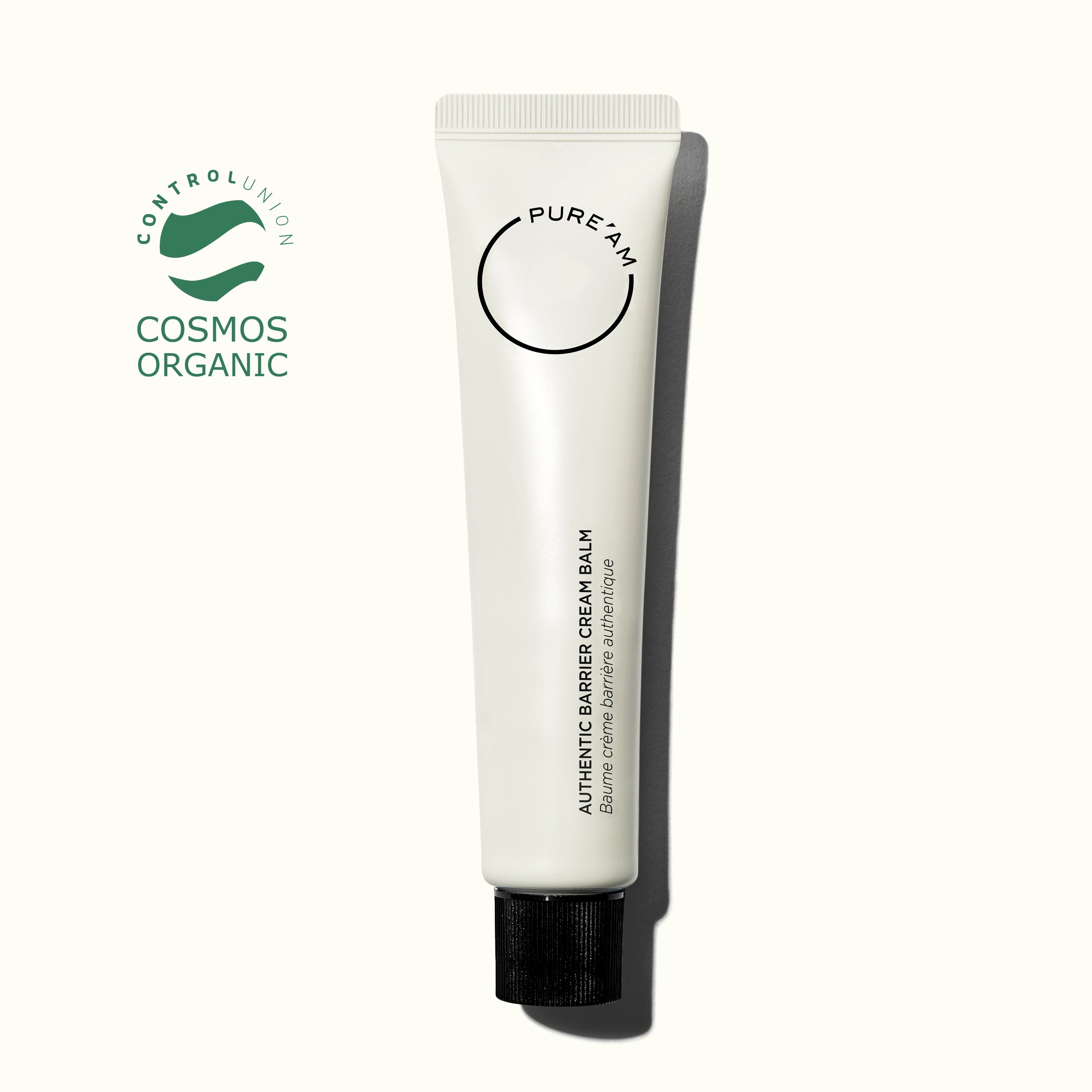
AUTHENTIC BARRIER CREAM BALM
37 USD
Shop now
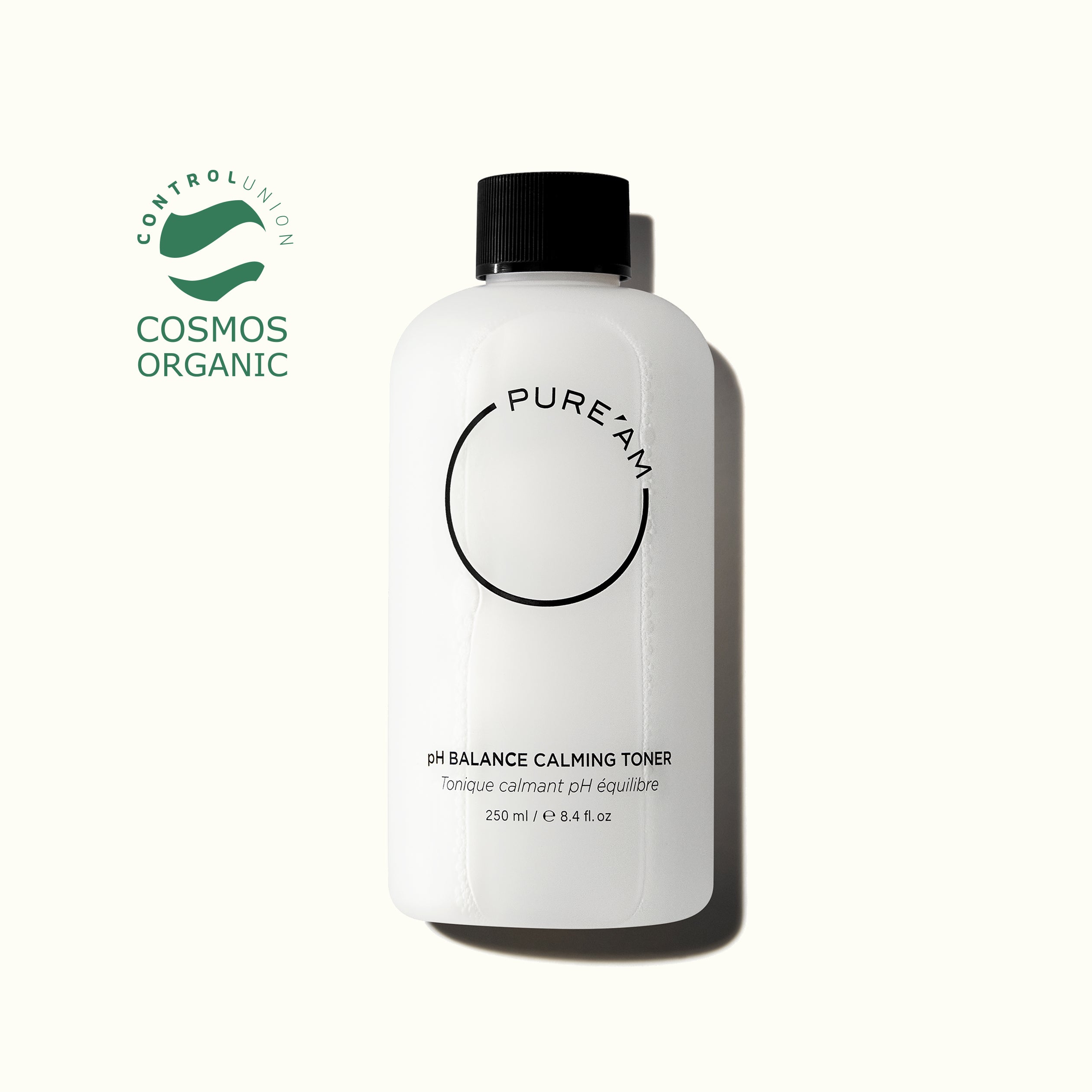
pH BALANCE CALMING TONER
29 USD
Shop now
1. PURE'AM Authentic Barrier Cream Balm + pH Balance Calming Toner
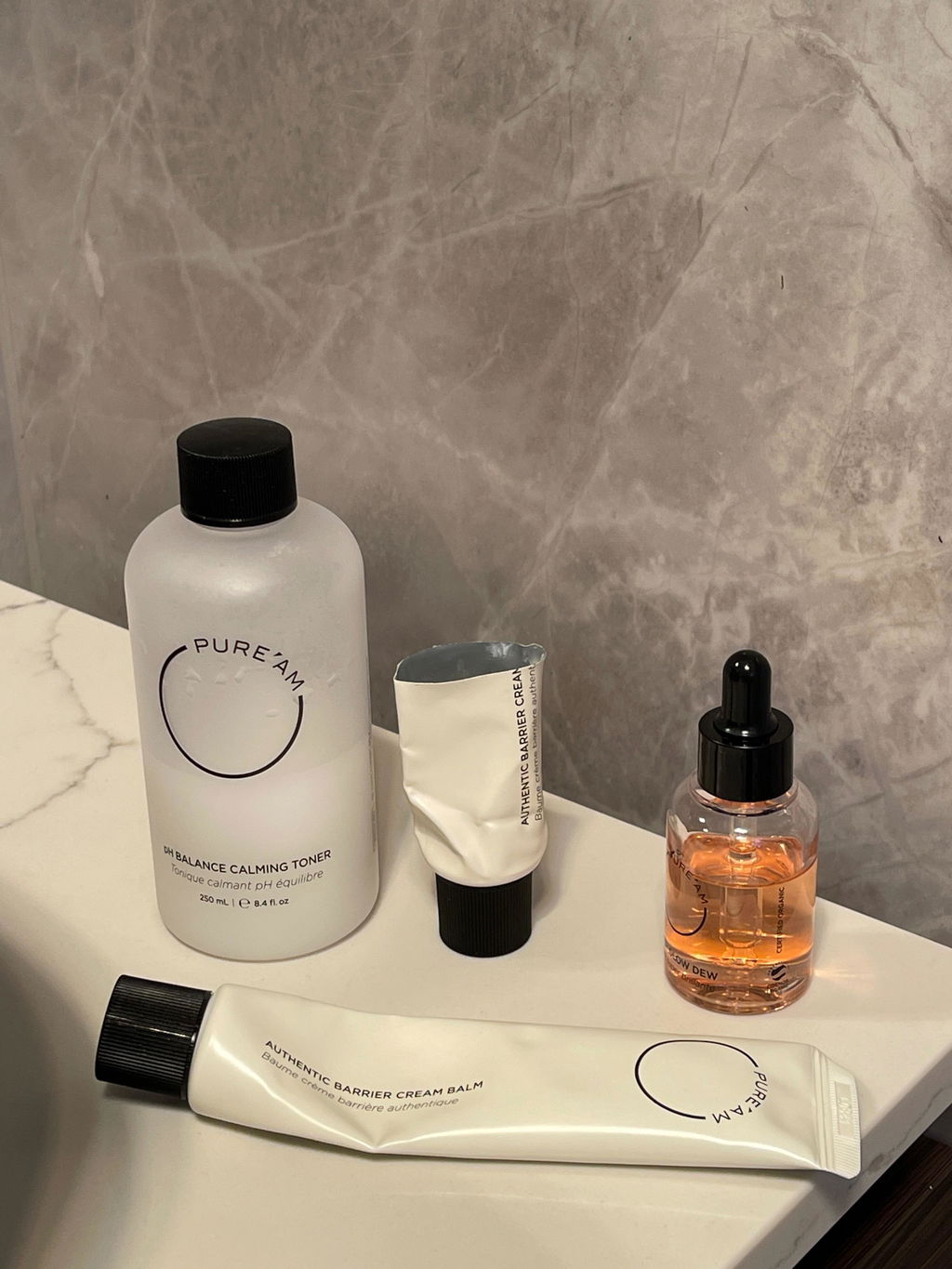
We rank our own pairing first here because it satisfies all three criteria as a set, not because of brand recognition. Our Authentic Barrier Cream Balm product page lists encapsulated vegan ceramide, triple hyaluronic acid, and polyglutamic acid formulated together. Its paired pH Balance Calming Toner is a milky-textured toner built with triple hyaluronic acid, vegan ceramide, and organic Wando yuzu water, designed to restore skin's pH and add hydration right after cleansing.
On their own, that description reads as "a toner with ceramide" and "a balm with ceramide." Used in sequence, they complete the humectant-then-occlusive structure described above: the toner supplies water and settles pH, and the balm goes on before that moisture evaporates, sealing it in. That's a more reliable path to the locked-in hydration a balm is supposed to deliver than applying a balm to skin that was never rehydrated first.
We haven't independently confirmed exact fragrance status or repurchase data at the time of writing, so we're not stating either as fact here. Always check the current full ingredient list on the product page before buying.
2. Illiyoon Ceramide Ato Concentrate Cream
This is a solid fragrance-free option. Both EWG Skin Deep and independent ingredient analysis confirm no added fragrance. According to INCIDecoder's breakdown, the formula does include cholesterol, but ceramide NP is listed at a low concentration, around 4ppm, so the brand doesn't publicly state a ratio close to 3:1:1. It's a reasonable pick for someone prioritizing fragrance-free above all else, though there's no stated toner-first routine to pair it with.
3 and 4. COSRX and Round Lab Ceramide Creams
Both brands sell ceramide-forward creams, and neither has published, at the time of writing, a clear public statement of the exact lipid ratio or a confirmed fragrance-free claim through their own official channels. That's not a mark against the products themselves. It just means the specific claims this ranking checks for aren't independently confirmable right now. Check the current ingredient list before buying either one.
5 and 6. Real Barrier Extreme Cream and Atopalm Cream
These sit lowest on this particular checklist. Skinsort's ingredient comparison shows both Real Barrier Extreme Cream and Atopalm Cream contain fragrance and silicone. Fragrance is a known irritant risk for reactive skin, and while silicone isn't inherently harmful, a heavy occlusive silicone layer can make it harder to judge whether the other lipids in the formula are actually absorbing. Skin that reacts easily to fragrance has reason to look elsewhere first.
The Order That Actually Matters
- Right after cleansing, while skin is still slightly damp, apply a toner or essence.
- Layer the cream balm on before the toner fully absorbs and evaporates.
- Read the ingredient list yourself and check for Fragrance or Parfum.
- Favor a formula that states cholesterol and fatty acids alongside ceramides over one that names ceramides alone.
For more on why we design a full routine instead of leading with one hero ingredient, see Which Sensitive-Skin Brands Explain Their Whole Formula? and How to Choose a Barrier Cream for Dry, Sensitive Skin.
FAQ
Is a ceramide-only cream still worth using?
A ceramide-only formula can offer some moisturizing benefit, but the ScienceDirect lipid study found that ceramide alone, or ceramide with only one of the other two lipids, delayed normal barrier recovery compared to all three lipids applied together. Checking for cholesterol and fatty acids alongside ceramide is the safer default.
Can I skip the cream balm and just use a regular moisturizer?
A regular moisturizer contains water and is built to hydrate and seal at once. A balm contains no water and is built purely to seal. Per Skin Balm Apothecary, very dry skin usually gets more out of a balm layered over a humectant step than from a moisturizer alone, since the sealing effect is stronger and more deliberate.
Does fragrance-free mean a product won't cause any irritation?
No. Alcohol, certain preservatives, and some essential-oil-derived ingredients can irritate skin even without fragrance listed. Fragrance-free is one useful filter, not a full safety guarantee, so it's still worth reading the entire ingredient list rather than stopping at that one line.
Should I apply more cream balm in winter?
Order matters more than quantity. Layering a thicker amount of balm onto dry skin that skipped the toner step just adds an oil layer without the water underneath it to seal in. Rehydrating first with a toner, then sealing with the balm, does more for winter dryness than simply using more balm.