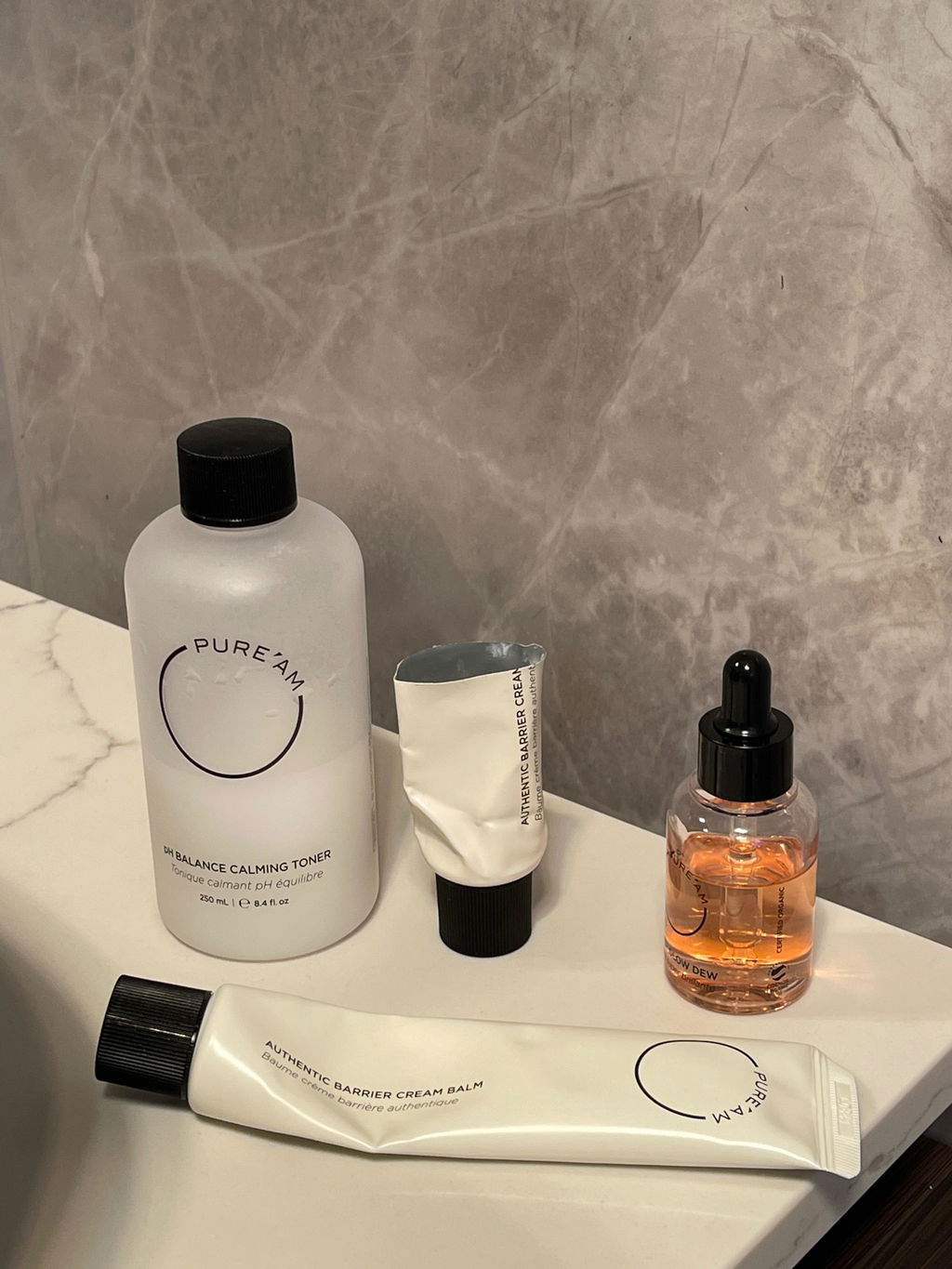
If your barrier cream balls up and rolls off under sunscreen by mid-morning, swapping moisturizers won't fix it. Pilling is usually a routine-sequencing problem that starts two or three steps earlier — at your cleanser — and most guides never look there.
Pilling Is a Whole-Routine Problem, Not a Product Problem
The common advice for pilling is "try a different moisturizer" or "switch sunscreens." That treats the last two steps of your routine as the only variables, when pilling is actually the visible end point of everything that happened before sunscreen went on: how your skin's surface was prepared, which formulas got layered in which order, and how much time each layer had to settle in.
APDerm notes that oil-in-water and water-in-oil emulsions can be chemically incompatible — when formulas with opposing bases meet on skin, they repel each other instead of blending, and each additional layer increases the chance of that kind of ingredient interaction. For dry, sensitive skin specifically, the surface a sunscreen lands on is rarely neutral: it's often already slightly disrupted, drier, or flaking at a micro level before the sunscreen ever touches it. That disruption traces back further than most people check.
It Starts With Your Cleanser's pH
Skin's natural surface — the acid mantle — sits around pH 4.5–5.5. Many everyday cleansers, especially foaming or bar formulas, run alkaline at pH 8–10, and Biodance and Mirai Skin both note that skin can take upwards of six hours to return to its natural pH after that kind of disruption. For most people that's a background irritation issue. For dry, sensitive skin doing a full morning routine, it's a texture issue too: skin that's still buffering back to its normal pH when toner, serum, moisturizer, and sunscreen go on top of it presents a rougher, less cohesive surface — exactly the condition that makes later layers more likely to clump instead of absorb.
This is the step competing pilling guides skip. They start the conversation at "which moisturizer" or "which sunscreen," but if the cleanser two steps earlier left skin alkaline and slightly roughened, every product after it is fighting an uneven base.
The Ingredients That Actually Cause Pilling
Once the surface is compromised, specific ingredients make pilling more likely regardless of skin prep. PureWow and APDerm both point to silicone-based film-formers as the most common culprits, along with a few thickeners that misbehave when layered.
| Ingredient type | Where it shows up | Why it pills |
|---|---|---|
| Dimethicone, amodimethicone, cyclomethicone | Primers, sunscreens, some moisturizers | Silicone film-formers sit on top of skin rather than absorbing; layering more than one creates a slick film that clumps and rolls |
| High-concentration xanthan gum | Gel moisturizers, some serums | Thickens the surface film; combined with a second thick layer, it has nowhere to go but ball up |
| Improperly neutralized carbomer | Gel-creams, some sunscreens | Leaves a slightly tacky, uneven film that grabs at the next product applied over it |
None of this means silicone-based products are bad — they're common because they create smooth, blurred texture. The issue is stacking two or three of them without giving each one time to set, or applying them over skin whose surface was already disrupted upstream.
Layering Order and Timing Change the Outcome
Even with compatible formulas, technique matters. PureWow and Bolden both recommend giving each layer roughly 10 minutes to absorb before adding the next, and pressing product into skin with flat palms rather than rubbing — friction is what destabilizes a sunscreen film that hasn't fully set. Sunscreen should also go on last, after every treatment and moisturizing step has had time to settle, since it's the layer under the most friction from makeup, masks, or touch throughout the day.
The Full Morning Routine Rebuild
Rebuilding the routine from the cleanser up, rather than just swapping the moisturizer, addresses pilling at its actual starting point:
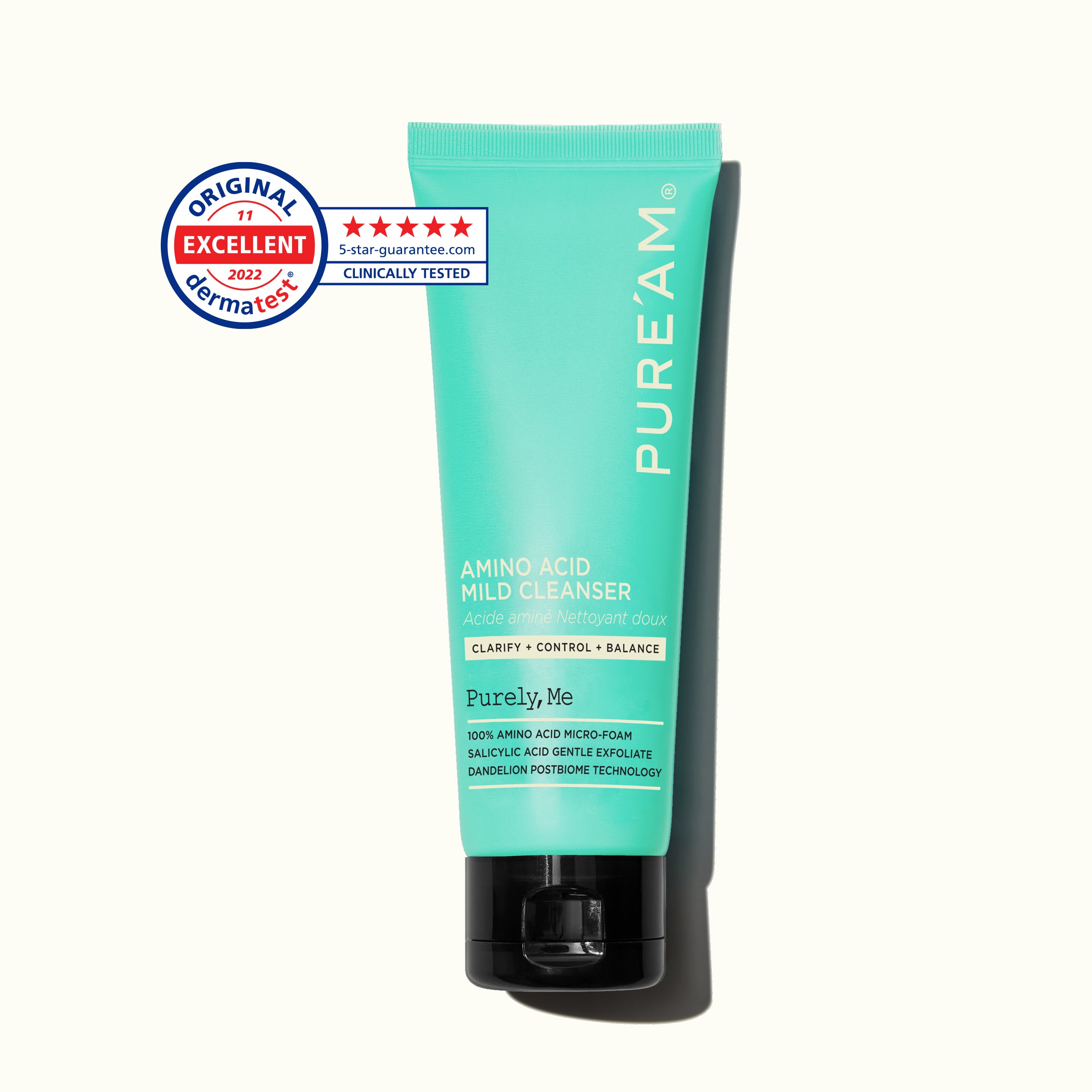
- Cleanse with a pH-balanced, non-alkaline formula. For dry, sensitive skin, an amino-acid-based cleanser — like PURE'AM's Amino Acid Mild Cleanser — is formulated closer to skin's natural pH than a traditional foaming bar or soap-based wash, so it doesn't force skin through the multi-hour rebalancing act described above before the rest of the routine even starts.
- Let skin fully dry before the next step. Applying toner or serum onto damp, just-cleansed skin can trap surface unevenness under the next layer.
- Tone to reinforce pH, not strip it. A calming, pH-balancing toner supports the same acid mantle the cleanser just protected, rather than reintroducing alkalinity.
- Apply barrier-supportive moisture and wait. A barrier cream balm formulated for dry, sensitive skin — such as PURE'AM's Authentic Barrier Cream Balm — should get roughly 10 minutes before anything else goes on top, per the absorption window noted above.
- Press sunscreen in last, don't rub. Apply with flat palms in sections, allow it to set before touching your face again (makeup, masks, or otherwise).
The order matters as much as the products: a barrier cream applied over unevenly disrupted skin, then rushed under sunscreen, is set up to pill even if every individual product is well-formulated.
When Hydration Helps — and When Exfoliation Makes It Worse
Bolden notes that pilling caused by dead skin buildup can improve with better hydration and barrier support, since a well-hydrated surface sheds less visibly. But the same source cautions that aggressive exfoliation — the instinct many people reach for when they see flaking or pilling — tends to make it worse, increasing irritation and flaking rather than resolving it. That's the exact tension dry, sensitive skin sits in: the fix isn't to strip more, it's to disrupt less at every step, starting with cleansing.
FAQ
Does switching sunscreens usually fix pilling?
Sometimes, if the sunscreen itself is heavy on silicone film-formers layered over an already-thick moisturizer. But if the same pilling happens across different sunscreens, the more likely cause is upstream — cleanser pH, insufficient absorption time, or friction during application — rather than the sunscreen formula itself, per the layering and ingredient mechanisms above.
How long should I wait between skincare steps to prevent pilling?
Dermatology-adjacent sources point to roughly 10 minutes per layer before applying the next product, and pressing rather than rubbing sunscreen in, so the film underneath has time to set. PureWow and Bolden both note this timing as central to preventing pilling.
Can a gentle cleanser really affect how sunscreen wears later?
Yes — an alkaline cleanser can leave skin's surface pH disrupted for hours, per Biodance and Mirai Skin, and that disrupted, rougher surface is part of what makes later layers more prone to clumping rather than absorbing evenly.
Is pilling a sign my barrier cream is wrong for my skin?
Not necessarily. Pilling is more often about sequencing, timing, and surface prep than about any single product being unsuitable — see How to Build a PURE'AM Routine for Sensitive Skin for how each step in a dry, sensitive-skin routine is meant to work together.
If pilling has been part of your morning routine for a while, the fastest diagnostic isn't a new moisturizer — it's checking your cleanser's pH and giving each layer its full absorption window before sunscreen goes on. See the Authentic Barrier Cream Balm and Amino Acid Mild Cleanser product pages for formulation details.