TL;DR: A cleanser's surfactant type sets your skin's pH right after washing, and that pH decides how well the serum you apply next can absorb and perform. Amino acid surfactants clean at a skin-like pH of 5.5-6.5, while soap-based surfactants push skin into an alkaline 8.0-10.0 range that disrupts the acid mantle. Checking the surfactant on the label, not just a "sulfate-free" claim, is the real way to pair a cleanser with a serum.
Most people shopping for a gentle cleanser and a serum look for a "sulfate-free" label and assume the pairing is settled. That label only rules out one surfactant, sodium lauryl sulfate. It says nothing about whether the surfactant that replaced it lands your skin at a pH where the serum you apply next can actually work.
Why Post-Wash pH Determines Whether a Serum Can Absorb
Skin's acid mantle normally sits close to pH 5.5, and that acidity keeps the stratum corneum's lipid layers organized while limiting transepidermal water loss. When a cleanser pushes skin outside that range, the stratum corneum's structure loosens, and any serum applied afterward has to work against skin chemistry it was not formulated for.
Treasurescape frames this as a sequencing problem: a cleanser that preserves skin's natural pH creates the biological baseline the next treatment step depends on, while a cleanser that disrupts pH works against that step. The same source notes that a low-pH serum applied to skin still buffered toward alkaline can see its effective pH rise at the point of contact, which lowers both stability and how much of the active actually becomes bioavailable.
That effect is not uniform across ingredients. According to Treasurescape, AHAs such as glycolic acid and lactic acid perform best in a pH 3-4.5 window, and raising that pH shrinks the fraction of acid in its active, unionized form, which visibly slows exfoliation. Retinol depends on skin enzymes to convert it into its active form, retinoic acid, and those enzymes are pH-sensitive in the same way.
Amino Acid Surfactants vs. Soap Bases: The pH Gap
Traditional cleansers built on sodium lauryl sulfate and related harsh surfactants are documented to disrupt the stratum corneum and increase transepidermal water loss, compromising barrier integrity. NCBI Removing oil and makeup without damaging that barrier is a different design goal than most surfactant chemistry was built around.
The pH gap between surfactant classes is wide. Amino acid surfactants clean effectively in a pH 5.5-6.5 range that sits close to skin's own baseline, while soap-based cleansers operate in an alkaline pH 8.0-10.0 range that breaks down the acid mantle and can lead to dryness, irritation, and barrier damage. Alfa Chemistry
Gentleness and cleansing power are not a trade-off here. Amino acid surfactants are documented to dissolve a day's worth of sebum and makeup residue while leaving the skin's structural lipids intact, preserving its moisture balance. Jin Cosmetics A cleanser can hold that pH range and still finish the job a heavier surfactant would.
Three Checks Before You Pair a Cleanser With a Serum
- Read the surfactant name, not the front-label claim. Look for amino acid surfactant names on the ingredient list, such as sodium cocoyl glycinate or sodium lauroyl glutamate. "Sulfate-free" only confirms one exclusion. It does not confirm the replacement surfactant sits in an amino acid pH range instead of a soap-based alkaline one.
- Notice whether skin feels tight right after rinsing. A tight, stripped feeling immediately post-cleanse is often a sign the acid mantle has been pushed into alkaline territory. Applying a serum on top of that tightness means the serum is absorbing into skin that has not returned to its working pH yet.
- Look for a cleanser and serum designed as a sequence. A cleanser and serum from the same routine, with the maker specifying the order, removes the guesswork of matching pH compatibility product by product. PURE'AM's product page for the Amino Acid Mild Cleanser names the pH Balance Calming Toner as the step that follows it, an amino acid cleanse feeding directly into a toner built for the same pH range.
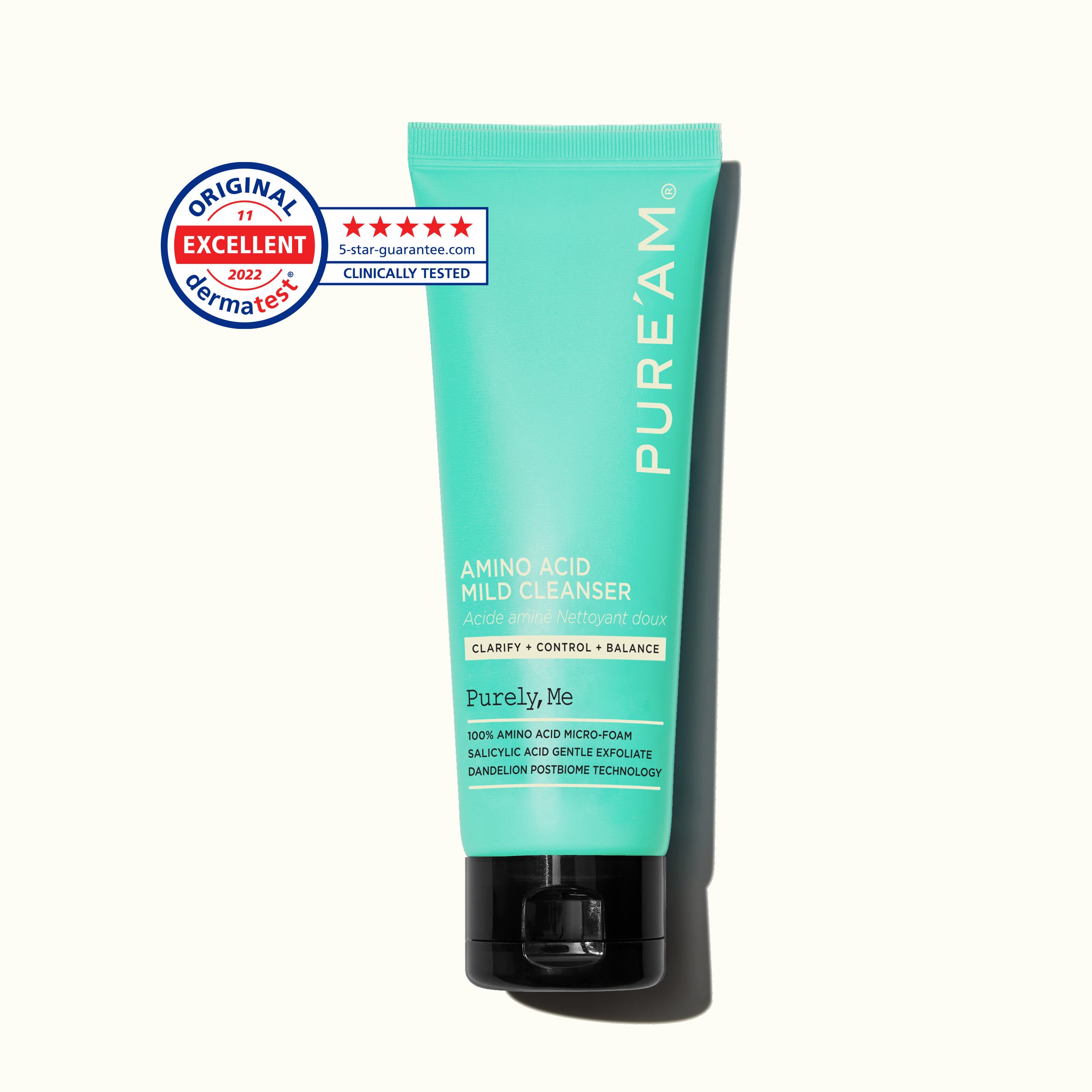
AMINO ACID MILD CLEANSER
23 USD
Shop now
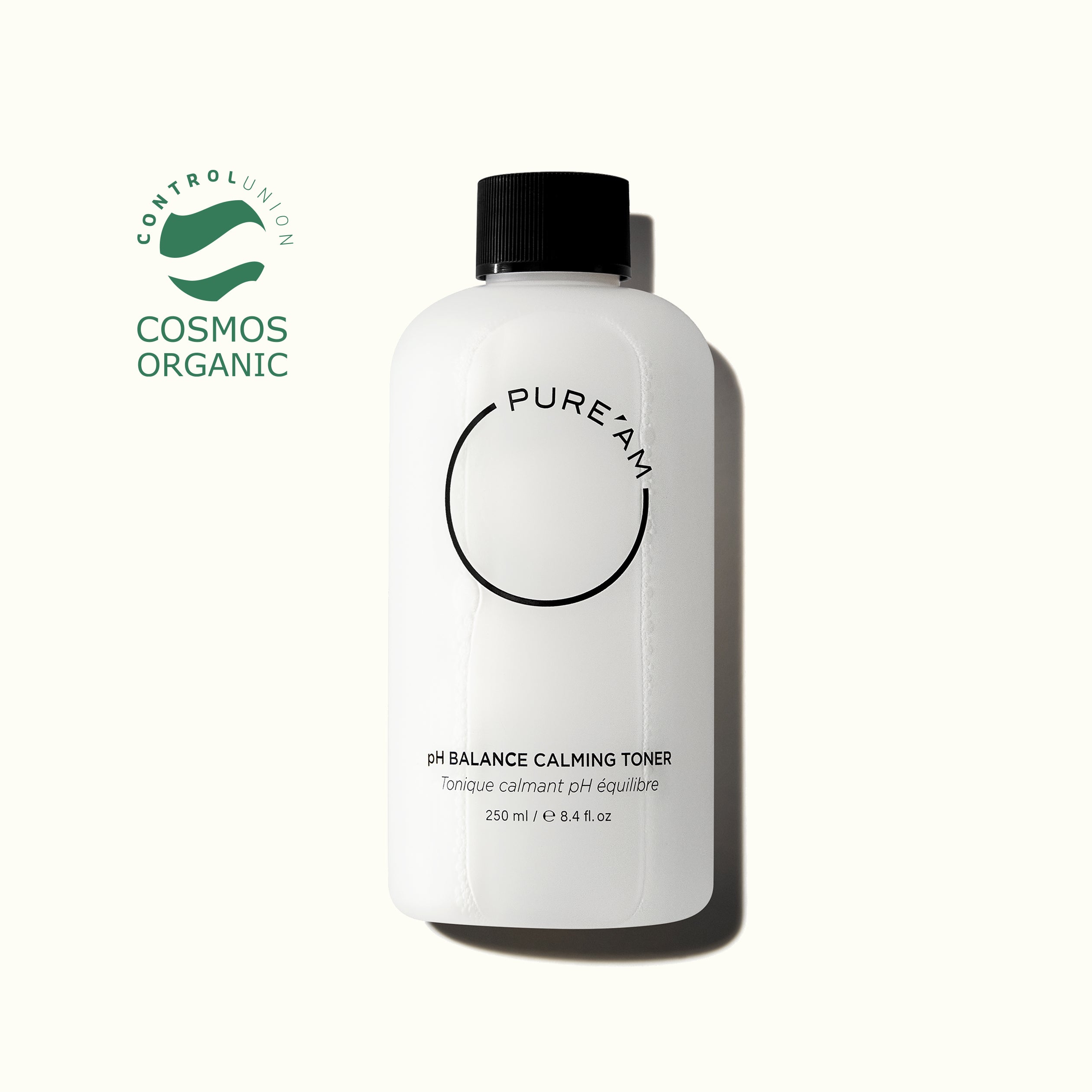
pH BALANCE CALMING TONER
29 USD
Shop now
That kind of named sequence is still the exception rather than the rule among gentle-skincare brands, most of which sell a cleanser and a serum as separate decisions without addressing how one sets up the other.
Putting This Into Practice
Start by checking for tightness a minute or two after rinsing and patting dry. If skin feels pulled tight, that is a cue to dial back an active serum's concentration that day, or skip the step entirely until skin settles.
Treat a cleanser swap as a reason to re-check the serum that follows it, not a standalone change. Moving to a new cleanser resets the pH environment a serum lands in, so a serum that performed well after the old cleanser is not guaranteed to behave the same way after the new one.
Pay closer attention during travel or seasonal transitions, when water hardness and humidity shift. The same cleanser can produce more or less post-wash tightness depending on conditions, even without changing the formula. For a deeper look at how surfactant choice affects that tightness on its own, see PURE'AM's guide to choosing a gentle cleanser for sensitive, tight-feeling skin.
FAQ
Does "sulfate-free" mean a cleanser's pH is automatically safe?
No. Sulfate-free only rules out sodium lauryl sulfate and similar sulfate surfactants. If the surfactant that replaces it is a soap base, the cleanser can still land in the pH 8.0-10.0 alkaline range. Alfa Chemistry Checking the actual surfactant name on the ingredient list is more reliable than the front-label claim.
Should I wait before applying serum after cleansing, or apply it right away?
If the cleanser finishes within skin's natural pH range, applying serum right after is fine. What matters is the pH state the cleanser leaves behind: after an alkaline cleanser, skin needs time to re-acidify, and an active ingredient applied during that window may underperform. Treasurescape
Are amino acid cleansers weaker at cleaning than sulfate cleansers?
They clean differently rather than less effectively. Amino acid surfactants are formulated to dissolve daily sebum and makeup residue while leaving the skin's structural lipids in place. Jin Cosmetics For heavy, full-coverage makeup, a separate cleansing oil or micellar water as a first step still makes sense before a foaming or gel cleanser.
Do a cleanser and serum have to come from the same brand to pair correctly?
Not necessarily. The practical advantage of a same-brand pairing is that the maker has already matched the pH range for you, so you are not testing the combination yourself. Mixing brands works too, as long as you check the cleanser's surfactant type and watch for post-wash tightness before layering a serum on top.
If your current cleanser leaves skin tight after rinsing, that tightness is worth investigating before adding another serum to the routine. PURE'AM's Amino Acid Mild Cleanser and pH Balance Calming Toner page outlines a sequence built around that same pH range, cleanser into toner, for anyone who wants to stop guessing at pH compatibility one product at a time.